


Views: 0 Author: Site Editor Publish Time: 2026-07-27 Origin: Site


A failing label is a failing process. In high-volume logistics, cold-chain, or healthcare environments, unreadable, detached, or jammed labels create a cascading financial impact. When operations halt due to missing barcodes, the entire supply chain suffers from lost inventory, compliance fines, and ruined hardware. Procurement teams often focus on the unit cost of a direct thermal label roll, while operations deals with the fallout of mismatched adhesives. Specifying the wrong thermal label adhesive chemistry leads to severe consequences. Adhesive components can migrate into the thermal face stock, triggering a chemical reaction with leuco dyes that causes premature greying and scan failures. This guide serves as a technical evaluation framework for procurement and operations managers. You will learn how to identify, test, and validate adhesive performance before committing to a custom thermal labels supplier contract, ensuring your labeling process remains efficient and reliable.
Application vs. Service Temperature: The temperature at which a self adhesive label roll is applied is rarely the same as its long-term storage environment; failing to account for both is the leading cause of adhesive failure.
Substrate Surface Energy Dictates Formulation: Rubber-based and acrylic adhesives perform vastly differently depending on whether they are applied to corrugated cardboard, low-surface-energy plastics, or cold glass.
Adhesive Bleed Destroys Hardware: Poorly manufactured rolls cause adhesive oozing, leading to costly printer jams, premature printhead failure, and operational downtime.
Chemical Migration Can Blind Barcodes: Standard adhesives can react with the heat-sensitive chemistry of direct thermal barcode labels, rendering them unreadable.
Testing is Non-Negotiable: Relying solely on manufacturer spec sheets is a critical risk; in-situ pilot testing under actual environmental conditions using ASTM/FINAT standards is required for validation.
When thermal barcode labels detach during transit, the operational consequences hit the floor immediately. Automated sorting systems fail to read missing barcodes, routing packages to exception bins. Manual relabeling incurs high labor costs and slows down processing times, severely impacting overall throughput. In a busy cross-docking facility, a single missing routing label means a pallet sits on the dock while a worker manually hunts down the manifest. Multiply that by hundreds of pallets, and the labor drain becomes massive. Traceability vanishes the second the adhesive fails to hold the face stock to the carton. You lose visibility into inventory movement, leading to stockouts and delayed shipments. The physical bond between the label and the substrate is the only thing keeping your digital tracking systems accurate.
Adhesive transfer inside the printer mechanism creates significant maintenance overhead. Friction increases as adhesive residue bakes onto the printhead, leading to burnout. This damage often voids hardware warranties and forces unexpected equipment replacement. Platen rollers get coated in sticky residue, causing the media to track sideways and jam. Operators then spend valuable time scraping hardened glue off delicate printer components, often using improper tools that cause further damage. A single poorly manufactured roll can destroy a printhead worth hundreds of dollars in a matter of hours. The downtime associated with swapping out damaged hardware stops production lines dead. You are not just paying for replacement parts; you are paying for idle labor and missed shipping cutoffs.
Financial penalties in retail, automotive, and pharmaceutical supply chains are steep when mandatory tracking labels become illegible. Chemical, UV, or moisture exposure can cause labels to fail, triggering costly chargebacks and compliance violations from regulatory bodies. Large retailers enforce strict routing guide compliance. If your pallet arrives with a peeling or unreadable barcode, they will hit you with a chargeback fee per carton. In the pharmaceutical sector, a detached label on a medication vial constitutes a severe regulatory breach, potentially triggering a product recall. The adhesive must withstand the entire lifecycle of the product, from the warehouse rack to the retail shelf or hospital pharmacy. Failing to meet these standards turns a simple labeling error into a massive financial liability.
Plasticizer migration from the adhesive or substrate into the thermal paper presents a hidden danger. This migration deactivates the leuco dye chemistry, causing barcodes to fade entirely. Once the barcode disappears, the label loses its functional value. Direct thermal paper relies on a heat-sensitive coating. Certain adhesive formulations contain mobile chemicals that seep through the paper over time. This reaction accelerates in warm storage conditions. You might print a perfectly crisp barcode, only to find it completely blank three weeks later in the warehouse. Understanding the chemical compatibility between the adhesive layer and the thermal topcoat is non-negotiable. You must specify barrier-coated face stocks if you are using aggressive adhesives prone to migration.
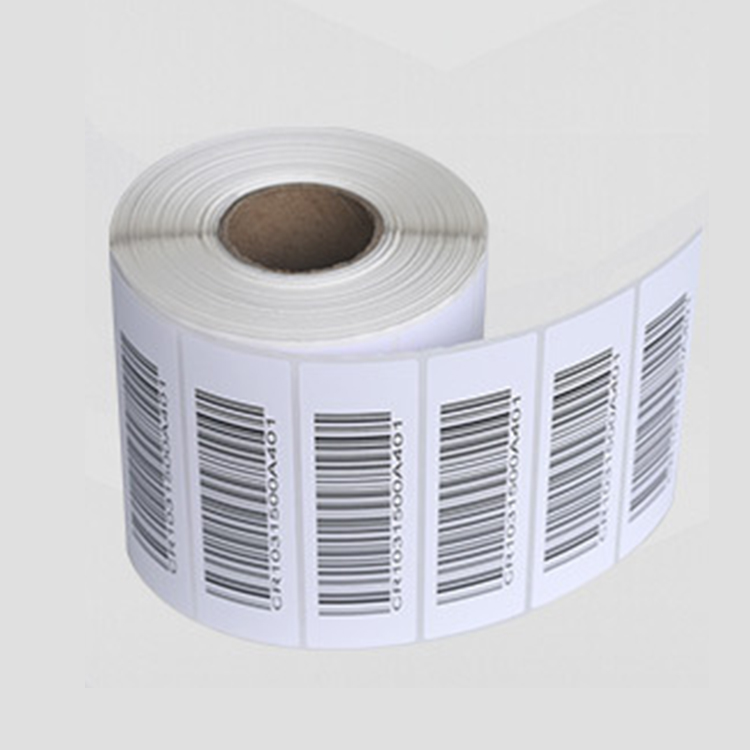
Adhesive migrates beyond the face stock due to poor slitting, excessive coat weight, or improper rewind tension. Inspect a direct thermal label roll for tacky edges before loading. Tacky edges indicate oozing, which will inevitably cause printer jams. When the roll is wound too tightly at the factory, the pressure forces the adhesive out the sides. This creates a solid brick of labels that tear when you try to unroll them. Inside the printer, this oozing glue transfers to the media guides and sensors. Dust and paper debris stick to the glue, blinding the gap sensors and causing the printer to feed blank labels. You must demand tight quality control from your converter regarding coat weight and winding tension.
Incorrect silicone release liner coatings cause severe dispensing issues. Labels may fall off the liner prematurely inside the printer, known as pre-dispensing. Conversely, high release force prevents labels from dispensing entirely on automated labeling lines. If the release force is too low, the labels detach as they bend around the platen roller, jamming the internal mechanism. If the release force is too high, the automated applicator arm will tear the liner web trying to pull the label free. The silicone coating must be perfectly calibrated to the specific adhesive formulation. This balance ensures the label stays put during printing but releases cleanly at the peel edge.
Face stock memory combined with inadequate initial tack causes flagging. When a self adhesive label roll is applied to curved surfaces like vials or cables, the edges lift. The adhesive fails to hold the stiff material against the curve. The paper or film wants to return to its flat state. If the adhesive lacks the shear strength to overcome this mechanical memory, the label pops off. You see this constantly on small-diameter test tubes in laboratories. To prevent flagging, you need a highly aggressive adhesive paired with a flexible, thin face stock that conforms easily to tight radiuses.
Standard adhesives break down chemically when exposed to blast freezers or condensation. The glass transition temperature limit is breached, causing the adhesive to become brittle. This cold fracture leads to sudden and complete label detachment. When a warm, labeled box enters a blast freezer, the sudden temperature drop shocks the adhesive. It turns from a flexible polymer into a rigid, glass-like substance. Any movement or impact shatters the bond. Moisture from condensation further degrades the adhesive by penetrating the paper face stock and attacking the bond line. You must use specialized freezer-grade formulations designed to remain pliable at sub-zero temperatures.
Shear strength and peel adhesion metrics define adhesive categories. Permanent adhesives suit shipping boxes. Removable adhesives work well for retail glassware. Repositionable adhesives allow temporary bin routing without leaving residue. Permanent adhesives are designed to tear the face stock before the bond breaks. They are the workhorses of logistics. Removable adhesives maintain a low, stable peel adhesion over time, allowing clean removal without solvents. Repositionable adhesives offer a brief window where the label can be lifted and moved before the bond cures into a permanent state. Choosing the right category depends entirely on the lifecycle of the labeled item.
Acrylic adhesives offer excellent UV resistance, longevity, and plasticizer resistance. They perform reliably in extreme temperatures. Rubber-based adhesives provide high initial tack and cost-effectiveness. They excel on rough surfaces like recycled corrugated boxes but degrade under UV, high heat, and chemical exposure. If you are labeling drums stored outside in the sun, you need an acrylic formulation. If you are slapping labels on dusty, recycled cardboard boxes in a fast-paced fulfillment center, a rubber-based hot melt adhesive provides the instant grab you need. Understanding the chemical base of the adhesive allows you to match it to the environmental hazards it will face.
Niche formulations address specific challenges. Freezer-grade adhesives handle sub-zero temperatures. Ultra-high tack adhesives bond to tires and oily surfaces. Water-dissolvable adhesives wash away cleanly from reusable plastic containers. Tire adhesives require massive coat weights to flow into the rough rubber tread. Wash-away adhesives are critical for closed-loop supply chains using plastic totes, preventing the buildup of old labels that confuse automated scanners. These specialty formulations cost more upfront but solve specific operational bottlenecks that standard adhesives cannot handle.
Linerless technology places the adhesive face directly against a silicone release topcoat on the thermal face stock. While reducing waste, this design introduces unique risks. Adhesive build-up on custom cutter blades requires frequent cleaning to maintain performance. You eliminate the silicone liner waste, which is a massive benefit for high-volume operations like fast-food receipt printing. However, the printer must be specifically designed with non-stick platen rollers and self-cleaning cutter mechanisms. If you run linerless media through a standard printer, it will jam instantly. The adhesive formulation for linerless rolls is highly specialized to ensure it releases from the face of the label below it on the roll without leaving residue.
Matching adhesives to substrates requires understanding surface energy. High-surface-energy materials like glass and metal form strong bonds easily. Low-surface-energy materials like HDPE plastics and rough textures like recycled cardboard demand aggressive adhesive formulations. Think of surface energy like water on a freshly waxed car; it beads up. Adhesives do the same thing on low-surface-energy plastics like polypropylene. The adhesive cannot flow and wet out the surface, resulting in a weak bond. You must specify adhesives with tackifiers designed specifically to bite into these difficult plastics. Rough surfaces require a thicker adhesive coat weight to fill the microscopic valleys and establish sufficient contact area.
Reading technical data sheets correctly is crucial. Differentiate between minimum application temperature and service temperature range. The minimum application temperature is the lowest temperature the adhesive can be physically applied to establish a bond. The service temperature range covers the operational temperatures the label can withstand once cured. You cannot apply a standard label to a frozen box inside a cold room. The adhesive will freeze before it wets out. You must apply the label at room temperature, let it cure, and then move it to the freezer, or you must buy an all-temp adhesive designed to be applied at sub-zero temperatures.
Temperature Type | Definition | Field Example |
|---|---|---|
Minimum Application Temperature | The lowest temperature the adhesive can be physically applied to establish a bond. | Applying a label to a frozen meat carton inside a -10°F cold storage room. |
Service Temperature Range | The operational temperatures the label can withstand once cured. | A labeled pallet sitting in a 120°F trailer during summer transit. |
Evaluate labels subjected to harsh conditions. UV light, high humidity, and chemical solvents like isopropyl alcohol degrade standard adhesives. Sterilization processes like autoclave or Gamma radiation require specialized formulations. If your labels are wiped down with harsh sanitizers in a hospital setting, a standard rubber-based adhesive will dissolve into a sticky mess. You need a solvent-resistant acrylic adhesive paired with a synthetic face stock. Prolonged UV exposure breaks down the polymer chains in many adhesives, causing them to yellow and turn brittle. You must audit the entire physical journey of the label to identify these exposure risks.
Certifying adhesives under FDA 21 CFR 175.105 for indirect food contact is mandatory for food packaging. European food contact regulations also dictate specific adhesive requirements for packaging lines to ensure consumer safety. You cannot use industrial adhesives on packaging that touches food. The chemicals can migrate through the packaging material and contaminate the product. Converters must provide documentation proving their adhesive formulations meet these strict regulatory standards. Failure to maintain this documentation leaves your operation vulnerable to massive fines and product recalls.
Off-the-shelf products fail in demanding scenarios. Proprietary low-surface-energy packaging materials require custom formulations. Extreme multi-environment transit and highly curved applications also necessitate engineered adhesive solutions. If you are rolling out a new type of eco-friendly, biodegradable packaging, standard adhesives will likely fail to bond to the novel surface. You need a converter to engineer a specific adhesive profile. Custom formulations are also required when a label must survive a blast freezer, a steam sterilization cycle, and outdoor UV exposure all in the same lifecycle. Standard catalog items are built for average conditions, not extreme edge cases.
Ordering custom thermal labels involves procurement realities. Tooling costs and adhesive formulation lead times affect project timelines. Inventory safety-stock planning is essential to manage minimum order quantities effectively. Converters require large master rolls of material to run a custom adhesive batch. You cannot order just five rolls of a highly specialized formulation. You must forecast your usage accurately and commit to larger production runs. The lead time for custom adhesives can stretch to several weeks, as the raw materials must be sourced and the coating lines scheduled. You must build these lead times into your operational planning to avoid running out of critical labels.
Test labels in the actual operational environment. Apply labels in the cold room, not at an office desk. Allow the full 24-hour cure time before evaluating the bond strength under stress. Slapping a sample label on a clean coffee mug in an air-conditioned office tells you nothing about how it will perform on a dusty, frozen cardboard box. You must give the sample rolls to the operators on the floor. Have them run the labels through the actual printers, apply them to the actual substrates, and subject them to the actual environmental hazards. Only then can you validate the adhesive performance.
Scrutinize metrics on a supplier's technical data sheet. You must understand the testing standards used to generate the numbers.
Peel Adhesion (ASTM D3330 / FINAT FTM1): Measures the force required to remove the label at a specific angle and speed. This indicates the ultimate bond strength.
Loop Tack (ASTM D2979 / FINAT FTM9): Measures the initial grab of the adhesive before pressure is applied. Critical for automated blow-on applicators.
Shear Resistance (ASTM D3654 / FINAT FTM8): Measures the resistance to cohesive failure under constant stress. Important for labels applied to curved surfaces.
Store thermal label adhesive products properly. Maintain conditions at 72°F and 50% relative humidity. Adhere to the standard 12-month shelf life to prevent over-ordering and adhesive degradation. If you store pallets of labels in a hot warehouse near the ceiling, the adhesive will degrade rapidly. The heat accelerates chemical breakdown and causes oozing. Rotate your stock using a first-in, first-out method. Do not buy a three-year supply of labels to get a volume discount; the adhesive will fail before you use them all. Treat label rolls like perishable inventory.
Thermal label adhesive is a highly engineered component, not a generic commodity. Treat it as a critical operational asset to prevent downstream supply chain failure. Select a converter based on transparency in technical data sheets, willingness to provide sample rolls, and expertise in specific substrates.
Audit your current label failure rates on the warehouse floor to identify specific environmental bottlenecks.
Document your exact environmental variables, including substrate surface energy, application temperature, and chemical exposure.
Request targeted sample rolls from your converter for rigorous internal testing under actual operational conditions.
Establish strict storage protocols to maintain 72°F and 50% relative humidity for all label inventory.
A: The standard shelf life is 12 months. Temperature and humidity fluctuations degrade the chemical bonds over time, reducing effectiveness and causing the adhesive to ooze or lose tack.
A: Standard adhesives freeze and fracture in sub-zero temperatures. Freezer-grade adhesives with specific minimum application temperatures are necessary to maintain a flexible bond in cold environments.
A: Application temperature is the environment during the physical labeling process. Service temperature is the long-term environment the label lives in after the adhesive has fully cured.
A: Check roll tension and avoid high-heat storage. Source from converters with precise slitting and coat-weight controls to minimize oozing from the edges of the roll.
A: Standard labels often flag on curved surfaces due to material memory. Highly aggressive adhesives and flexible face stock are required to overcome this mechanical memory and maintain the bond.
A: Adhesive squeeze-out transfers to the printhead, attracting dust and debris. This creates insulating barriers that cause thermal elements to overheat and burn out prematurely.
A: Invest in custom solutions for unique low-surface-energy packaging, FDA direct food contact requirements, extreme chemical exposure, or recurring failures with standard off-the-shelf products.


