


Views: 0 Author: Site Editor Publish Time: 2026-09-21 Origin: Site


In high-volume retail and logistics environments, degraded print quality or premature printhead failure rarely stems from hardware defects. It usually points to a chemical mismatch between the printer's energy output and the reactive layer on the media. The quality of chemical reagents—specifically leuco dyes and developers—dictates the validity and longevity of printed data. Poorly sourced compounds cause inconsistent reactions and data loss. Procurement teams often buy thermal receipt paper based on dimensions alone, ignoring chemical activation thresholds. This oversight leads to faded barcodes, unreadable receipts, accelerated printhead wear, and archiving compliance failures. Selecting the right media requires evaluating thermal paper coating sensitivity against operational variables like printer speed, environmental exposure, and archival life. This guide breaks down the technical criteria for matching coating formulations to specific enterprise printing demands.
Dynamic vs. Static Sensitivity: Print quality relies on matching the printer's inches-per-second (IPS) speed with the paper's dynamic sensitivity, while static sensitivity dictates environmental durability.
Hardware Preservation: Using low-sensitivity paper in high-speed printers forces maximum energy output, accelerating printhead burnout and increasing maintenance costs.
Coating Trade-offs: Adding protective layers (top-coated thermal paper) improves environmental resistance but alters the thermal transfer dynamics, requiring precise calibration.
Base Material Impact: The caliper and weight of the base paper (e.g., standard 48gsm thermal paper) directly influence how efficiently heat is absorbed and dissipated during the printing process.
Thermal printing relies entirely on localized chemical reactions. The paper surface contains a specialized coating matrix. This matrix holds leuco dyes, developers, and sensitizers in a solid, unreacted state. When the printhead applies heat, the sensitizer melts. This melting allows the leuco dye and the developer to merge. The resulting chemical reaction forces the dye to change from colorless to black, blue, or red. The efficiency of this phase change defines the paper's sensitivity.
The purity and grade of these chemical reagents dictate the consistency of the reaction. High-quality reagents ensure a uniform activation threshold across the entire roll. When manufacturers use substandard chemicals, the melting point varies microscopically across the paper surface. This variance causes patchy prints, broken barcode lines, and uneven text. Consistent reagent quality guarantees that every thermal pulse produces an identical chemical response.
Thermal Coating Chemical Components and Functions | ||
Component | Primary Function | Impact on Print Quality |
|---|---|---|
Leuco Dye | Provides the color pigment (usually black) | Determines the maximum optical density and contrast of the printed image. |
Developer | Reacts with the dye to trigger the color change | Dictates the archival stability and resistance to fading over time. |
Sensitizer | Lowers the melting point of the chemical matrix | Controls the dynamic sensitivity and allows for high-speed printing. |
Binder | Adheres the chemical matrix to the base paper | Prevents dusting and residue buildup on the printhead elements. |
Static sensitivity refers to the exact temperature at which the chemical reaction begins. This activation point typically falls between 70°C and 90°C. Paper with high static sensitivity reacts at lower temperatures. While this sounds efficient, it poses severe risks in warm environments. If you store highly sensitive rolls in a hot warehouse, the ambient heat can trigger the developer. The paper will prematurely darken or turn entirely gray before it ever reaches a printer.
Lower static sensitivity prevents this premature darkening. Applications requiring environmental durability demand paper with a higher activation threshold. For example, parking citations left on vehicle dashboards bake in direct sunlight. If the static sensitivity is too high, the heat inside the cabin destroys the printed data. Choosing a lower static sensitivity ensures the background remains white, preserving the contrast of the printed text under high ambient temperatures.
Dynamic sensitivity measures how quickly the coating reacts to short pulses of heat energy. Printers measure this energy in millijoules. A printhead element fires for just a few milliseconds. The coating must absorb that energy, melt the sensitizer, and complete the chemical reaction instantly. High dynamic sensitivity means the paper requires very little energy to reach maximum optical density. The image appears dark and crisp even when the heat pulse is incredibly brief.
This metric directly correlates with print speed. Faster printers leave less time for heat transfer. If the dynamic sensitivity is low, a fast heat pulse will not fully activate the dye. The resulting image looks faded or washed out. Matching the dynamic sensitivity to the printer's energy output ensures optimal image darkness without forcing the hardware to work beyond its design limits.
Modern retail and logistics operations push hardware to extreme limits. Printers now operate at speeds exceeding 10 to 12 inches per second (IPS). At these velocities, the printhead elements pulse rapidly. There is almost no dwell time for heat transfer. To achieve crisp text without smudging, you must use high-speed POS paper equipped with high dynamic sensitivity coatings. The chemical reaction must happen instantaneously.
Using low-sensitivity paper in fast printers creates severe operational risks. The most common failure is image trailing. The printhead fires, but the paper moves before the chemical reaction finishes. This smears the edges of text and distorts barcode lines. A distorted barcode fails automated scanning, causing bottlenecks at checkout lanes and sorting facilities. High dynamic sensitivity eliminates image trailing by reacting the exact millisecond the heat applies.
Not every application requires lightning-fast printing. Low-volume retail shops, ATM kiosks, and basic ticketing machines often run at slower speeds, typically between 3 and 5 IPS. In these scenarios, standard sensitivity formulations work perfectly. The slower paper feed allows the printhead sufficient time to transfer heat. The chemical reaction completes fully without requiring highly specialized, rapid-melt sensitizers.
You must configure the printer's energy settings to match this standard paper. If you leave a printer on its maximum darkness setting while using standard sensitivity paper, you overdrive the printhead. The excess heat does not make the image any darker once the dye fully reacts. Instead, the surplus energy degrades the microscopic resistors on the printhead. Proper configuration optimizes print quality while protecting the hardware.
The coating does not function in isolation. The base paper beneath it plays a structural role in heat management. Lightweight media, such as 48gsm thermal paper, absorbs and dissipates heat differently than heavier 80gsm grades. Thinner paper retains less heat within its fibers. This rapid dissipation can actually sharpen the edges of printed text, as the heat does not bleed outward from the print zone.
Caliper consistency is just as critical as the paper weight. Caliper refers to the exact thickness of the sheet. If the base paper has microscopic variations in thickness, the printhead contact becomes uneven. High spots receive full pressure and heat, while low spots receive less. This uneven contact causes patchy print quality, regardless of how sensitive the chemical coating is. Consistent base paper ensures uniform thermal transfer across the entire width of the receipt.
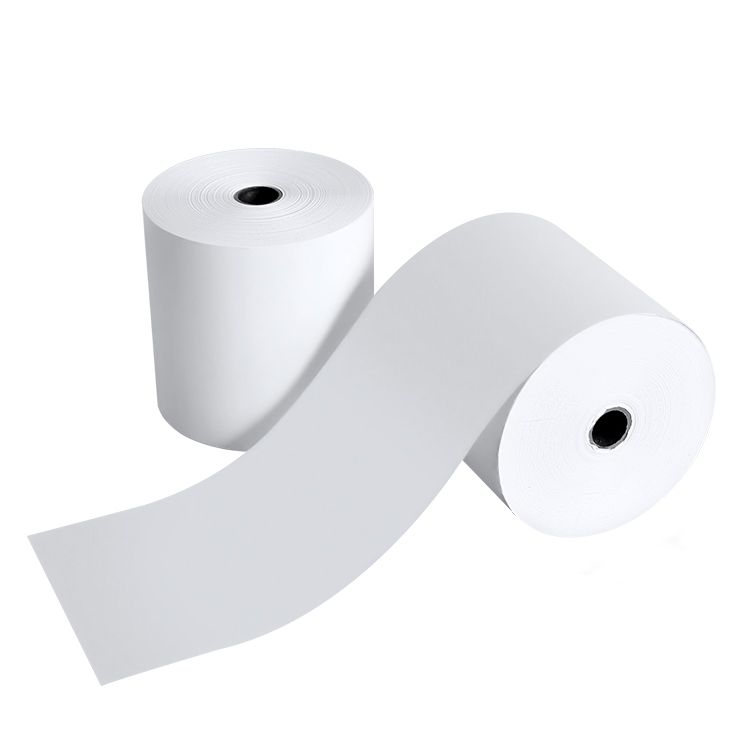
Standard thermal paper is highly vulnerable to environmental contaminants. To solve this, manufacturers apply additional protective layers over the reactive coating. This structural difference separates uncoated media from top-coated thermal paper. The top coat provides a physical barrier against plasticizers, oils, moisture, and chemical solvents. If a standard receipt touches a vinyl wallet or hand sanitizer, the image fades instantly. A top coat blocks these destructive interactions.
However, this protective barrier acts as a thermal insulator. The printhead must now push heat through the top coat to reach the reactive layer below. This alters the thermal transfer dynamics entirely. To achieve optimal print density on top-coated media, you face two choices. You must either increase the printhead energy settings to punch through the insulation, or the manufacturer must use a highly sensitive base thermal layer that reacts to residual heat. Precise calibration is mandatory to prevent faint prints.
Certain industries operate entirely outdoors or in wet environments. Kitchen order tickets face steam and grease. Outdoor citations face rain and snow. These applications require specialized waterproof thermal paper. The coating formulations for these products include advanced synthetic resins that repel water without dissolving the leuco dyes beneath them.
Creating waterproof media involves a strict trade-off between extreme environmental resistance and required activation energy. The heavier the waterproof resin, the harder it is to transfer heat. Printers using waterproof rolls often require maximum darkness settings and slower print speeds. The hardware must dwell longer on each line to ensure the heat penetrates the weather-resistant barrier. Failing to adjust the printer for waterproof formulations results in illegible tickets.
Evaluating print quality goes beyond simple visual checks. In logistics and healthcare, barcode readability determines operational success. Scanners grade barcodes on an ANSI/ISO scale from A to F. Coating sensitivity directly impacts this grade by controlling edge sharpness. If the sensitivity is too high for the printer's speed, the heat bleeds, blurring the bars. If it is too low, the bars appear broken. Precise sensitivity matching guarantees high-contrast, Grade A barcodes.
Matching sensitivity to durability requirements ensures compliance in highly regulated sectors. Healthcare labeling must survive chemical exposure while remaining legible for HIPAA compliance. Logistics chain-of-custody labels must survive cross-country transit without fading. You cannot achieve this compliance with generic paper. You must select a formulation engineered specifically for the chemical and physical threats of that specific industry.
An inverse relationship often exists between high dynamic sensitivity and environmental stability. Paper designed for ultra-fast printing reacts to minimal energy. Consequently, it also reacts to minimal environmental stress. UV exposure from fluorescent warehouse lights can slowly trigger the highly sensitive developers, turning the background yellow or gray. Ambient heat near industrial machinery causes similar degradation.
Chemical exposure poses an even greater risk to highly sensitive coatings. Common workplace substances destroy thermal images rapidly. These include:
Alcohol-based hand sanitizers used frequently in medical and retail settings.
Industrial cleaning agents and heavy-duty degreasers found in manufacturing plants.
Plasticizers leaching from vinyl folders, PVC badge holders, and standard adhesive tapes.
Petroleum-based lubricants and motor oils present in automotive repair shops.
Highly sensitive coatings lack the chemical barriers needed to repel these substances. The solvent penetrates the surface, reversing the chemical reaction and erasing the text. If your environment involves these chemicals, you must sacrifice some dynamic sensitivity in favor of heavy top-coating.
Archival lifespan depends entirely on the chemical stability of the reacted dyes. Standard sensitivity papers typically offer a 5-year archival life under ideal dark-storage conditions. They use basic developers that slowly break down over time. For tax records or warranty receipts, this is often insufficient.
Upgrading to 10-year or 20-year archival grades requires different chemistry. These papers use advanced, highly stable developers that lock the leuco dye into its colored state permanently. They also feature robust top and bottom coatings to prevent atmospheric moisture from degrading the image. The sensitivity profile of archival paper is usually lower, requiring more energy to print, but the resulting image withstands decades of storage without fading.
Thermal Paper Sensitivity and Durability Comparison | |||
Sensitivity Profile | Primary Application | Archival Lifespan | Environmental Resistance |
|---|---|---|---|
High Dynamic / Uncoated | High-speed POS, Logistics | 3 - 5 Years | Low (Vulnerable to heat/UV) |
Standard / Uncoated | Retail Receipts, ATMs | 5 - 7 Years | Moderate |
Low Static / Top-Coated | Kitchens, Outdoor Labels | 10 - 15 Years | High (Resists oil/water/chemicals) |
Archival Grade / Multi-Coated | Medical, Legal Records | 20+ Years | Very High |
Deploying the wrong paper sensitivity damages hardware and disrupts operations. Recognizing the symptoms early prevents costly downtime. A diagnostic matrix helps identify sensitivity mismatches immediately.
Faint prints at high speeds: Indicates low dynamic sensitivity. The paper cannot react fast enough to the short heat pulses.
Background darkening in storage: Indicates high static sensitivity. The ambient room temperature is too close to the chemical activation point.
Smudged or bleeding barcodes: Indicates the printhead energy is set too high for a high-sensitivity paper, causing thermal bleed.
Inconsistent, patchy text: Indicates poor reagent quality or inconsistent base paper caliper.
Poorly formulated, highly sensitive coatings often suffer from dusting. As the paper feeds through the printer, microscopic particles of the chemical coating flake off. This dust accumulates directly on the printhead elements. Over time, this chemical residue bakes onto the heat resistors, creating an insulating crust. The printer must then work harder to push heat through the crust, degrading the print quality further.
Operators often try to fix faint prints by increasing the darkness settings to maximum. If the root cause is low-sensitivity paper, this excess heat provides a temporary fix but causes permanent hardware damage. Pushing maximum current through the thermal elements accelerates their physical breakdown. Premature printhead failure is almost always the result of compensating for incorrect paper sensitivity with excessive heat.
For mobile printing fleets, energy efficiency dictates operational success. Delivery drivers and warehouse workers rely on battery-powered belt printers. Every thermal pulse drains the battery. If you use low-sensitivity paper, the printer must draw maximum voltage to generate enough heat for a legible print. This heavy energy draw depletes the battery rapidly.
Switching to high-sensitivity paper reduces the energy draw per print. The coating requires fewer millijoules to react, allowing the printer firmware to drop the voltage output. This minor adjustment extends battery life significantly, ensuring the device lasts through an entire shift without requiring a recharge. Matching sensitivity to mobile hardware is a critical power management strategy.
You cannot switch paper grades without recalibrating the hardware. When introducing a new roll with a different sensitivity profile, you must adjust the printer firmware. Outline a strict calibration protocol for your IT or maintenance teams. First, print a diagnostic test block. Adjust the darkness settings down until the image begins to fade, then notch it up slightly for optimal contrast. Second, adjust the baud rates and print speeds to ensure the paper feed matches the chemical reaction time. Skipping calibration guarantees suboptimal performance.
Procuring thermal media requires technical scrutiny. Do not accept quotes based solely on roll dimensions and paper weight. You must demand specific technical documentation from your supplier. Require Technical Data Sheets (TDS) that detail the static and dynamic sensitivity curves. A reputable thermal paper manufacturer will readily provide graphs showing optical density relative to applied energy.
Demand transparency regarding chemical reagent sourcing. The stability of your printed data relies on the purity of the leuco dyes. Ask about their quality control processes. How do they ensure coating uniformity? What tolerances do they allow for caliper variations? Rigorous quality control prevents dead spots on the roll where the coating is too thin to react properly.
Never execute a bulk procurement order without conducting a controlled pilot test in your actual operational environment. Lab specifications do not always translate to warehouse realities. Use this framework to validate the paper:
Scan Rate Validation: Print 500 barcodes at maximum operational speed. Run them through your standard scanners. Require a 99% first-pass read rate.
Residue Inspection: Run 100 continuous rolls through a single printer. Inspect the printhead with a magnifying loupe for chemical dusting or baked-on residue.
Environmental Stress Test: Place printed samples in the harshest areas of your facility (e.g., dashboard in the sun, near a heat vent, under UV lights). Monitor for fading over 14 days.
Chemical Exposure: Apply common workplace chemicals (sanitizer, cleaning spray) to the printed text and measure the degradation time.
Audit your current printer fleet to document exact inches-per-second (IPS) speeds and baseline darkness settings.
Request comprehensive Technical Data Sheets (TDS) from your supplier to verify the dynamic and static sensitivity curves of your existing media.
Execute a 14-day controlled pilot test in your harshest facility environment before authorizing bulk procurement of a new paper grade.
Standardize hardware calibration protocols for your maintenance teams to follow whenever introducing a new paper formulation to the production floor.
A: Static sensitivity is the ambient temperature at which the paper begins to darken without a printer, dictating environmental heat resistance. Dynamic sensitivity measures how fast the chemical coating reacts to brief, intense heat pulses from a printhead, determining how well the paper performs at high print speeds.
A: The protective top coat acts as a thermal insulator. To achieve a dark, legible print, you must either increase the printhead's heat energy settings to push through the barrier or use a base paper with highly sensitive chemistry that reacts to lower residual heat.
A: Faded or distorted barcodes at high speeds usually indicate low dynamic sensitivity. The paper moves past the printhead faster than the chemical reaction can complete. The heat pulse is too short to fully melt the sensitizer, resulting in smeared or faint lines.
A: Yes. Lightweight 48gsm paper absorbs and dissipates heat much faster than thicker grades. Because it retains less heat, you may need to adjust the printer's energy settings to ensure the chemical reaction completes fully without bleeding outward and blurring the text.
A: Request a Technical Data Sheet (TDS) that includes dynamic and static sensitivity curves, optical density ratings at specific energy levels, base paper caliper consistency, and details on top-coating materials. Do not rely solely on paper weight and roll dimensions.
A: Waterproof formulations use advanced synthetic resins that repel moisture while allowing heat transfer. Because these resins act as insulators, the printer usually requires slower print speeds and higher energy settings to ensure the heat penetrates the barrier and activates the dye beneath.


