


Views: 0 Author: Site Editor Publish Time: 2026-09-29 Origin: Site


High-volume supermarket environments require continuous operational uptime. A single receipt printer failure or paper jam during peak hours causes immediate checkout bottlenecks and revenue disruption. Procurement teams often view receipt paper as a generic commodity, leading directly to the selection of low-grade rolls. Cheap paper causes faded prints and premature printhead failure due to high lint accumulation. It also introduces potential health compliance liabilities for retail staff. This guide breaks down the technical specifications, sizing standards, chemical formulations, and vendor evaluation criteria required to source reliable checkout paper. You will learn how to evaluate paper coatings, match core dimensions to your hardware, and select formulations that protect your equipment. Implementing these technical standards ensures operational continuity across all checkout lanes, protects expensive POS hardware from abrasive damage, and keeps your front-end moving efficiently without unnecessary mechanical interruptions.
Standardization vs. Capacity: The 80x80 thermal paper format remains the industry baseline for maximum roll length and fewer changeovers, while 80x70 thermal paper offers a viable compromise for specific hardware constraints.
Hardware Protection: Selecting low-lint, properly wound paper prevents microscopic dust accumulation, significantly extending the lifespan of expensive POS printheads.
Regulatory Compliance: Transitioning to BPA-free receipt paper is increasingly a legal mandate and a necessary step to mitigate liability and protect cashier health.
Strategic Sourcing: Partnering directly with a verified thermal paper manufacturer ensures consistent coating chemistry, precise core winding, and supply chain stability for high-volume operations.
Thermal printers rely on direct contact between the thermal printhead (TPH) and the paper surface. The TPH contains hundreds of microscopic heating elements protected by a thin ceramic coating. These elements activate the chemical layer on the paper to create images. Cheap paper contains high levels of loose cellulose fibers, silica, and calcium carbonate fillers. This paper dust acts as a harsh abrasive during the printing process. It grinds against the delicate ceramic coating during every single transaction.
Over time, this continuous friction wears away the protective layer and exposes the heating elements. The elements eventually scratch, short out, and burn up completely. You will notice this damage when permanent white lines start appearing vertically across your printed receipts. Replacing a damaged thermal printhead requires specialized technician support and expensive replacement parts. High-lint paper directly accelerates this hardware degradation, turning a cheap paper purchase into a massive maintenance expense.
Quality paper undergoes strict surface calendering during manufacturing. This mechanical process presses the paper fibers tightly together, creating a smooth surface that glides seamlessly over the printhead. Investing in low-lint paper acts as a preventative maintenance strategy. It protects the most vulnerable component of your checkout hardware and keeps lanes open.
Supermarket efficiency relies on speed at the checkout lane. Frequent roll changes severely disrupt this momentum. Cashiers must stop scanning items, open the printer housing, and thread a new roll. This process halts the transaction and frustrates waiting customers. Low-capacity rolls force cashiers to perform this task multiple times per shift, compounding the lost time.
Poor manufacturing quality also leads to sudden mechanical failures. Cheap rolls often feature poorly glued cores or uneven winding tension. Uneven tension causes the paper to feed diagonally into the printer mechanism. This misalignment binds against the platen roller and triggers immediate paper jams. The cashier must then manually extract the crumpled paper, clear the feed path, and reset the system.
Telescoping is another common issue with poorly wound rolls. The inner layers of the paper push outward from the center core, creating a cone shape that refuses to spin freely inside the printer housing. The printer's stepper motor strains against the jammed roll, potentially stripping the plastic drive gears, and eventually triggers an error code. Consistent winding tension eliminates these disruptive bottlenecks.
Retail operations require perfectly legible receipts for post-sale processes. Low-quality thermal coatings produce faint, easily smudged text. The chemical reactive layer fails to activate fully under standard printhead temperatures. This results in a low optical density, producing gray, washed-out characters instead of sharp black text. Customers struggle to read their purchased items or total amounts.
Illegible barcodes create massive operational friction. Customer service desks rely on receipt barcodes to process returns quickly. If the barcode smudges or lacks contrast, the red laser of the barcode scanner cannot distinguish the black bars from the white spaces. Staff must manually type long 16-digit transaction numbers into the system. This manual entry slows down the return process and increases the risk of human error.
Smudging also compromises internal inventory tracking and warranty claims. High-quality paper utilizes a highly sensitive thermal coating. This coating reacts instantly and cleanly to the printhead heat. The resulting image remains crisp and dark. It resists immediate smudging from the natural oils and moisture on human hands.
Thermal paper relies on a chemical reaction involving a leuco dye and a developer, rather than physical ink. This makes the printed image susceptible to environmental degradation. Non-top-coated paper degrades rapidly when exposed to ambient heat, UV light, or physical friction. Leaving a standard receipt on a hot car dashboard will cause the entire paper to activate and turn black. Leaving it in a sunny window will bleach the text completely white.
Faded receipts create major liabilities for accounting audits. Retailers must maintain clear transaction records for tax and compliance purposes. If the printed data vanishes within a few months, the retailer loses critical documentation. This archival failure complicates financial tracking, vendor chargebacks, and customer dispute resolution.
Certain chemicals also erase thermal prints instantly. Hand sanitizers, cleaning solvents, and the plasticizers found in vinyl wallets react with the thermal coating. The chemical reaction reverses, and the text dissolves into an illegible blur. Selecting the correct paper formulation prevents this rapid data loss and ensures long-term document retention.
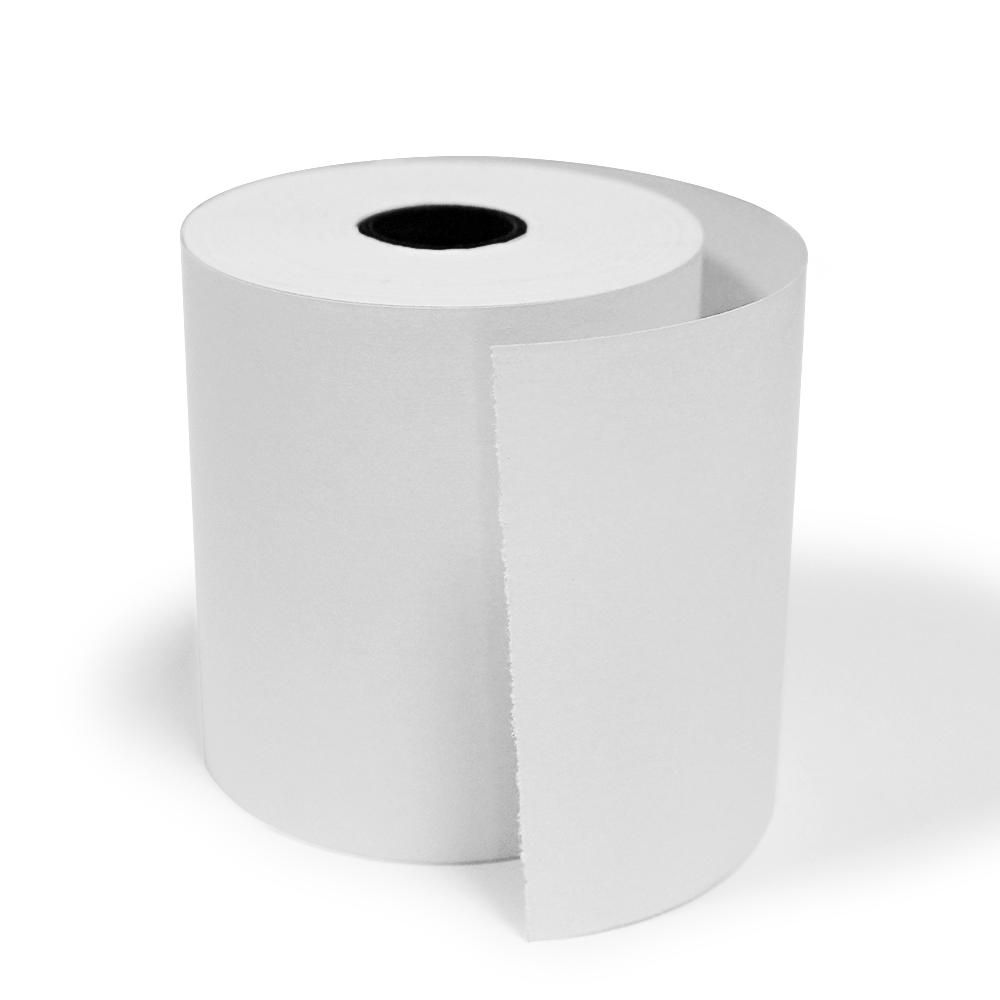
Supermarket hardware relies heavily on standardized dimensions. The most common format measures 80mm in width and 80mm in outer diameter. This specific size fits perfectly into standard full-size receipt printers from major hardware brands. The 80mm width provides ample space for detailed item descriptions, scannable barcodes, and store branding.
Using 80x80 thermal paper maximizes the linear footage available on a single roll. A standard roll of this size holds approximately 230 feet of 48gsm paper. This high capacity significantly reduces the frequency of roll changes. Cashiers can process hundreds of transactions before needing a replacement, keeping the checkout line moving steadily.
This standardization simplifies procurement and inventory management. You only need to stock one primary SKU for all standard checkout lanes. The 80x80 format balances physical size constraints with maximum operational uptime. It remains the undisputed baseline for high-volume grocery environments.
Not all retail hardware can accommodate an 80mm diameter roll. Many modern POS setups utilize compact printer housings to save counter space. These smaller printers require a reduced roll diameter to close properly. The 80mm width remains the same, but the outer diameter drops to 70mm.
This diameter reduction directly impacts the total receipt yield. A 70mm roll holds approximately 160 feet of paper, representing a significant reduction in linear footage compared to an 80mm roll. You must accept more frequent roll changes as a trade-off for the compact hardware footprint. Specific self-checkout kiosks and integrated scale-printers often mandate this smaller size.
Attempting to force an 80mm roll into a 70mm printer housing will cause immediate mechanical failure. The lid will not latch, the platen roller will not engage, and the paper will not feed. Procurement teams must audit their hardware specifications carefully. Selecting 80x70 thermal paper ensures perfect compatibility with these space-restricted systems.
Specialized self-checkout stations demand maximum uptime with minimal staff intervention. Standard 80x80 rolls deplete too quickly in these unattended environments. Hardware manufacturers design these kiosks to hold oversized rolls. These large-capacity rolls often measure 80mm in width but extend up to 180mm in diameter.
An 80x180mm roll holds thousands of feet of paper. This massive capacity allows a busy self-checkout terminal to operate for days without a paper change. ATM-style kiosks and automated ticketing machines utilize similar oversized formats. The internal printer mechanisms feature heavy-duty stepper motors to pull the extra weight of the massive roll without stalling.
Sourcing these oversized rolls requires specific attention to core strength. The core must support a heavy wall of paper without crushing or warping under its own weight. The winding tension must remain perfectly uniform from the core to the outer edge. Any tension inconsistency will cause the heavy roll to bind and jam the kiosk mechanism.
The paper roll core serves as the mechanical foundation for the entire printing process. Standard core sizes typically feature a 7/16-inch (11mm) or 1/2-inch (12.7mm) inner diameter. The printer spindle slides directly through this core. The roll must spin smoothly on the spindle to ensure consistent paper feeding at high speeds.
Incorrect core sizing causes severe operational issues. If the core diameter is too large, the roll will bounce and wobble erratically on the spindle during high-speed printing. This wobbling causes micro-tears in the paper web and leads to diagonal feeding. If the core diameter is too small, the roll will not fit onto the spindle at all.
Core material also matters. Most standard rolls use rigid cardboard cores. However, some specialized hardware requires plastic cores to prevent cardboard dust accumulation inside the printer housing. The core must maintain its structural integrity under the tight winding pressure of the manufacturing process. A crushed core renders the entire roll unusable.
Roll Size (Width x Diameter) | Typical Core Size (ID) | Estimated Length (48gsm) | Hardware Compatibility |
|---|---|---|---|
80x80mm | 7/16" or 1/2" | 230 feet | Full-size POS receipt printers |
80x70mm | 7/16" or 1/2" | 160 feet | Space-restricted printer housings |
80x180mm | 1" or larger | 1,500+ feet | Heavy-duty kiosk mechanisms |
Paper weight is measured in grams per square meter (GSM), while thickness is measured in caliper (mils). The baseline for supermarket receipt paper typically ranges from 48gsm (approx. 2.1 mils) to 55gsm (approx. 2.4 mils). This weight range provides the optimal balance between physical durability and roll capacity. Understanding GSM is critical for maximizing your hardware efficiency.
Thinner paper, such as 45gsm or 48gsm, provides more linear footage per roll. You get more receipts out of the same 80mm diameter. However, thinner paper is highly prone to curling after printing. It also tears easily when customers pull the receipt from the machine before the auto-cutter engages. Cashiers often struggle to hand a flimsy, curling receipt to a customer.
Thicker paper, around 55gsm to 60gsm, feels premium and resists curling. It tears cleanly and survives rough handling in shopping bags. The trade-off is reduced linear footage. A thicker paper takes up more physical space, meaning the roll holds less total length. You must change thicker rolls more frequently during busy shifts.
The thermal coating dictates the final print quality. This chemical layer reacts to the precise heat output of the printhead. High-quality coatings offer excellent thermal sensitivity. They activate quickly and completely at lower temperature settings. This produces sharp, high-contrast black text and highly readable barcodes that scan on the first attempt.
Low-quality coatings require higher heat settings to activate properly. Even with increased heat, the text often appears gray and pixelated. The chemical reaction remains unstable on the paper surface. This instability leads to immediate smudging when cashiers or customers handle the receipt with damp hands.
Smudge resistance relies on the chemical binder used in the coating formulation. A strong binder locks the activated dye firmly into the paper fibers. It prevents the image from transferring onto fingers or other surfaces. Testing sample rolls for smudge resistance is a mandatory step before committing to a bulk purchase.
Bisphenol A (BPA) is an industrial chemical traditionally used as a developer in thermal paper coatings. When the printhead applies heat, the BPA reacts with a leuco dye to create the black image. However, extensive handling of BPA-coated paper allows the chemical to absorb directly through human skin.
The regulatory landscape now heavily restricts BPA usage due to documented health concerns. Supermarket cashiers handle hundreds of receipts every single shift. This constant exposure creates significant liability and health risks. Transitioning to BPA-free receipt paper is a necessary step to protect your workforce and ensure regulatory compliance.
Manufacturers now utilize safer chemical alternatives. Bisphenol S (BPS) is a common replacement, though entirely phenol-free formulations offer the highest safety standard. Phenol-free paper utilizes urea-based developers that pose no known absorption risks. Auditing your supply chain for strict chemical compliance protects both your staff and your corporate reputation.
Thermal paper comes in two primary structural variations. Non-top-coated paper consists of a base paper layer and a thermal reactive layer. This is the standard formulation for everyday grocery receipts. It is cost-effective and performs perfectly for short-term transaction records. However, it offers zero resistance to environmental damage.
Top-coated paper adds a third protective chemical layer over the thermal coating. This clear barrier seals the reactive chemicals away from external elements. It provides robust resistance against moisture, cooking oils, and hand sanitizers. Top-coated paper also resists the plasticizers found in wallets and packaging tape.
Standard grocery checkouts rarely require the extra expense of top-coated paper. The receipt only needs to survive the trip from the store to the customer's home. However, hardware stores, pharmacies, and electronics retailers require top-coated paper. Their receipts serve as long-term warranties that must remain legible for several years.
Retailers utilize colored paper to streamline visual identification at the checkout. Standard white paper blends in easily. Colored paper immediately grabs the customer's attention. Stores often use specific colors to highlight seasonal promotions, clearance events, or specialized return policies.
Using colored thermal receipt paper requires no hardware modifications. The colored variants use the exact same heat-reactive chemical process as standard white paper. The base paper is simply dyed during the initial manufacturing stage. The thermal coating still activates to produce sharp black text against the colored background.
Security teams also rely on colored receipts to prevent fraud. Changing the receipt color daily or weekly stops shoplifters from reusing old receipts to steal merchandise. The door greeter can instantly verify a valid purchase just by glancing at the paper color. This simple visual cue significantly reduces inventory shrinkage.
Supermarkets utilize multiple types of thermal printing technology. Standard checkout lanes use continuous, non-adhesive receipt rolls. These rolls feed smoothly through the high-speed POS printer. The paper requires no backing liner and cuts cleanly after every transaction.
Deli counters, bakeries, and produce scales require adhesive-backed thermal labels. These labels feature a completely different physical structure. They include a thermal face stock, a layer of aggressive adhesive, and a silicone release liner. The scale printer peels the label away from the liner automatically.
Food environment labels demand strict top-coating requirements. The label must resist condensation from refrigerated display cases. It must withstand direct contact with raw meat juices and bakery oils. Standard receipt paper would dissolve instantly in these harsh conditions. You must source specialized top-coated labels for all food weighing stations.
The reverse side of a receipt roll offers valuable real estate for corporate messaging. Manufacturers can pre-print store policies, return guidelines, or promotional logos directly onto the non-thermal side of the paper. This pre-printing occurs on large flexographic presses before the paper is cut into individual rolls.
Pre-printing eliminates the need for cashiers to hand out separate policy flyers. It guarantees that every customer receives the necessary legal or promotional information. The ink used for pre-printing must be heat-resistant. Standard inks will melt and transfer onto the printhead during the POS printing process.
Security features also rely on pre-printing technology. Manufacturers can apply invisible UV inks or complex anti-fraud watermarks to the paper. These features prevent criminals from printing counterfeit receipts on generic white paper. Advanced security printing protects high-value retailers from sophisticated return fraud schemes.
Legacy retail systems once relied on dot-matrix or inkjet printers using regular bond paper. These systems required constant mechanical maintenance. A POS thermal paper roll eliminates the need for ink cartridges, toner, and fabric ribbons. The heat-reactive coating contains everything necessary to produce the image.
Thermal technology operates at significantly higher speeds than impact printing. A modern thermal printer outputs up to 300mm of paper per second. It prints complex barcodes and detailed graphics instantly. Regular paper printers struggle to match this throughput. They cause unacceptable delays during peak supermarket hours.
Maintenance requirements drop drastically with thermal technology. You only need to wipe the printhead occasionally with isopropyl alcohol to remove minor dust. There are no ink spills to clean and no ribbons to untangle. Thermal printing remains the undisputed standard for maximizing supermarket checkout efficiency.
Procurement teams must evaluate vendors based on strict manufacturing standards. You must ask detailed questions regarding coating uniformity and lint reduction processes. A reliable thermal paper manufacturer utilizes advanced vacuum systems during slitting. These systems remove microscopic paper dust before the roll is sealed.
Tension control during the winding process is equally critical. The manufacturer must use automated tensioning equipment. This ensures the paper is wrapped tightly and evenly around the core. Loose winding causes the roll to telescope and jam the printer. Demand proof of automated tension control for all bulk orders.
Request optical density test results from the manufacturer. These tests measure the darkness and contrast of the activated thermal coating. Consistent optical density ensures every roll performs identically in your stores. Reject any vendor that cannot provide documented quality assurance metrics.
High-volume supermarkets consume massive quantities of receipt paper annually. Buying directly from a manufacturer stabilizes your supply chain. It eliminates the unpredictable stock shortages associated with third-party distributors. Direct partnerships guarantee priority production during peak retail seasons.
Logistics planning requires careful attention to freight weights. Thermal paper is exceptionally heavy. A single pallet holds hundreds of pounds of paper. You must calculate shipping costs based on dense freight classifications. Consolidating orders into full truckloads significantly reduces the per-roll transportation expense.
Minimum order quantities (MOQs) dictate your purchasing strategy. Manufacturers require high MOQs to justify custom slitting and packaging runs. You must balance these high volume requirements against your available warehouse space. Establish a scheduled delivery contract to maintain consistent inventory levels without overwhelming your storage facilities.
Bulk thermal paper requires strict environmental controls during storage. The chemical coating remains highly reactive until it passes through the printer. Storing pallets in a hot warehouse will activate the coating prematurely. The entire batch of paper will turn gray or black, rendering it completely useless.
Thermal paper is hygroscopic, meaning it absorbs moisture from the air. Enforce strict humidity limits to prevent the paper from swelling. Swollen paper jams tightly inside the printer mechanism and refuses to feed. Maintain stable temperatures in your storage facilities, keeping the ambient temperature below 77°F (25°C).
UV protection is mandatory for long-term storage. Keep the paper sealed in its original dark plastic wrapping or corrugated cartons. Direct sunlight or intense fluorescent lighting degrades the chemical coating. Proper storage protocols protect your bulk investment and ensure the paper performs perfectly when deployed to the checkout lanes.
Environmental Factor | Safe Storage Limit | Risk of Non-Compliance |
|---|---|---|
Temperature | Below 77°F (25°C) | Premature activation (paper turns black) |
Relative Humidity | 45% to 65% | Paper swelling, edge binding, and printer jams |
Light Exposure | Dark storage only | Coating degradation and faded prints |
Audit your current POS printer specifications to confirm exact width and maximum diameter constraints before ordering.
Calculate your monthly linear footage requirements to determine optimal order volumes and pallet configurations.
Request physical sample rolls from shortlisted manufacturers to test core fit and winding tension.
Conduct in-store printhead scratch tests to verify thermal sensitivity and smudge resistance.
Verify the chemical safety data sheets to ensure strict compliance with BPA-free regulations before committing to a bulk contract for a supermarket thermal paper roll.
A: Perform a simple scratch test. Run your fingernail firmly across the surface of the paper. If it leaves a dark black mark caused by the friction heat, you are using thermal paper. Regular bond paper will only show a physical indentation without any color change.
A: Both share the exact same width of 80mm to fit standard receipt printers. The 80x70 roll has a smaller overall outer diameter of 70mm. This means it holds less linear footage of paper but fits perfectly into more compact, space-restricted printer housings.
A: Supermarket cashiers handle hundreds of receipts per shift. BPA-free paper eliminates their physical exposure to Bisphenol A. This chemical is linked to serious health concerns and absorbs through the skin. Removing it ensures compliance with modern workplace safety regulations and protects staff.
A: Standard non-top-coated thermal receipts last 1 to 3 years if stored properly in a cool, dark place. Top-coated variants feature a protective chemical barrier. These premium receipts can last 7 to 10 years by actively resisting degradation from UV light, oils, and moisture.
A: Yes. Colored thermal paper utilizes the exact same heat-reactive chemical coating as standard white paper. It is fully compatible with standard thermal printheads. You do not need to adjust any hardware settings or change printers to use colored rolls.
A: Jams are typically caused by moisture exposure that makes the paper swell. High lint buildup in the printer mechanism also restricts movement. Uneven winding tension from the manufacturer causes diagonal feeding. Using a roll with an incorrect core size creates wobbling that triggers sensor errors.


