


Views: 0 Author: Site Editor Publish Time: 2026-09-22 Origin: Site


Incorrect thermal paper selection causes immediate operational friction. Faded compliance records disrupt audits. Unscannable barcodes slow down logistics. Unreadable kitchen tickets delay orders. Premature printhead failure halts checkout lines entirely. These issues stem from a fundamental mismatch between paper specifications and environmental demands.
Procurement teams must balance upfront consumable specifications against severe operational risks. Data loss, hardware wear, and compliance failures plague demanding environments. Choosing the wrong roll degrades system efficiency. It forces staff to reprint documents constantly. It also accelerates hardware degradation over time.
This technical decision guide evaluates top-coated vs standard thermal paper. We focus on environmental resilience, barcode scannability, and regulatory compliance. You will learn how to audit your current stock. We explore the chemical differences dictating performance. You will discover how to align paper specifications directly with your operational environment.
Standard thermal paper relies on a specific chemical reaction rather than traditional ink. It serves as the foundation for most receipt printing worldwide. Understanding its physical structure reveals both its utility and its vulnerabilities in the field.
The architecture of standard thermal paper features a three-tier structural matrix. The bottom layer is the base paper. This provides mechanical integrity and determines the overall caliper of the roll. A pre-coat layer, often formulated from calcined clay or synthetic pigments, sits above the base. This layer smooths the surface and prevents melted chemicals from sinking into the porous base paper during printing.
The top layer contains the active thermal coating. This layer houses a precise mixture of leuco dyes, chemical developers, and sensitizers. The printer's ceramic thermal head applies targeted heat to this surface. The heat melts the sensitizer, typically at temperatures between 70°C and 90°C. This allows the dye and developer to mix. The resulting chemical reaction instantly produces a high-contrast black image. No ink ribbons, toner cartridges, or external pigments are necessary.
A standard thermal paper roll prioritizes maximum length over extreme durability. Manufacturers typically produce these rolls in weights ranging from 48gsm to 55gsm. The caliper usually measures between 55 and 60 microns. A lower GSM indicates thinner paper.
Thinner paper allows manufacturers to wind more footage onto a single core. A standard 80mm diameter roll can hold up to 80 meters of this thin paper. This maximizes the total print yield per roll. Staff spend less time changing empty rolls during busy shifts. The thin profile feeds smoothly through standard point-of-sale internal mechanisms without jamming.
Standard variants perform reliably only inside controlled, predictable environments. They require climate-controlled spaces. Ambient temperatures should remain moderate. Humidity levels must stay low. The paper must remain completely dry during handling, transit, and storage.
These rolls suit applications requiring short-term data retention. Standard grocery receipts represent the most common use case. ATM receipts and temporary parking tickets also utilize this paper. Customers typically discard these items shortly after the transaction. Long-term archival is rarely necessary for these specific documents.
Standard thermal paper possesses significant chemical vulnerabilities. The active thermal layer remains entirely exposed to the environment. UV light degrades the image rapidly. Leaving a standard receipt on a car dashboard under direct sunlight erases the print within hours. Ambient moisture causes the paper matrix to curl and the image to fade.
Friction triggers the chemical reaction prematurely. Scratching the surface with a fingernail leaves dark marks. Adhesives from standard packaging tape destroy the printed text within days. Plasticizers present the highest risk. These chemicals exist in vinyl wallets, PVC folders, and synthetic fabrics. Contact with plasticizers causes the leuco dye to revert to its colorless state. The data disappears completely, leaving a blank strip of paper.
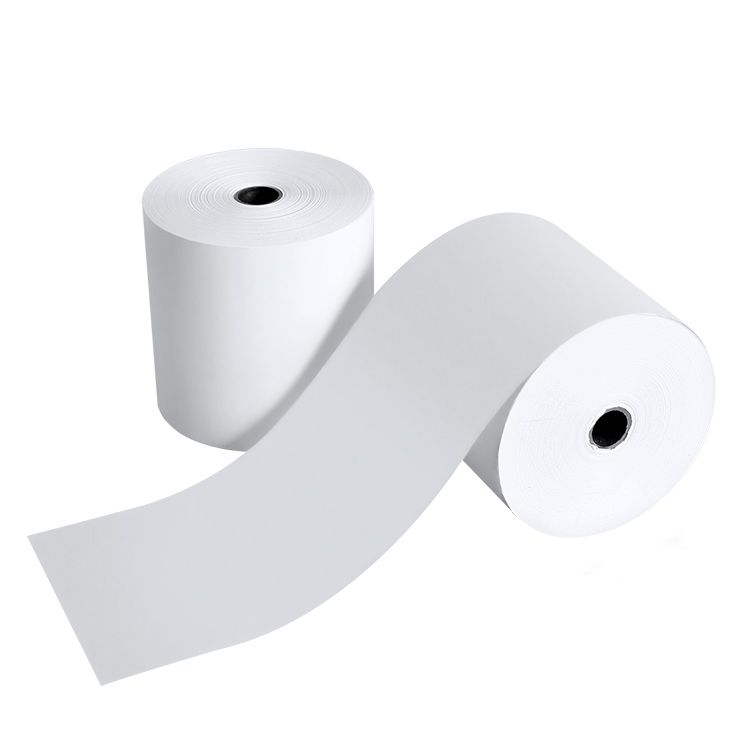
Demanding environments destroy standard thermal paper quickly. Engineers developed top-coated variants to solve this exact problem. This specialized paper adds a critical layer of defense against harsh external elements, transforming a fragile medium into a highly resilient data carrier.
Top-coated paper modifies the standard three-layer architecture. Manufacturers apply an additional protective chemical layer directly over the active thermal coating. This top coat consists of highly cross-linked polymers. It acts as a transparent, impermeable shield.
This shield locks the thermal image beneath it. It prevents external chemicals from reaching the sensitive dye layer. Some extreme applications also require a "back-coat". This protects the underside of the paper from absorbing contaminants like adhesives or plasticizers migrating from underlying surfaces. The combination creates a highly resilient print medium capable of surviving industrial conditions.
The top coat provides quantifiable protection against severe environmental stressors. It blocks cooking oils and animal fats completely. It resists common hand sanitizers, lotions, and isopropyl alcohol. Industrial cleaning solvents cannot penetrate the barrier easily.
The coating also elevates the paper's thermal threshold. It withstands higher ambient temperatures before the background begins darkening prematurely. This resistance proves essential in environments where chemical exposure happens daily. The image remains legible even after direct contact with harsh substances.
Moisture destroys standard thermal coatings by breaking down the chemical bonds. The top coat solves this by creating a functional moisture barrier. True waterproof thermal paper relies entirely on this advanced polymer layer. Water beads up on the surface instead of soaking into the matrix.
This prevents moisture from triggering unintended chemical reactions. The paper matrix retains its structural integrity when wet. The printed image will not bleed, smudge, or wash away. Staff can handle the tickets with wet gloves without destroying the data.
Certain industries mandate top-coated paper for operational continuity. Commercial kitchens represent a primary example. Kitchen order tickets face constant exposure to grease, steam, and heat from deep fryers. Standard paper fails here immediately.
Medical laboratories require top-coated labels for specimen tracking. Alcohol spills and cold storage environments demand high resilience. Cold-chain logistics rely on this paper to survive condensation. When pallets move from -20°C freezers to humid loading docks, condensation forms instantly. Top-coated paper survives this transition. Long-term archival records also necessitate top-coating to meet strict legal retention requirements.
| Layer | Standard Paper Function | Top-Coated Paper Function |
|---|---|---|
| Base Paper | Provides mechanical foundation and thickness. | Provides mechanical foundation and thickness. |
| Pre-Coat | Smooths surface, prevents dye absorption. | Smooths surface, prevents dye absorption. |
| Thermal Layer | Houses leuco dye, developer, and sensitizer. | Houses leuco dye, developer, and sensitizer. |
| Top Coat | None (Layer does not exist). | Cross-linked polymer shield blocking moisture/chemicals. |
| Back Coat | None (Layer does not exist). | Optional barrier blocking plasticizer migration from below. |
Choosing between these two variants requires a structured evaluation. Procurement teams must analyze specific performance metrics. We break down the core dimensions dictating this technical decision.
Data retention requirements dictate paper selection heavily. Standard thermal paper offers a short readable lifespan. Images typically remain legible for six to eighteen months. This assumes ideal storage conditions.
Top-coated variants deliver exceptional archival quality. The protective layer extends image longevity to seven, ten, or even fifteen years. You must follow strict storage best practices to achieve these lifespans. Maintain stable room temperatures below 25°C. Keep relative humidity below 50 percent. Strictly avoid contact with PVC plastics and direct sunlight.
Faded receipts carry severe legal and compliance implications. Tax audits require legible documentation. Medical records must remain readable for decades. Warranty claims fail if the proof of purchase fades to blank paper. Top-coated paper mitigates these compliance risks entirely.
Print clarity impacts operational speed directly. The top coat prevents thermal bleed during the printing process. The heat transfers precisely through the protective layer without allowing the melted dye to spread laterally. This results in exceptionally crisp edges for printed text.
This edge definition proves critical for high-density 2D barcodes and QR codes. Standard paper sometimes allows the image to spread slightly. This blurring confuses optical scanners. top-coated thermal paper renders sharp, high-contrast barcodes consistently.
Scannability impacts warehouse logistics heavily. A failed scan at a loading dock requires manual data entry. This slows down sorting lines. Point-of-sale efficiency also drops when cashiers struggle to scan faded return receipts. High-quality rendering eliminates these bottlenecks.
Thermal printers represent a significant hardware investment. The ceramic printhead is the most critical component. Friction coefficients differ significantly between standard and top-coated paper. Standard paper often features a rougher surface profile.
Standard rolls shed microscopic calcium carbonate dust from the pre-coat during operation. This dust accumulates on the printhead. It insulates the heating elements. The printer must work harder to transfer heat. This causes hot spots and accelerates hardware burnout.
Top-coated paper features a highly calendered, smooth surface. It acts as a protective barrier against abrasion. It reduces paper dust generation drastically. Chemical residue buildup drops. This extends the lifespan of the printhead. Hardware replacement frequency decreases, saving maintenance labor.
The additional polymer layer changes the physical dimensions of the paper. Top-coated paper is generally thicker. It typically measures 70gsm to 80gsm. The caliper ranges from 75 to 90 microns. This increased thickness impacts roll yield directly.
A standard diameter roll holds fewer meters of top-coated paper. The thicker profile takes up more space on the core. An 80mm roll might only hold 50 to 60 meters. Staff must perform roll changes more frequently. You must factor this increased handling time into your operational workflows.
Procurement often focuses solely on the initial consumable specifications. However, evaluating long-term operational efficiency reveals a different reality. Standard paper generates hidden labor burdens in demanding environments.
Staff waste time reprinting unreadable kitchen tickets. Faded barcodes cause inventory tracking errors. Excessive paper dust leads to premature printhead failure, taking terminals offline. Lost compliance data triggers audit penalties. Upgrading to top-coated paper eliminates these operational disruptions, keeping hardware online and staff focused on core tasks.
| Environmental Stressor | Standard Paper Reaction | Top-Coated Paper Reaction |
|---|---|---|
| Ambient Moisture | Paper curls, image fades rapidly. | Maintains structural integrity, image remains sharp. |
| Direct Water Contact | Matrix disintegrates, data washes away. | Water beads on surface, data remains legible. |
| Cooking Oils/Grease | Immediate image degradation and smudging. | Complete resistance, no image loss. |
| Plasticizers (PVC) | Dye reverts to colorless state, data lost. | Polymer shield blocks chemical migration. |
| Alcohol/Solvents | Image dissolves instantly. | High resistance, image remains intact. |
Transitioning paper types requires practical validation. You must match hardware specifications accurately. You must also audit your current stock and address chemical safety regulations.
Hardware compatibility dictates roll dimensions. You must match paper specifications to your specific printer models. The ubiquitous 80x80 thermal paper roll serves as the global baseline. This format dominates Point of Sale (POS) systems across retail and hospitality.
The "80x80" designation refers to the physical dimensions. The paper measures 80 millimeters in width. The roll measures 80 millimeters in outer diameter. The inner core typically measures 12 millimeters. Both standard and top-coated variants are widely available in this exact size. Standardizing on this dimension simplifies procurement across diverse hardware fleets.
Procurement teams often inherit unknown paper stock. You must test your current inventory to determine its classification. Field testing requires no specialized laboratory equipment. You can perform two simple tests immediately.
Execute the coin scratch test using these steps:
Execute the solvent test using these steps:
Chemical safety represents a critical procurement baseline. Historically, manufacturers used Bisphenol A (BPA) as the primary developer in the thermal layer. Regulatory bodies worldwide recognized BPA as an endocrine disruptor. This triggered a massive shift in manufacturing protocols.
The industry initially transitioned to Bisphenol S (BPS). However, BPS presents similar environmental and health concerns. Modern regulations push toward fully phenol-free options. These formulations utilize safer chemical developers like Pergafast 201 or Vitamin C (ascorbic acid).
Both standard and top-coated options are now available in safe formulations. You must verify these claims actively. Request compliance certificates from your manufacturer. Sourcing certified BPA-free thermal paper protects your cashiers, your customers, and your corporate reputation.
Paper specifications only matter if the manufacturer executes them flawlessly. Vendor selection impacts product consistency directly. You must evaluate potential partners rigorously.
Manufacturing thermal paper requires high precision. Look for suppliers holding active ISO 9001 certifications. These indicate standardized quality management systems. Consistent coating thickness is paramount. Uneven top-coating leaves vulnerable patches on the roll.
Evaluate their slitting and rewinding processes. Inferior crush slitting blades press the paper against a hard anvil. This generates excessive paper dust. Dust ruins thermal printheads rapidly. A premium supplier utilizes shear slitting technology. This uses two rotary blades cutting like scissors. It produces clean, dust-free edges that protect your hardware.
Many enterprises require pre-printed rolls. You might need company logos, return policies, or security watermarks printed on the reverse side. The top-coating changes how the paper interacts with traditional printing inks.
Standard water-based flexographic inks struggle to adhere to the polymer top coat. They smudge or offset onto the thermal layer. A specialized thermal paper supplier understands these chemical interactions. They utilize specific UV-cured inks designed for coated surfaces. This ensures your branding remains crisp without compromising the thermal functionality.
Enterprise operations consume vast quantities of paper daily. A stockout halts point-of-sale operations entirely. Evaluate a vendor based on inventory consistency. Ask about their raw material sourcing networks. Ensure they do not rely on a single base paper mill.
Assess their standard lead times. Determine their ability to scale production during peak retail seasons. A reliable partner maintains strategic buffer stock. They absorb supply chain shocks without passing delays onto your operations.
Never deploy a new paper specification blindly across an entire enterprise. You must mitigate implementation risks through controlled testing. Run a targeted pilot program first.
Select five high-volume locations. Deploy the new top-coated rolls on specific POS terminals. Monitor the results for 14 days. Verify barcode scannability with your existing optical scanners. Check for any unexpected hardware jams. Inspect the printheads for debris buildup. Gather feedback from frontline staff before authorizing a global rollout.
A: Perform a simple solvent test. Place a drop of hand sanitizer or rubbing alcohol on a printed section of the paper. Standard thermal paper will turn black or the image will bleed and fade almost instantly. Top-coated thermal paper will repel the liquid, and the printed image will remain sharp and legible.
A: Yes. The waterproof capability comes directly from the specialized polymer top coat applied during manufacturing. This layer creates an impermeable barrier. It prevents water and moisture from reaching the sensitive chemical thermal layer beneath, ensuring the paper matrix remains intact and the image does not wash away.
A: Yes. Top-coated paper features a smoother, highly calendered surface. This reduces the friction coefficient against the thermal printhead. It also generates significantly less paper dust during the printing process. Less abrasive dust and lower chemical residue buildup prevent the heating elements from burning out prematurely.
A: No. The "80x80" designation only refers to the physical dimensions of the roll (80mm wide by 80mm in diameter). Manufacturers produce both standard and top-coated thermal paper in this ubiquitous size. You must specify the chemical coating requirement explicitly when ordering from your supplier.
A: Under ideal storage conditions, standard thermal paper retains a legible image for roughly six to eighteen months. Top-coated thermal paper is designed for archival purposes. It can retain a crisp, readable image for seven to ten years, provided it is kept away from extreme heat, UV light, and PVC plastics.
A: Yes. The polymer top coat prevents the melted thermal dye from spreading laterally during the printing process. This eliminates thermal bleed, resulting in exceptionally crisp edges. High-contrast, sharp edges are critical for optical scanners to read high-density 2D barcodes and QR codes accurately without manual data entry.


