


Views: 0 Author: Site Editor Publish Time: 2026-09-22 Origin: Site


Shipping labels represent a mission-critical operational asset for high-volume fulfillment centers. A mere 1% failure rate translates directly to severe revenue loss at scale. Mis-scans, printer jams, and adhesive degradation bottleneck your entire dispatch process. When thousands of packages leave a facility daily, even minor label defects compound into massive logistical failures. Procuring substandard materials introduces hidden operational penalties across your workflow. You risk premature printhead wear, carrier chargebacks for unreadable barcodes, and extensive warehouse downtime. Constant reloading and hardware troubleshooting drain valuable labor hours during peak fulfillment windows. Every delayed scan impacts customer satisfaction and carrier performance metrics. This guide provides a technical evaluation framework for operations managers and logistics directors to assess material quality, form factors, and vendor reliability before committing to high-volume procurement.
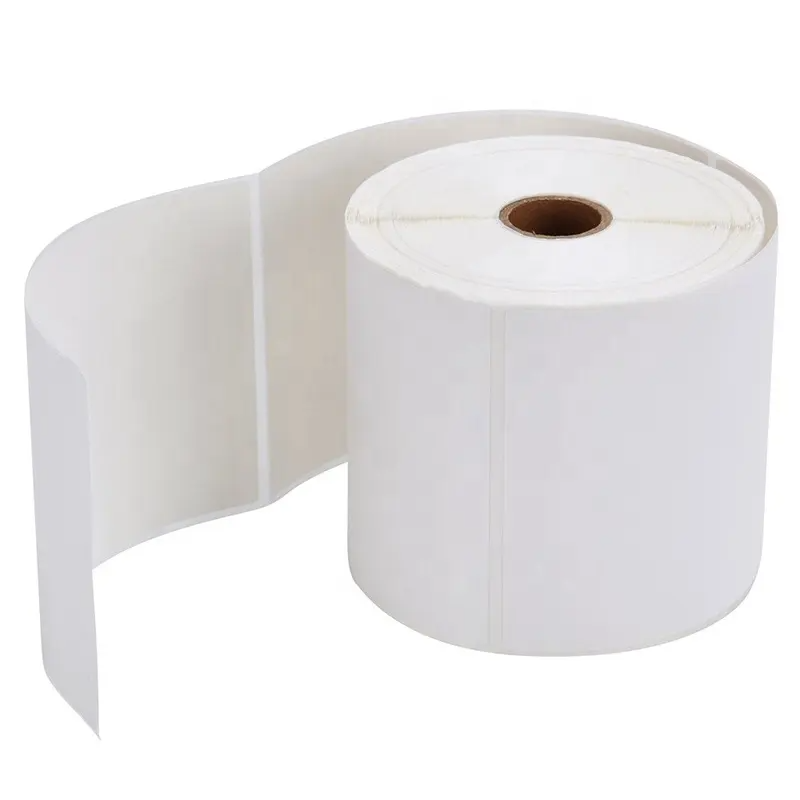
Automated optical character recognition systems at carrier hubs require standardized dimensions to function at high speeds. The 4x6 thermal labels format perfectly fits exact barcode and routing data requirements. Major carriers mandate this specific size for seamless automated sorting. Their conveyor systems scan packages moving at velocities exceeding 600 feet per minute. Any deviation from standard label dimensions causes immediate rejection from the automated sorting line. Rejected packages require manual sorting. Manual sorting delays delivery times significantly and often triggers carrier chargebacks for non-compliance.
International shipping relies heavily on precise metric conversions for cross-border logistics. The standard 100x150mm thermal labels serve as the exact metric equivalent used throughout Europe and Asia. They offer 1:1 hardware compatibility with standard 4-inch thermal printers globally. You do not need to purchase different hardware when expanding fulfillment operations internationally. The printheads align perfectly with both imperial and metric formats, ensuring consistent print quality regardless of the facility's location.
This size provides optimal information density for complex routing requirements. You gain ample spatial real estate for primary tracking barcodes, secondary QR codes, and detailed return addresses. Hazmat indicators and special handling instructions fit easily without compromising primary scan readability. A smaller label forces you to shrink barcodes. Shrinking barcodes immediately reduces the quiet zone around the barcode. The quiet zone is the blank space required by scanners to identify where a barcode begins and ends. Reducing this space increases the rate of failed scans at carrier terminals. Carriers utilize complex formats like MaxiCode and Code 128. These formats demand specific physical dimensions to remain legible under infrared scanners.
Facilities standardizing on a single consumable streamline their entire procurement process. These labels double as standard markers for internal pallet routing and warehouse bin locations. Large-format product identification becomes highly efficient when using the same media. You eliminate the need to stock multiple label sizes for different warehouse zones. This standardization simplifies inventory management for your procurement team and reduces the number of SKUs you must track.
The 4x6 standard guarantees absolute plug-and-play hardware compatibility. Industrial printers and popular desktop thermal printers accept these dimensions universally. You avoid hardware vendor lock-in entirely. If a specific printer brand fails, you can swap it with a competitor's model without changing your label inventory. This flexibility keeps your dispatch lines running during unexpected hardware failures.
| Carrier | Standard Label Size | Primary Barcode Format | Routing Code Requirement |
|---|---|---|---|
| UPS | 4x6 inches | MaxiCode & Code 128 | High-contrast alphanumeric |
| FedEx | 4x6 inches | PDF417 & Code 128 | Astra label routing code |
| USPS | 4x6 inches | Intelligent Mail Package Barcode (IMpb) | Zone routing indicator |
| DHL | 100x150mm | Code 39 & Code 128 | Global routing matrix |
Direct thermal technology relies entirely on heat-sensitive paper. The printhead applies targeted heat directly to the substrate to create high-contrast black images. No ribbon, ink, or toner is required. The paper itself contains specialized leuco dyes and developers. These chemicals react instantly to the microscopic heating elements within the printhead, typically activating between 158°F and 212°F. Thermal transfer technology operates differently. It melts a resin or wax ribbon onto the label surface to create the image, requiring complex internal ribbon spools.
Fast-moving fulfillment centers overwhelmingly prefer direct thermal shipping labels for daily outbound packages. Lower consumable complexity drives this operational choice. You experience significantly faster loading times because staff never have to thread delicate ribbons through printer mechanisms. This results in a much lower cost per print and higher daily throughput per packing station. Eliminating ribbons also reduces the physical waste generated by your packing stations, simplifying trash removal on the floor.
Direct thermal materials do possess specific environmental limitations. The chemical coating remains sensitive to extreme external factors. Prolonged exposure to UV light causes severe fading over time. Extreme heat or chemical solvents degrade the chemical coating rapidly. Applying standard clear packing tape directly over a direct thermal barcode often causes a chemical reaction. The adhesive in the tape can erase the printed image completely within hours, rendering the package untrackable.
Despite these limitations, transit shelf-life remains highly predictable and sufficient. These labels typically maintain perfect readability for six to nine months under normal conditions. This duration easily covers standard transit times, temporary warehouse storage, and typical return windows. Thermal transfer is simply overkill for packages that only need to survive a two-week journey. The operational speed of direct thermal far outweighs its environmental sensitivities for standard logistics.
To verify the durability of your direct thermal stock on the warehouse floor, implement this rapid testing protocol:
Warehouse footprint and daily shipping volume dictate your ideal form factor. Choosing the wrong configuration bottlenecks your packing stations. You must evaluate the physical layout of your dispatch area before ordering.
Fanfold thermal labels offer massive capacity per stack. You often get 2,000 or more labels per bundle. This drastically reduces frequent reloading interruptions during peak shifts. Inventory levels remain highly visible to packing staff, allowing them to anticipate when a new stack is needed. High-volume stations benefit immensely from this uninterrupted workflow, keeping packers focused on sealing boxes rather than servicing printers.
They feed seamlessly through the rear slot of most desktop printers. Auto-detection mechanisms pull and align the paper without requiring the operator to open the printer chassis. However, they require dedicated external desk space or specialized under-desk mounts. Improper alignment between the stack and the printer causes drag against the feed slot. This drag leads to skewed printing, barcode distortion, and potential paper jams.
Roll labels remain entirely self-contained within the printer chassis. The plastic casing protects the unprinted labels from ambient warehouse dust and debris. They are highly portable, making them ideal for mobile packing stations or warehouse carts. Desktop printers usually accept rolls with a 1-inch core, while industrial printers require a 3-inch core to accommodate larger outer diameters.
Rolls suffer from severely limited capacity. You typically get 250 to 500 labels per roll depending on the inner core size. Packing staff must intervene frequently to swap empty cores. This halts the packing line momentarily. During peak seasons, these minor interruptions accumulate into significant lost labor hours across dozens of packing stations.
| Feature | Fanfold Labels | Roll Labels |
|---|---|---|
| Capacity | 2,000+ per stack | 250-500 per roll |
| Reload Frequency | Very Low (Ideal for peak volume) | High (Requires frequent swaps) |
| Space Requirement | External desk space or mounts needed | Self-contained inside printer |
| Environmental Protection | Exposed to ambient warehouse dust | Protected inside printer chassis |
| Best Use Case | High-volume fixed packing stations | Mobile carts or low-volume stations |
Adhesive chemistry determines package security during rough transit. Standard acrylic adhesives work exceptionally well for basic corrugated cardboard boxes. They provide reliable adhesion for standard dry environments and offer excellent shear strength. Hot-melt rubber adhesives provide superior initial tack. This makes them mandatory for recycled poly mailers and highly textured surfaces where acrylic might peel. Cold-storage environments require specialized freezer-grade formulations. Standard adhesives crystallize and fail in sub-zero temperatures, causing labels to fall off entirely during refrigerated transit.
Paper quality directly impacts hardware longevity and maintenance schedules. Top-coated thermal paper features a protective layer that resists moisture, oil, and scratches effectively. This barrier protects the chemical layer from smudging during transit. Uncoated thermal paper lacks this barrier. It generates excessive micro-dust during the high-speed printing process. This abrasive dust accumulates directly on the thermal printhead elements and the platen roller.
This dust accumulation causes rapid degradation of the heating elements. You will face expensive hardware repairs and replacement costs if you rely on low-quality uncoated stock. The money saved on cheap paper is quickly lost to hardware maintenance. Clean micro-perforations between labels ensure rapid tear-off for packers. Ragged or incomplete perforations slow down packing lines. They cause accidental label tearing, forcing workers to reprint labels and waste material.
The glassine release liner must maintain strict opacity and thickness standards, typically around 60 to 70 microns. High-quality liners prevent sensor misfeeds entirely. Cheap, overly transparent liners confuse printer gap sensors. This causes skipped labels, continuous feeding errors, and wasted material. Reliable e-commerce shipping labels always utilize premium glassine liners engineered for precise optical detection. The liner must also feature a consistent silicone coating to ensure smooth release without tearing the adhesive.
| Adhesive Type | Primary Characteristic | Ideal Packaging Substrate | Temperature Tolerance |
|---|---|---|---|
| Standard Acrylic | High shear strength, UV resistant | New corrugated cardboard | Standard ambient (40°F to 120°F) |
| Hot-Melt Rubber | Aggressive initial tack | Recycled poly mailers, textured boxes | Standard ambient (40°F to 100°F) |
| Freezer-Grade | Resists crystallization | Cold-chain packaging, wax-coated boxes | Sub-zero (-20°F to 40°F) |
Visual routing accelerates warehouse sorting operations significantly. Colored 4x6 thermal labels provide instant visual cues for floor workers and forklift drivers. You can designate specific colors for Next Day Air versus standard ground shipping. This allows dock workers to prioritize pallets from a distance without scanning every individual package. Red labels might indicate fragile items, while yellow indicates heavy team-lift packages.
Inventory categorization benefits heavily from strategic color coding. Different colored headers or borders separate product categories instantly. Quality assurance teams use specific colors to mark items that require secondary inspection before dispatch. This visual system reduces cognitive load on warehouse staff, leading to fewer sorting errors during high-stress shifts.
You must manage critical technical trade-offs when implementing color. Contrast ratio degradation poses a severe operational risk. Dark background colors interfere directly with infrared barcode scanners used by major carriers. Scanners fail to differentiate between the black thermal print and a dark red or dark blue background. If the scanner cannot read the contrast, the package is rejected.
Always maintain high-contrast white zones for primary tracking numbers and routing barcodes. Restrict vibrant colors to the outer borders or specific header sections. This ensures 100% scan compliance at carrier facilities while retaining all the visual routing benefits for your internal warehouse staff. Testing the contrast ratio with your own handheld scanners before deployment is highly recommended.
Consistent adhesive application and uniform paper thickness are mandatory requirements. You must audit your supplier across multiple production runs to ensure quality remains stable. Variance in paper thickness causes constant printer jams and requires continuous recalibration of hardware sensors. Poor die-cutting leaves adhesive residue on the liner edges, which gums up printer rollers over time and causes labels to wrap around the platen roller.
Leverage high-volume commitments to negotiate premium materials. Direct-to-manufacturer relationships always beat third-party distributors for scaling operations. A reliable thermal label manufacturer provides factory-direct consistency and eliminates distributor markups. They offer direct communication lines for technical troubleshooting. You gain access to their engineering teams for specialized material requests.
Evaluate supply chain resilience carefully before signing long-term agreements. Assess the manufacturer's production lead times and domestic warehousing capabilities. Verify their raw material sourcing networks to ensure they are not reliant on a single paper mill. This due diligence mitigates catastrophic stockouts during peak fulfillment seasons like Black Friday and Cyber Monday. A supplier with multiple production facilities offers better risk mitigation.
Assess customization capabilities for unique logistical environments. You may require pre-printed company branding, custom core sizes for specialized industrial printers, or specific adhesive formulations for unique packaging substrates. Ensure the factory operates the necessary machinery to accommodate these technical requests. They should be able to provide these customizations without demanding unreasonable minimum order quantities.
Printers frequently fail to detect the gap between labels when switching brands. This auto-feed error wastes blank labels and halts packing lines immediately. Different manufacturers use varying liner opacities, which confuses the optical sensors inside the printer. This is the most common technical hurdle when onboarding a new label supplier.
Implement a strict standard operating procedure for physical loading. Feed the paper precisely from the back slot. Allow the printer to auto-detect the material. The machine should pull the paper back and align the first edge perfectly with the tear bar. Perform manual gap sensor calibration whenever you introduce a new batch of labels to the floor. This usually involves holding down the feed button until the printer flashes and runs a calibration sequence.
Define strict warehouse storage protocols to protect your consumable investment. Thermal chemistry activates prematurely under poor environmental conditions. Store all label inventory in climate-controlled environments, ideally between 68°F and 77°F with 45% to 60% relative humidity. Keep boxes elevated off concrete floors to prevent moisture absorption. Keep them away from direct sunlight, skylights, and industrial heat sources. High humidity causes the paper to curl, leading to severe printer jams.
Implement a First-In, First-Out inventory management system. This ensures older stock is utilized before the chemical coating degrades. Never sign an enterprise procurement contract without structured floor testing. Recommend a comprehensive pilot test run for your busiest packing floor. Distribute test rolls to multiple stations. Monitor closely for adhesive failure on your specific poly mailers, track carrier scan rates, and log any printer jams.
A: They are the exact metric equivalent. 100x150mm translates to roughly 3.94 by 5.91 inches. This slight fractional difference does not affect printing alignment. They offer universal compatibility with all standard 4x6 printers and major carrier automated sorting systems globally.
A: No ribbon is required. Direct thermal technology utilizes heat-sensitive paper. The printer's thermal head applies heat directly to the label surface, causing a chemical reaction that turns the paper black. You never need to purchase ink, toner, or thermal ribbons.
A: Faded prints usually stem from dirty printheads or incorrect printer settings. Clean the thermal printhead using isopropyl alcohol wipes. Adjust the heat or darkness settings within your printer driver. Degraded thermal paper stored in hot environments also causes extremely faint printing.
A: Yes. Most desktop thermal printers feature a rear feed slot specifically for fanfold stacks. Feed the first label through this back slot. The printer will utilize its auto-feed and pull-back calibration feature to align the paper perfectly without opening the lid.
A: Direct thermal labels typically remain readable for 6 to 12 months. This depends heavily on storage conditions. Prolonged exposure to direct sunlight, extreme warehouse heat, or chemical solvents will accelerate fading. Store them in a cool, dark environment to maximize shelf life.


