


Views: 0 Author: Site Editor Publish Time: 2026-11-25 Origin: Site


Procurement of consumable POS supplies rarely gets attention until a failure happens. Premature printhead degradation, illegible receipts, or supply chain bottlenecks leave retail operations stranded. Purchasing thermal paper at scale requires balancing bulk volume discounts against strict hardware compatibility, chemical compliance, and the physical degradation risks of thermal coatings during long-term storage. Substituting incorrect roll dimensions or ignoring environmental vulnerabilities quickly erases any savings achieved through bulk purchasing.
This guide provides a technical evaluation framework for standardizing procurement, verifying dimensional tolerances, calculating true yield, and vetting a reliable supply chain partner. By understanding the exact specifications required for your hardware and establishing strict inventory controls, operations managers can confidently source Wholesale Thermal Paper Rolls without risking hardware damage or operational downtime.
Dimensional Accuracy is Non-Negotiable: Hardware compatibility relies on three precise measurements (Width x Outer Diameter x Core Size); substituting close approximations leads to printer jams and voided hardware warranties.
Yield Trumps Roll Count: Evaluating wholesale orders strictly by "rolls per carton" obscures the true cost; buyers must calculate total linear footage and paper thickness (GSM) to determine actual value.
Chemical Compliance is a Liability Vector: Transitioning to BPA-free or Phenol-free paper is increasingly required by regional regulations and corporate ESG mandates.
Storage Dictates Order Volume: Because thermal coatings react to heat, UV light, and humidity, bulk purchasing strategies must align with climate-controlled warehousing capabilities, accurate burn-rate calculations, and strict First-In, First-Out (FIFO) inventory rotation.
Hardware compatibility begins with precise dimensional matching. Standard measurement formats dictate three specific numbers: Width, Outer Diameter, and Core Size. Width determines whether the paper fits into the printer tray without binding against the side walls. Outer diameter dictates whether the printer lid can close securely over the media. Core size ensures the roll spins smoothly on the printer spindle without causing excessive tension on the feed motor.
High-volume operations rely heavily on two primary standards. The first is 80x80 Thermal Paper Rolls, commonly sold as 3 1/8" in the United States. These rolls serve as the backbone for standard POS receipt printers found in supermarkets, restaurants, and large retail environments. The second standard involves 57x40 Thermal Paper Rolls, frequently marketed as 2 1/4". This narrower format is engineered specifically for credit card terminals, mobile Bluetooth printers, and handheld point-of-sale devices where compact form factors are mandatory.
Core variations also play a direct role in hardware performance and waste management. You will encounter three main types in the field:
Solid Plastic Cores: Provide rigid support for high-speed printing environments, ensuring the roll does not collapse under the tension of rapid feed mechanisms.
Honeycomb Cardboard Cores: Offer a lightweight alternative that reduces shipping weight. However, they can deform under heavy tension or in high-humidity environments, causing the roll to wobble during printing.
Coreless Rolls: Eliminate the plastic or cardboard center entirely. This maximizes the linear footage within the same outer diameter while reducing end-of-roll environmental waste. Coreless media requires specific printer models designed to handle center-less feeding.
Procurement teams must distinguish between continuous thermal receipt paper and direct thermal shipping labels. Continuous receipt rolls consist of a single substrate coated with a heat-sensitive chemical layer containing leuco dyes. They feed through cash registers and are cut dynamically by the printer's auto-cutter mechanism. The printhead applies targeted heat, causing the dye to change color and form text or barcodes.
Direct thermal shipping labels feature a complex multi-layer construction. They include the thermal topcoat, an adhesive backing, and a silicone-coated release liner. Label printers require specialized optical sensors to detect the gaps between individual labels to align the print correctly. Feeding adhesive-backed labels through a standard POS receipt printer will immediately foul the printhead. The adhesive melts under the heat of the printhead, jamming the cutting mechanism and requiring a complete hardware replacement.
Paper thickness is measured in Grams per Square Meter (GSM). Standard retail receipt paper typically ranges from 48 to 55 GSM. This lightweight grade maximizes linear footage per roll, reducing the frequency of roll changes during busy shifts. Premium paper grades, exceeding 70 GSM, provide enhanced durability and a heavier feel. These thicker rolls are deployed in environments requiring physical longevity, such as banking receipts, legal citations, or warranty documentation.
Paper Grade (GSM) | Physical Characteristics | Primary Field Applications |
|---|---|---|
48 - 50 GSM | Lightweight, thin, prone to curling at the end of the roll. Maximizes footage. | High-volume retail, grocery stores, fast food receipts. |
55 - 60 GSM | Standard weight, lays flat, balances footage with durability. | Department stores, standard restaurant receipts, credit card terminals. |
70+ GSM | Heavyweight, feels like standard printer paper, highly durable. | Banking, pharmacy prescriptions, warranty records, fine dining. |
Thermal coating sensitivity dictates how much heat the printhead must apply to activate the chemical reaction. High-sensitivity coatings require lower energy outputs. This extends the operational lifespan of expensive printer components. However, high-sensitivity paper remains highly vulnerable to ambient environmental heat, making it unsuitable for hot environments like commercial kitchens or outdoor kiosks.
The presence of a top-coat layer further differentiates paper grades. Non-top-coated paper serves standard retail environments where receipts are discarded quickly. Top-coated paper includes an additional protective layer over the thermal chemistry. This barrier resists moisture, cooking oils, and mild abrasions. Kitchen display systems and long-term archival applications demand top-coated media to prevent premature image degradation.
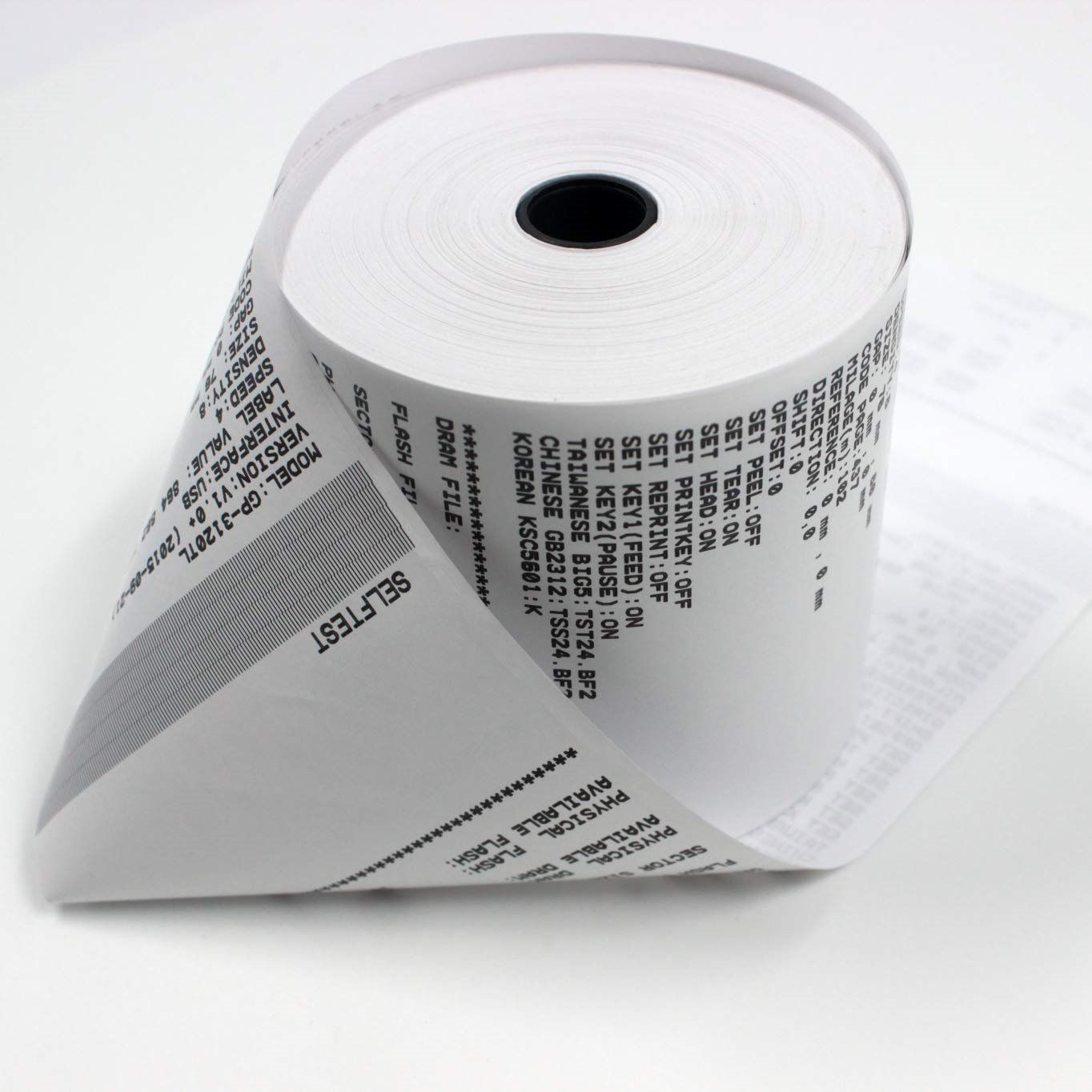
Evaluating wholesale orders based strictly on the number of rolls per carton obscures the actual value of the purchase. Suppliers can manipulate the outer diameter of a roll by utilizing thicker paper stock or inserting larger inner cores. A carton containing fifty rolls might look visually identical to a competitor's carton, but the actual usable paper length can vary by up to twenty percent.
To establish an accurate baseline for vendor comparison, buyers must calculate the cost per linear foot or meter. Divide the total carton price by the product of the rolls per carton and the guaranteed linear footage per roll. This metric strips away packaging manipulations and reveals the true material cost. Relying on roll count alone guarantees inefficient spending and artificially inflates annual consumable budgets.
Auditing inbound freight is a mandatory step in bulk procurement. Receiving docks must verify the exact breakdown of the shipment. Discrepancies at the pack level multiply rapidly across palletized orders, leading to significant inventory shortfalls. Implement the following dock receiving protocols for all thermal media deliveries:
Verify the total pallet count against the bill of lading before signing the delivery receipt.
Select three random cartons from different pallets and open them to inspect the inner shrink-wrap.
Count the exact number of rolls per shrink-wrapped pack and multiply by the packs per carton to verify the stated carton yield.
Measure the outer diameter of one random roll with calipers to ensure it matches the purchase order specifications.
Packaging integrity directly impacts product viability. Shrink-wrapped inner packs are non-negotiable for wholesale orders. This plastic barrier protects the sensitive thermal coating from moisture and humidity during ocean freight transit or long-term warehousing. Cartons lacking inner shrink-wrap expose the paper edges to ambient moisture, which swells the paper fibers and causes severe printer jams.
Acceptable tolerance levels for roll length variances must be established before issuing purchase orders. In large-scale manufacturing runs, a length variance of plus or minus two percent is standard. Variances exceeding this threshold indicate poor slitting and rewinding controls at the manufacturing facility.
Establishing a direct relationship with a Thermal Paper Roll Manufacturer requires rigorous technical vetting. Assess the facility's slitting and rewinding precision. Poorly tensioned rewinding creates telescoped rolls that will not sit flat in a printer tray, causing the paper to feed at an angle and jam the cutter.
Evaluate the manufacturer's dust extraction processes. Paper slitting generates microscopic dust particles. If this dust is not vacuumed during production, it transfers to the roll. During printing, the dust accumulates on the printer's optical sensors, causing false "out of paper" errors. Worse, the dust acts as an abrasive, permanently scratching the printhead glass and leaving permanent white vertical lines on every printed receipt.
Direct manufacturing relationships also require careful negotiation of Minimum Order Quantities (MOQs) and lead times. Manufacturers prioritize large, uninterrupted production runs. Buyers must ensure their organizational consumption rates justify the required MOQs without forcing the company to warehouse excessive stock that might expire before use.
Partnering with a dedicated Thermal Paper Rolls Wholesale Supplier often provides logistical advantages that offset slightly higher unit costs. Distributors offer advanced warehousing capabilities, allowing buyers to secure bulk pricing while taking delivery in staggered shipments. This preserves cash flow and minimizes the physical footprint required at the buyer's facility.
Distributors excel at mixed-SKU fulfillment. Retail operations frequently require standard receipt paper, mobile terminal rolls, and bond paper for kitchen dot-matrix printers. A wholesale supplier can consolidate these disparate items into a single palletized shipment. Buyers must define strict Service Level Agreements (SLAs) with their distributors, explicitly outlining penalties for stockouts and mandating emergency expedited shipping protocols to prevent operational paralysis.
Deploying Custom Printed Thermal Paper Rolls transforms a mandatory consumable into an active marketing asset. Utilizing the reverse side of the receipt allows organizations to broadcast return policies, security watermarks, promotional coupons, or corporate branding. Evaluating the return on investment requires comparing the increased unit cost of printed rolls against the reduction in separate promotional flyer printing.
Technical constraints govern the pre-printing process. Inks must be formulated specifically for compatibility with thermal coatings. Standard commercial inks can leach through the paper substrate, prematurely activating the thermal chemicals and causing dark spots on the receipt face. Furthermore, printers equipped with optical sensors require precise print registration marks on the paper backing to trigger the auto-cutter accurately. Pre-printing processes also extend manufacturing lead times and significantly increase MOQs.
The regulatory landscape surrounding thermal paper chemistry is shifting rapidly. Bisphenol A (BPA), traditionally used as the chemical developer in thermal coatings, faces strict legal bans in multiple global regions due to health concerns. Procurement teams must navigate this transition to mitigate corporate liability and protect employee health.
Transitioning to BPA-Free paper is the baseline requirement. However, some manufacturers substitute BPA with Bisphenol S (BPS), which carries similar regulatory scrutiny. Forward-thinking organizations mandate entirely Phenol-Free alternatives. Additionally, requesting FSC (Forest Stewardship Council) certified paper ensures the raw timber originates from sustainably managed forests, supporting corporate ESG (Environmental, Social, and Governance) reporting initiatives.
Thermal paper is inherently unstable by design. The chemical coating reacts to environmental stimuli beyond the printer's thermal head. Ultraviolet light exposure causes the paper background to yellow and the printed text to fade rapidly. Ambient storage temperatures exceeding 77°F (25°C) can trigger a low-level chemical reaction, turning the entire roll gray and rendering it unusable.
High humidity environments degrade the paper substrate, causing it to swell and jam feed mechanisms. Furthermore, chemical plasticizers present a severe risk. Storing printed receipts in PVC folders, leather wallets, or securing them with standard adhesive tape accelerates image degradation. The plasticizers migrate into the paper and break down the chemical bonds of the printed image, erasing the data within weeks.
Visual Symptom | Hardware or Media Cause | Corrective Action |
|---|---|---|
White vertical lines through text | Paper dust buildup or scratched printhead glass. | Clean printhead with isopropyl alcohol. Switch to low-dust paper. |
Faded or light print quality | Low-sensitivity paper or failing printhead elements. | Increase printer heat settings or switch to high-sensitivity media. |
Paper jams at the cutter | Swollen paper from humidity or adhesive residue. | Store paper in climate-controlled areas. Never use label stock in receipt printers. |
Entire roll turns gray | Exposure to ambient heat above 77°F (25°C). | Relocate storage away from HVAC vents, windows, or kitchen equipment. |
Proper inventory management prevents catastrophic stockouts and costly product spoilage. Unused thermal paper carries a maximum shelf-life baseline, typically ranging from one to three years, heavily dependent on storage conditions.
Calculating the organizational burn rate is the first step in optimization. Procurement teams must audit cash register and terminal usage to determine the exact monthly linear footage consumed. This data establishes the optimal reorder point. Buyers use the burn rate to balance bulk volume discount tiers against the cost of climate-controlled warehousing and the risk of chemical spoilage.
Implementing strict FIFO (First-In, First-Out) rotation is mandatory. Newly delivered pallets must be staged behind existing inventory. Warehouse staff must label pallets with receiving dates in large, visible markers. Failure to enforce FIFO protocols results in dead stock—older rolls pushed to the back of the storage room that eventually exceed their chemical shelf life and must be discarded.
Audit all active POS hardware across your facilities to document the exact width, maximum outer diameter, and core size requirements for every printer model.
Calculate your monthly linear footage consumption by analyzing transaction volumes to establish an accurate, data-driven reorder point.
Initiate a pilot test with a shortlisted supplier by running sample rolls through your most heavily utilized printers to check for paper dust accumulation, print clarity, and sensor compatibility.
Update your warehousing protocols to ensure all thermal media is stored in climate-controlled environments and rotated using strict First-In, First-Out (FIFO) methods.
A: Measure the width of the paper across the face, the total outer diameter across the side of the roll, and the inner diameter of the plastic or cardboard core. Accurate measurements prevent printer jams and ensure the roll fits inside the hardware casing.
A: They are the exact same size. 80mm is the metric measurement used globally, while 3 1/8" is the Imperial equivalent commonly used in the United States for standard POS receipt printers.
A: Thermal paper uses a heat-sensitive chemical coating to produce an image without ink ribbons. Bond paper is standard uncoated paper that requires a dot-matrix printer and a physical ink ribbon to transfer the image onto the page.
A: Unused thermal paper typically lasts 1 to 3 years if stored in a dark, climate-controlled environment below 77°F (25°C) and away from high humidity, UV light, or chemical solvents.
A: Fading is caused by exposure to UV light, excessive heat, friction, or contact with chemical plasticizers found in leather wallets, PVC sleeves, or certain adhesive tapes, which break down the thermal coating.
A: No. While many regions have banned BPA, requiring a shift to BPA-free paper, some manufacturers substitute it with BPS. Buyers must specifically request BPA-free or entirely Phenol-free documentation from their supplier to ensure compliance.


