


Views: 0 Author: Site Editor Publish Time: 2026-11-20 Origin: Site


In high-volume order fulfillment, the cost of a failed shipping label far exceeds the fraction of a cent saved on procurement. Label-induced mis-scans, printer jams, and adhesive failures directly bottleneck throughput. Scaling ecommerce and third-party logistics operations requires standardizing consumables to eliminate downtime. Procurement teams must balance label quality, printer compatibility, and supply chain reliability without inflating fulfillment expenses. This guide provides a technical evaluation framework for selecting enterprise-grade Thermal Shipping Labels. We compare form factors, material specifications, and vendor sourcing strategies to optimize warehouse efficiency. You will learn how to align adhesive chemistry with operational environments. We also cover how to choose the right dimensions for global shipping compliance. You can use these insights to build a resilient, high-speed packing workflow.
Direct Thermal is the Standard: For transit lifespans under six months, direct thermal technology eliminates ribbon costs and maximizes printing speed.
Form Factor Dictates Throughput: Transitioning from standard rolls to high-capacity fanfold labels significantly reduces printer reloading downtime in industrial environments.
Adhesive Chemistry Matters: Standard acrylic adhesives fail on recycled corrugated cardboard or in cold-storage environments; specific operational conditions and regional climates dictate adhesive requirements.
Vendor Scalability is Critical: Partnering with a vetted wholesale supplier ensures batch-to-batch consistency and protects against supply chain disruptions during peak seasons.
Fulfillment centers live and die by their throughput metrics. A shipping label acts as the physical bridge between digital order data and successful delivery. Poor label quality disrupts this bridge immediately, causing cascading delays across the warehouse floor. You must establish baseline metrics to measure label performance accurately. Track your first-pass scan rates at the carrier induction point. Monitor printer jam frequency across different shifts. Measure application speed for both manual packing stations and automated print-and-apply systems. These metrics reveal the true operational impact of your consumable choices.
Substandard labels introduce severe hidden costs that erode profit margins. When automated sortation cameras cannot read a faded barcode, the package kicks to a manual exception lane. This delay often results in financial penalties and carrier chargebacks. You also face high labor costs associated with manual re-labeling. Warehouse associates waste valuable minutes reprinting and taping over defective labels instead of packing new orders. Furthermore, abrasive paper stock accelerates printhead wear. Replacing damaged industrial printheads frequently destroys your maintenance budget and causes unexpected line-down situations.
Blank direct thermal labels serve mandatory functions beyond outbound shipping. You can deploy them for internal inventory and distribution workflows. Facilities use them for internal routing tags, cross-docking identification, and temporary bin location management. Standardizing on one type of label allows facilities to maintain a unified consumable ecosystem. You avoid stocking dozens of different label SKUs for minor internal tasks, simplifying your procurement cycle.
Major carriers enforce strict compliance standards for inbound packages. UPS, FedEx, USPS, and DHL mandate specific barcode clarity levels. They require exact layout dimensions and quiet zones around barcodes to ensure their automated scanners can read the data at high speeds. Label finish directly affects this compliance. High-gloss finishes often reflect too much light, blinding automated barcode scanners. Matte or semi-gloss top-coated labels provide the necessary contrast. They absorb scanner lasers efficiently to guarantee rapid data capture.
Failure Mode | Root Cause | Operational Impact | Resolution Strategy |
|---|---|---|---|
Barcode No-Read | Faded print or low-contrast paper finish | Package diverted to manual exception lane; carrier chargebacks | Switch to top-coated paper; clean printhead regularly |
Label Detachment | Standard adhesive used on recycled corrugate or poly mailers | Lost package in transit; customer refund required | Upgrade to high-tack rubber-based adhesive |
Printer Jamming | Thick release liner or tight memory curl on rolls | Pack station downtime; wasted label stock | Transition to fanfold labels; specify glassine liners |
Premature Printhead Failure | Abrasive face stock or paper dust from poor edge cuts | Expensive hardware replacement; maintenance delays | Audit supplier for clean slitter cuts and smooth face stock |
Modern warehouses rely on seamless software integration to maintain high fulfillment velocity. Your warehouse management system (WMS) or enterprise resource planning (ERP) software must drive order generation automatically. Automating the batching and review of shipping labels eliminates manual data entry errors. The system should download print jobs directly to the pack station the moment an associate scans a pick ticket. Operators should never type addresses manually. This automation accelerates the packing process and ensures data accuracy.
Print execution strategies depend heavily on your facility layout and order profile. You must evaluate the efficiency of your current setup to determine the best approach for your specific volume.
On-Demand Printing: Best for individual pack stations handling diverse order profiles. The associate packs the box, scans the barcode, and prints a single label. This one-to-one ratio prevents mislabeling errors and ensures the right label goes on the right box.
Centralized Batch Printing: Useful for uniform product runs or subscription box fulfillment. One industrial printer generates hundreds of labels at once. Associates then apply them rapidly in an assembly line format, maximizing manual application speed.
Automated Print-and-Apply: Required for massive throughput operations. Conveyor-mounted applicators print and tamp labels onto moving cartons without human intervention. This requires highly consistent label stock to prevent applicator jams.
Physical label application requires strict standardization across all shifts. You must train associates on application best practices to maintain high scan rates. Never place labels over carton seams, as the box flexing during transit will tear the barcode. Do not wrap labels around the corners of a box, which prevents flat scanning. Avoid overlapping clear packing tape over the thermal barcode. Tape reflects light and chemically alters the thermal coating, causing the print to fade instantly. Following these rules guarantees high first-pass scan rates by automated carrier sortation facilities.
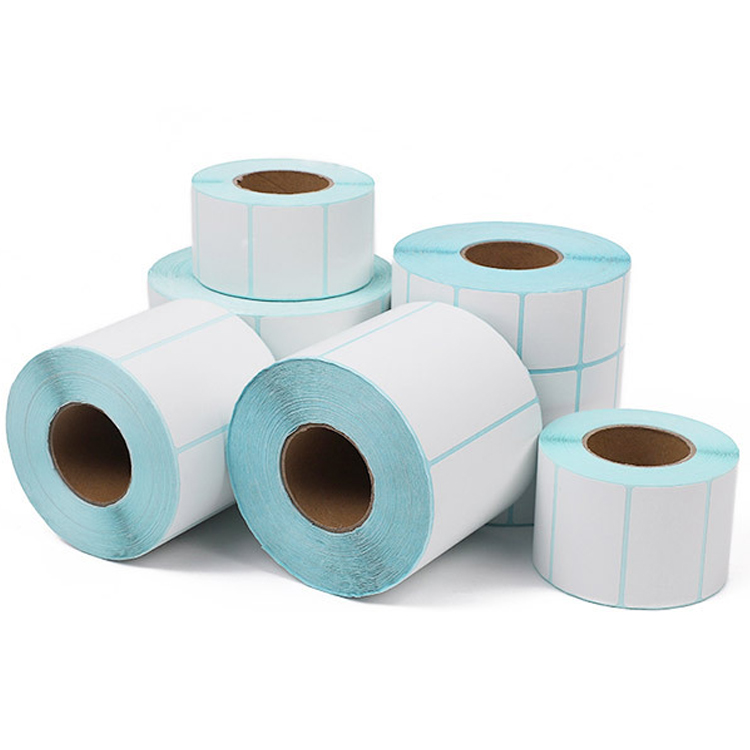
Direct thermal technology relies on heat-sensitive paper to generate an image. The printer printhead applies heat directly to the label surface. This heat triggers a chemical reaction in the coating that turns the paper black. We consider this the optimal solution for ecommerce shipping. It delivers rapid print speeds and requires zero ribbon management. The durability easily covers standard transit times of one to four weeks. You eliminate the hassle of matching ribbon widths to label widths, and you reduce the number of consumable SKUs you need to manage.
Thermal transfer technology uses a completely different mechanism. The printhead heats a wax, wax-resin, or pure resin ribbon. This melts the ink onto the label surface, creating a permanent bond. Thermal transfer offers superior longevity and extreme chemical resistance. However, it is generally over-engineered for standard outbound shipping. It is cost-prohibitive for high-volume ecommerce fulfillment. The ribbons add unnecessary expense, require frequent reloading, and generate additional waste that must be disposed of.
You need a clear decision matrix to know when to deviate from direct thermal. Use thermal transfer if you ship hazardous materials requiring permanent identification that must survive chemical spills. Choose it for products facing long-term outdoor storage in lumber yards or garden centers. Select it if packages will endure extreme abrasion during specialized transit. For the vast majority of standard retail and ecommerce fulfillment, direct thermal remains the undisputed champion for cost and efficiency.
Feature | Direct Thermal | Thermal Transfer |
|---|---|---|
Printing Mechanism | Heat activates chemical coating on paper | Heat melts ribbon ink onto label |
Ribbon Required | No | Yes (Wax, Wax/Resin, or Resin) |
Print Speed | Very High (Up to 14 inches per second) | Moderate to High (Up to 10 inches per second) |
Durability | Short-term (6-12 months) | Long-term (Multiple Years) |
Environmental Resistance | Low resistance to UV light and extreme heat | High resistance to chemicals, UV, and abrasion |
Primary Use Case | Ecommerce shipping, short-term inventory | Asset tagging, hazardous materials, outdoor storage |
Choosing the right physical format impacts your daily packing speed and printer maintenance schedule. Thermal Shipping Label Rolls fit directly inside the printer housing. They work best for desktop printers, low-to-medium volume pack stations, and tight workspaces. Mobile printing carts also rely on rolls for portability, allowing workers to print labels directly in the warehouse aisles. However, rolls have distinct limitations in high-volume settings. Their smaller capacity typically holds 250 to 500 labels per roll. This requires frequent changeovers. An operator must stop packing, open the printer, remove the empty core, thread a new roll, and recalibrate the sensor. These interruptions kill momentum in high-speed workflows. When buying rolls, you must verify core size compatibility. Desktop printers usually require a 1-inch core, while industrial printers use a 3-inch core. You must also check the maximum outer diameter constraints of your specific printer model to ensure the roll actually fits inside the casing.
Upgrading to Direct Thermal Fanfold Labels transforms high-volume operations. These labels fold in a zigzag pattern and stack in a dense block. They sit outside the printer housing, and you feed them through a rear or bottom slot. They are ideal for high-volume industrial printers, centralized shipping hubs, and automated print-and-apply applicators.
Throughput Advantages: Stacks contain 2,000 or more labels. This drastically reduces replenishment downtime. Operators spend more time packing boxes and less time managing printer media. A single stack can last an entire shift.
Flat Feeding: Fanfold labels do not suffer from memory curl. Labels at the end of a roll often curl upward because they are wrapped tightly around the core. This curl causes jams in the printhead. Fanfold labels remain perfectly flat from the first label to the last.
Implementation Risks: You must allocate adequate desk space behind the printer to hold the stack. Alternatively, you can use under-desk feeding slots to save workspace. The stack must sit perfectly aligned with the printer input slot to prevent the liner from snagging or tearing during high-speed printing.
The logistics industry operates on strict dimensional standards to ensure uniformity across millions of packages. 4x6 Thermal Shipping Labels are the universal default for North American logistics. Measuring 4 inches wide by 6 inches long, they provide ample real estate for all necessary data. This size accommodates the return address, the recipient address, carrier routing codes, tracking barcodes, and complex 2D barcodes like the UPS Maxicode. Carriers design their API label generation specifically for this 4x6 footprint. Attempting to shrink shipping labels below this standard risks non-compliance, unreadable barcodes, and rejected packages at the carrier facility.
Global operations require slight dimensional adjustments to align with local manufacturing standards. Facilities outside the US integrate 100x150mm Thermal Shipping Labels seamlessly into their workflows. This metric equivalent measures approximately 3.94 inches by 5.91 inches. The slight dimensional variance requires minor printer calibration. You must adjust the media guides slightly inward to prevent the narrower stock from drifting side to side. However, it serves the exact same operational purpose. Major international carriers accept 100x150mm formats without issue. Multinational third-party logistics providers often standardize on this metric size to unify procurement across their global facilities.
Specialized workflows occasionally demand alternative sizes. Facilities combining packing slips with shipping data use 4x8 labels. The extra two inches allow a tear-off receipt or return instruction block for the customer. Warehouses shipping small poly bags or jewelry might utilize 4x4 labels to prevent the label from wrapping around the small package. You must ensure your carrier contracts permit these alternative dimensions before implementing them on the floor.
Not all thermal paper performs equally in a rugged warehouse environment. Face stock quality determines survivability during transit. You must choose between top-coated and non-top-coated direct thermal paper based on your shipping profile. Top-coated labels feature a protective layer over the thermal chemistry. They resist moisture, ambient oils, and minor scratching. If a package sits on a wet porch or encounters rain during delivery, a top-coated label remains readable. Non-top-coated labels lack this barrier. They are strictly for dry, short-term use. Friction against other boxes on a delivery truck can cause non-top-coated labels to smudge heavily, rendering the barcode useless.
Adhesive selection dictates whether your label stays attached to the box from the warehouse to the customer's door. You must match the adhesive chemistry to your packaging material and regional climate.
Standard Permanent: Sufficient for standard new corrugated boxes. It performs well in temperate climates and controlled warehouse environments. It provides a strong initial tack on clean, flat surfaces.
Aggressive/High-Tack: Required for highly recycled corrugated boxes. Recycled cardboard has shorter fibers and holds more surface dust. Standard adhesives bind to the dust and peel off. High-tack rubber-based adhesives flow into the porous surface to create a destructive bond. High-tack is also mandatory for flexible poly mailers, which resist standard adhesives.
All-Temp/Freezer Grade: Necessary for cold-chain logistics and refrigerated storage. It is also vital for winter transit through extreme regional climates. In places like the Northern US or Canada, standard adhesives crystallize in sub-zero temperatures. They lose tack and detach entirely. All-temp adhesives remain flexible and sticky in freezing conditions.
Release liner specifications impact automated systems and manual peeling speed. The backing material is typically glassine or kraft paper. Glassine is thinner, highly calendared, and very smooth. It works exceptionally well for automated peeling mechanisms on print-and-apply machines. Industrial printer sensors detect the gap between labels more easily through translucent glassine. Kraft liners are thicker, more opaque, and often used for manual peel-and-stick applications where automated sensor detection is not a factor.
Procuring labels at scale requires strategic vendor alignment. You must look beyond the initial per-roll price quote and evaluate procurement economics comprehensively. Factor in shipping costs, volume discounts, and the financial protection of consistent quality control. A cheap label that causes daily printer jams costs far more in lost labor and maintenance than it saves in initial procurement.
Quality assurance defines a reliable Wholesale Thermal Label Supplier. You must audit their manufacturing tolerances before signing a contract. Inconsistent edge cuts leave microscopic paper dust inside your printer. This dust accumulates on the platen roller and ruins printheads rapidly. Adhesive bleed is another critical failure point. If adhesive oozes out from the edges of the roll during manufacturing, it sticks to the printer rollers. This causes catastrophic jams and requires extensive cleaning downtime. Request sample rolls and inspect the edges for any sticky residue or uneven cuts.
Supply chain resilience protects your peak season operations. Assess your supplier's lead times carefully. Understand their domestic versus international manufacturing risks. A strong supplier has the ability to hold safety stock for you in their own distribution centers. When Q4 volume surges unexpectedly, you cannot afford a two-week wait for labels. Establish service level agreements that guarantee inventory availability during your busiest months.
Customization capabilities add value to your packaging and internal routing. Pre-printed elements enhance brand identity right on the shipping label. You can add company logos, return policies, or handling instructions to the label border. Custom flood-coating allows you to color-code labels for specific shipping lanes or carrier sorts. A premium supplier executes these customizations using flexographic printing without sacrificing the direct thermal functionality in the primary barcode zone.
Direct thermal technology remains the most efficient choice for high-volume shipping. It provides rapid, ribbon-free printing that keeps pack stations moving at maximum capacity. Success depends entirely on matching physical specifications to your operational environment. You must base procurement decisions on printer compatibility, workflow volume, and environmental realities like packaging material and climate.
Take the following steps to optimize your label procurement:
Audit your current printer fleet to confirm maximum outer diameter, core size limits, and fanfold slot availability.
Conduct a small-batch pilot test of fanfold labels at your highest-volume pack stations to measure the reduction in reload downtime.
Test aggressive adhesive samples on your specific poly mailers and recycled corrugated boxes to ensure a destructive bond.
Verify sensor calibration and first-pass scan rates with top-coated paper before committing to a bulk wholesale contract.
A: Yes, most thermal transfer printers can operate in direct thermal mode. You simply remove the ribbon and update the printer settings to apply heat directly to the printhead. Ensure your media sensors are calibrated for the new label stock.
A: Faded prints are typically caused by a dirty printhead or incorrect heat/darkness settings in the printer driver. Using low-quality, non-top-coated thermal paper that reacts poorly to the printhead also causes light printing. Clean the printhead with isopropyl alcohol regularly.
A: They are functionally identical for logistics purposes. 4x6 inches is the Imperial standard, while 100x150mm is the metric equivalent. The metric version measures roughly 3.94 by 5.91 inches. Both formats are universally accepted by major global carriers.
A: No. When fed correctly through the printer's rear or bottom slot, fanfold labels often cause fewer jams. They do not suffer from the tight memory curl found at the core of label rolls, allowing them to feed perfectly flat.
A: Under standard warehouse and transit conditions, direct thermal labels remain scannable for 6 to 12 months. Keep them away from direct UV light and extreme heat sources. This lifespan is more than sufficient for standard order fulfillment lifecycles.
A: Poly mailers require an aggressive, high-tack rubber-based or modified acrylic adhesive. Standard permanent adhesives often peel off flexible plastic surfaces during the friction of transit. Always test the adhesive on your specific mailer material.
A: Yes. While primarily used for outbound shipping, blank direct thermal labels are highly effective for short-term internal workflows. You can use them for cross-docking, temporary bin location tagging, and receiving identification tags.


