


Views: 0 Author: Site Editor Publish Time: 2026-11-23 Origin: Site


Standard adhesive labels fail in sub-zero environments, leading to unreadable barcodes, lost inventory, and compliance violations. Warehouse managers frequently misdiagnose label failures, confusing application temperature limitations with service temperature limitations, resulting in costly mis-specifications. When a barcode detaches from a pallet in a blast freezer, the entire tracking system breaks down, forcing workers to manually identify and relabel goods under extreme conditions. Selecting the correct Thermal Labels for Cold Storage requires a strict evaluation of adhesive chemistry, facestock durability, and print technology to ensure scannability across the entire cold chain. You must match the label material to the exact environmental conditions it will face, accounting for frost, condensation, and rough handling from the blast freezer through fulfillment and refrigerated transportation.
Temperature Definitions Matter: A label's "service temperature" (survival range) is entirely different from its "application temperature" (the environment where it is initially applied).
Direct vs. Transfer Trade-offs: Direct thermal barcode labels suit short-term shipping identification and high-turnover logistics, while thermal transfer labels are mandatory for inventory that may sit in deep-freeze storage for extended periods.
Adhesive Chemistry is Non-Negotiable: True freezer-grade adhesives are required for frost-covered or already-frozen substrates; standard "all-temp" adhesives will crystallize and detach.
Supplier Vetting: Partnering with a specialized thermal label rolls supplier ensures access to custom material testing rather than off-the-shelf compromises.
Standard warehouse labels peel off in extreme cold because the adhesive hardens and loses its natural tack. Workers frequently find labels lying on the freezer floor, leaving pallets unidentified and causing severe logistical bottlenecks. You must understand the physical and chemical mechanics of these failures to engineer a reliable labeling system.
Application temperature dictates the specific environmental conditions required for the adhesive to initially wet out and bond to a surface. Service temperature dictates the extreme range the label can endure after a successful cure. These two metrics operate independently. Applying room-temperature labels to frozen goods without specialized adhesives guarantees failure because the adhesive freezes before it can grip the substrate.
Adhesives are viscoelastic materials. They require a specific temperature range to flow into the microscopic pores of corrugated cardboard or plastic. When a worker applies a standard label in a sub-zero freezer, the adhesive drops below its glass transition temperature. It instantly transforms from a sticky, flowing substance into a rigid, glass-like solid. It cannot form a mechanical bond, and the label simply falls away at the slightest touch.
Blast freezing and temperature fluctuations create constant condensation cycles. Warm air holds moisture, and rapid cooling forces this moisture out of the air, condensing directly onto your packaging. In a freezer, this condensation quickly turns into a layer of frost. Applying a label over frost means you are bonding to a temporary layer of ice, not the actual box or tote.
Water acts as a physical barrier between the adhesive and the substrate. This causes immediate delamination if the facestock and adhesive lack moisture resistance. When the frost eventually sublimates in the freezer or melts during transport, the label loses its anchor and slides off the package. You must use materials engineered to penetrate this moisture layer or aggressive enough to displace it during application.
Labels must survive static storage, physical handling, cross-docking, and transportation phases. Micro-abrasions and temperature shifts test adhesive integrity constantly. Forklifts scrape against pallets, workers physically handle boxes, and the label faces continuous mechanical stress throughout its lifespan.
Receiving and Initial Tagging: Labels are applied at ambient loading dock temperatures, requiring high initial tack.
Blast Freezing: Rapid temperature drops test the adhesive's ability to resist crystallization and thermal shock.
Long-Term Static Storage: Labels endure prolonged exposure to sub-zero temperatures and low humidity.
Picking and Fulfillment: Manual handling introduces physical abrasion and potential tearing to the facestock.
Outbound Transit: Temperature swings during loading cause packaging materials to expand and contract, requiring a flexible adhesive bond.
A pallet leaving a deep freeze to enter a refrigerated truck experiences immediate temperature swings. The packaging materials expand and contract. The label adhesive must remain flexible enough to move with the packaging. Rigid adhesives will crack and fail under these dynamic conditions.
You must choose the correct printing method for your specific cold chain logistics. Each technology offers distinct advantages and limitations based on the required lifespan of the barcode and the environmental hazards present in your facility.
Direct thermal printing uses heat-sensitive paper and does not require a ribbon. The printhead applies heat directly to the facestock, triggering a chemical reaction in the leuco dye that turns the paper black. This method reduces operational complexity because workers do not need to halt production to change ribbons during busy shifts.
These labels are highly efficient for short-term shipping identification. They work exceptionally well for cross-docking and fast-moving cold storage where inventory turns over rapidly. Direct Thermal Barcode Labels streamline your printing stations and reduce hardware maintenance. However, the heat-sensitive chemistry remains vulnerable to UV light, ambient heat, and chemical exposure. Their shorter lifespan makes them unsuitable for inventory that sits in a freezer for many months, as the barcodes will eventually fade or darken entirely, rendering them unscannable.
Thermal transfer printing uses a heated printhead to melt a wax or resin ribbon onto the label. The ink transfers from the ribbon and bonds permanently to the facestock, creating a highly durable, high-contrast image. These labels offer exceptional longevity in harsh freezer environments and resist degradation from moisture and abrasion.
Critical data remains legible through complex fulfillment and transportation networks. The print resists smudging, scratching, and condensation. However, this method requires strict ribbon management and carries a higher initial material cost. You must match the ribbon formulation to the specific facestock for optimal adhesion. Wax ribbons suit standard paper labels in dry environments. Wax/resin blends offer better smudge resistance, while full resin ribbons are mandatory for synthetic materials facing extreme chemical or abrasive exposure.
Feature | Direct Thermal | Thermal Transfer |
|---|---|---|
Print Mechanism | Heat-sensitive paper, no ribbon required | Heated printhead melts ribbon ink onto label |
Expected Lifespan | Short-term (Days to Weeks) | Long-term (Months to Years) |
Environmental Resistance | Low (Fades under UV light and ambient heat) | High (Resists smudges, chemicals, and UV exposure) |
Ideal Cold Storage Application | Cross-docking, fast-turnover logistics, shipping | Deep-freeze storage, long transit times, permanent ID |
Hardware Maintenance | Low (Only requires media roll changes) | Moderate (Requires synchronized ribbon and media changes) |
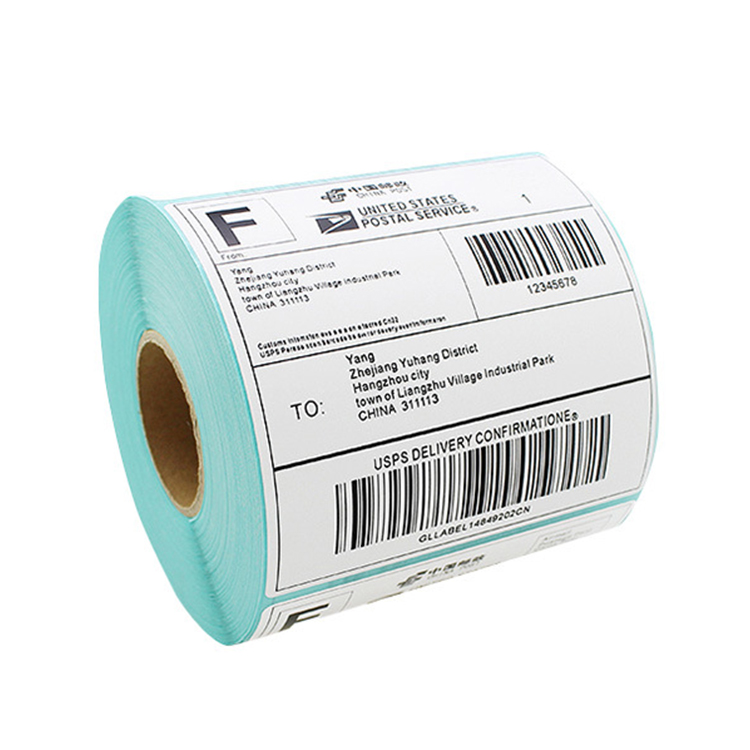
You must match material specifications to your specific warehouse substrates. Corrugated cardboard behaves differently than shrink wrap, and high-density polyethylene (HDPE) plastic totes present unique low-surface-energy adhesion challenges. A universal label does not exist for cold storage.
Many suppliers market "all-temp" adhesives for warehouse use. These work perfectly for standard refrigeration environments, handling temperatures around 35°F (2°C) without issue. However, they are highly prone to crystallization in blast freezers. Once an all-temp adhesive crystallizes, it shatters under microscopic pressure, causing the label to detach cleanly from the box.
True freezer-grade adhesives are formulated with specialized rubber or acrylic bases to remain pliable at -40°F (-40°C) and below. Rubber-based adhesives offer aggressive initial tack, grabbing onto rough, porous surfaces like corrugated cardboard instantly. Acrylic-based adhesives offer lower initial tack but provide better long-term stability, UV resistance, and performance on smooth plastics. You must also ensure the adhesive meets FDA or industry regulations for indirect food contact if your facility handles consumables or agricultural products.
Paper facestocks are highly cost-effective and perform well in dry cold environments. If your freezer maintains low humidity and minimal frost, paper is a smart, economical choice. However, paper absorbs moisture rapidly. When exposed to condensation during loading dock transfers, paper facestocks become saturated, tear easily, and turn into pulp under physical abrasion.
Synthetic facestocks are mandatory for high-moisture, frost-heavy environments. Materials like Biaxially Oriented Polypropylene (BOPP) and Polyester (PET) repel water entirely. They withstand physical scraping, condensation, and rough handling. Where paper would degrade, synthetic materials maintain their structural integrity, keeping your barcodes scannable regardless of the frost level or moisture exposure.
You must audit your substrate types, expected lifespan, and environmental exposure to build a comprehensive specification sheet before ordering materials. Note the exact texture of your boxes. Document the lowest temperature the label will face during storage and the exact temperature at the moment of application. Record the presence of chemical cleaners or degreasers used on your reusable plastic totes.
Discuss topcoats with your manufacturer. A protective topcoat shields the printed barcode from abrasion during rough pallet handling and prevents the ink from smearing when workers drag boxes across the floor. Developing Custom Thermal Label Specifications prevents costly rework and ensures your labels perform exactly as needed in your unique operational environment.
Your chosen label format must integrate seamlessly with your existing warehouse hardware. Incompatible media causes constant printer jams, misaligned prints, and sensor errors, slowing down your entire fulfillment operation. You must evaluate form factors carefully based on your printing volume and hardware fleet.
Fanfold labels are ideal for high-volume, continuous batch printing. They stack neatly behind the industrial printer and feed through a rear slot. They require far less frequent media changes than standard rolls, keeping your printing stations running without interruption during peak shifts. When evaluating fanfold media, check the stack sizes and perforation strength to prevent premature tearing during the feeding process.
Continuous rolls remain the standard for mobile printers, desktop units, and standard industrial setups. You must match the core size and outer diameter (OD) to the printer hardware. Industrial printers typically require an 8-inch OD on a 3-inch core. Desktop printers usually take a 4-inch OD on a 1-inch core. A roll that is too large will not fit inside the printer housing, while a mismatched core will cause the roll to drag, leading to print registration errors. Use Warehouse Thermal Labels that match your specific printer models perfectly to maintain hardware longevity.
Automated labeling in cold environments introduces severe mechanical complexities. Conveyor belts move fast, and the automated tamp pad strikes the box in a fraction of a second. The label has virtually no dwell time to bond to the surface before the box moves down the line.
If the adhesive tack is too low for the ambient temperature, the tamp pad fails to secure the label. The label drops to the floor or flags at the edges before bonding. You must use an adhesive with an extremely aggressive initial grab for automated systems, specifically designed for tamp-blow or wipe-on applicators. The adhesive must wet out instantly upon contact, even in freezing ambient air, to ensure a secure bond without manual pressure.
You must evaluate vendors beyond per-label pricing. Cheap labels that fail in the freezer cost thousands of dollars in lost inventory, operational downtime, and manual relabeling labor. A reliable partner provides technical expertise, consistent material quality, and supply chain stability.
Demand complete transparency in material data sheets (MDS). The data sheet must list the exact application and service temperature ranges, the adhesive base chemistry, and the facestock caliper. Do not accept vague marketing terms like "freezer safe" or "cold resistant." You need hard numbers and standardized testing metrics, such as Finat Test Methods (FTM) for peel adhesion and loop tack.
Require in-situ testing samples before committing to high-volume procurement. Apply the samples to your actual boxes and run them through your actual blast freezer. A reliable Thermal Label Rolls Supplier encourages this testing because they want to prove their materials work in your specific facility under real-world conditions.
Assess the supplier's ability to maintain consistent stock of specialized freezer materials. Peak seasonal demands strain weak supply chains, and you cannot afford to run out of labels during the holiday fulfillment rush or harvest season.
Ask about their manufacturing redundancy and raw material sourcing. Do they rely on a single adhesive supplier? Can they expedite orders if your volume suddenly spikes? Your supplier must scale with your operational needs without compromising adhesive quality or substituting inferior materials during shortages.
Improper storage of unprinted labels destroys their efficacy and shortens their shelf life drastically. You must treat unprinted label stock as a sensitive operational asset, not just standard office supplies.
Establish strict protocols for storing label inventory. Keep them in climate-controlled environments. The ideal storage condition is typically 72°F (22°C) at 50% relative humidity. Extreme heat bakes the adhesive, causing it to ooze out of the roll edges and jam your printers. Extreme cold deadens the tack before you even print the label, rendering the roll useless.
Maintain strict environmental controls to mitigate facestock curling and adhesive loss. This extends the usable shelf life of your inventory, which is typically one year from the date of manufacture. Never store label stock inside the freezer. Never stack boxes near heating vents, under skylights, or near loading dock doors where temperatures and humidity fluctuate wildly.
Direct thermal labels require extra protection due to their heat-sensitive chemistry. Ambient warehouse heat or prolonged UV exposure ruins them before application. The leuco dye reacts to the environment, and the entire roll can turn gray or black if left near a sunny window or stored on a hot mezzanine.
Implement mitigation strategies to prevent fading, curling, or pre-darkening. Keep the rolls in their original opaque packaging or black poly bags until the exact moment they are loaded into the printer. Store your Logistics Thermal Labels in dark, temperature-controlled cabinets to preserve their chemical integrity and ensure crisp, scannable barcodes.
Standard labels fail in cold storage environments, causing severe operational bottlenecks. Investing in true freezer-grade thermal labels eliminates the cascading costs of unscannable inventory, lost pallets, and manual rework. Base your final material decision on the temperature at the exact moment of application, the presence of frost or moisture on your substrates, and the required lifespan of the barcode through fulfillment and transport.
Audit your facility to identify the exact physical locations and temperature zones where current labels fail, peel, or detach from packaging.
Measure and document both the application temperature and the lowest service temperature for your specific products and substrates.
Request material samples from a specialized supplier to conduct real-world adhesion and scannability tests on your actual warehouse boxes and totes.
Upgrade your internal storage protocols immediately to keep unprinted label stock in a dark, climate-controlled environment away from extreme temperature swings.
A: True freezer-grade thermal labels can withstand service temperatures as low as -65°F (-54°C). However, performance depends heavily on the specific adhesive formulation and the substrate material. Always verify the manufacturer's material data sheet for exact temperature ratings before purchasing.
A: Yes, but you must use a specialized freezer-grade adhesive designed specifically for cold application. Standard adhesives freeze instantly upon contact with a frozen surface, preventing the label from bonding. Ensure the surface is free of heavy frost before application for the best results.
A: Direct thermal labels use heat-sensitive chemistry. Exposure to ambient warehouse heat, direct sunlight, or strong UV lighting causes the paper to pre-darken or fade. Storing them in a cool, dark environment prevents this premature degradation and extends their shelf life.
A: Cold-temp adhesives are typically designed for standard refrigeration environments around 35°F (2°C). Freezer-grade adhesives use specialized rubber or acrylic bases to remain pliable and maintain aggressive tack in sub-zero blast freezers down to -40°F (-40°C) and below.
A: It depends entirely on your facestock and durability needs. Wax ribbons work well for standard paper labels in dry cold. Wax/resin or full resin ribbons are mandatory for synthetic facestocks to resist smudging, moisture, and heavy abrasion during transport.
A: When paired with the correct freezer-grade adhesive and synthetic facestock, thermal transfer labels can remain legible and securely attached for several years in a blast freezer. Direct thermal labels have a shorter lifespan and may degrade after several months.
A: Store unprinted label rolls in a climate-controlled room at approximately 72°F (22°C) with 50% relative humidity. Keep them in their original packaging, away from direct sunlight, heating vents, and freezing environments to preserve adhesive tack and prevent facestock curling.


