


Views: 0 Author: Site Editor Publish Time: 2026-07-09 Origin: Site


Procurement of point-of-sale consumables often defaults to the lowest cost per case, masking the hidden operational costs of short-rolled products and mismatched paper weights. Wholesale buyers frequently evaluate thermal paper based on roll diameter rather than actual length and paper density. This misalignment leads to increased printer maintenance, frequent roll changes that waste labor, and degraded receipt archiving over time. Establishing a strict technical baseline for thermal paper specifications—specifically balancing paper weight, core size, and exact footage—is the only verifiable way to compare supplier quotes accurately and protect hardware investments. You must look past the outer dimensions and verify the actual usable media on the core. Relying on visual size alone guarantees you will lose money on every pallet.
GSM Dictates Durability and Capacity: Lower GSM yields longer rolls within the same diameter, reducing changeovers, while higher GSM provides durability for high-friction environments and long-term archiving.
Length Supersedes Diameter: Roll diameter is an easily manipulated metric; wholesale purchasing decisions must be calculated strictly on guaranteed length per roll and cost per foot/meter.
Supplier Transparency is Non-Negotiable: A credible thermal paper roll manufacturer will provide exact specifications, including coating chemistry (e.g., BPA-free, top-coated), core dimensions, and GSM tolerances.
Customization Requires Scalability: Sourcing a custom thermal paper roll requires vetting a supplier’s raw material access, often necessitating direct relationships with a thermal jumbo roll supplier to ensure consistency across high-volume orders.
Buyers often fail to match the paper's physical density to the end-user's application. This oversight results in either overspending on unnecessary thickness or experiencing paper jams and tearing during peak operational hours. The foundation of evaluating any receipt media begins with understanding its weight and density. You cannot simply order generic receipt paper and expect it to perform flawlessly across different environments, from hot kitchen printers to freezing outdoor kiosks.
Grams per Square Meter represents the standard measurement of paper density and weight. The base paper weight combines with the active thermal chemical coating layer to determine the final thermal paper roll GSM. It is important to distinguish between GSM and caliper. Caliper measures thickness in microns. While related, caliper is not always identical to GSM because coating density and paper compression during manufacturing affect the final physical thickness. A highly compressed paper might have a high GSM but a lower caliper, meaning it feels dense but takes up less physical space on the roll.
The thermal coating itself consists of several layers. The base paper receives a pre-coat to smooth the surface and prevent the active chemicals from sinking into the pulp. Next, the active thermal layer, containing leuco dyes and developers, is applied. Finally, some papers receive a top coat for environmental protection. Each of these layers adds fractional weight, contributing to the final GSM specification.
Selecting the correct weight category directly impacts both your operational efficiency and your consumable spend. Using a heavy paper for a temporary transaction wastes resources, while using a thin paper for a permanent record guarantees data loss.
GSM Category | Typical Caliper (Microns) | Primary Application | Max Length in 80mm OD Roll |
|---|---|---|---|
48gsm | 55 - 60 | Standard retail receipts, credit card terminals | Approx. 230 - 250 feet |
55gsm | 62 - 68 | Banking, hospitality, premium retail | Approx. 200 - 220 feet |
65gsm | 75 - 80 | Kiosk printing, mobile field service | Approx. 160 - 180 feet |
80gsm+ | 90 - 100+ | Ticketing, transit passes, lottery systems | Approx. 130 - 150 feet |
The 48gsm thermal paper roll acts as the industry standard for high-volume, short-life applications. It maximizes length per roll within a fixed diameter constraint. Mid-range standards like 55gsm offer a balance of tactile feel, tensile strength, and durability. Heavyweight paper, 70gsm and above, is required for environments demanding long-term archiving, chemical resistance, or extreme physical durability.
Increasing the paper weight inherently decreases the total printable length when constrained by a maximum roll diameter. A standard 80mm POS printer has a fixed physical capacity. A heavier paper will fill that capacity much faster than a lighter paper, resulting in fewer feet per roll. Industry-standard tolerances typically allow for a ±5% variation in weight. Reputable manufacturers strictly monitor these tolerances to stay within acceptable quality thresholds without shortchanging the buyer on length.
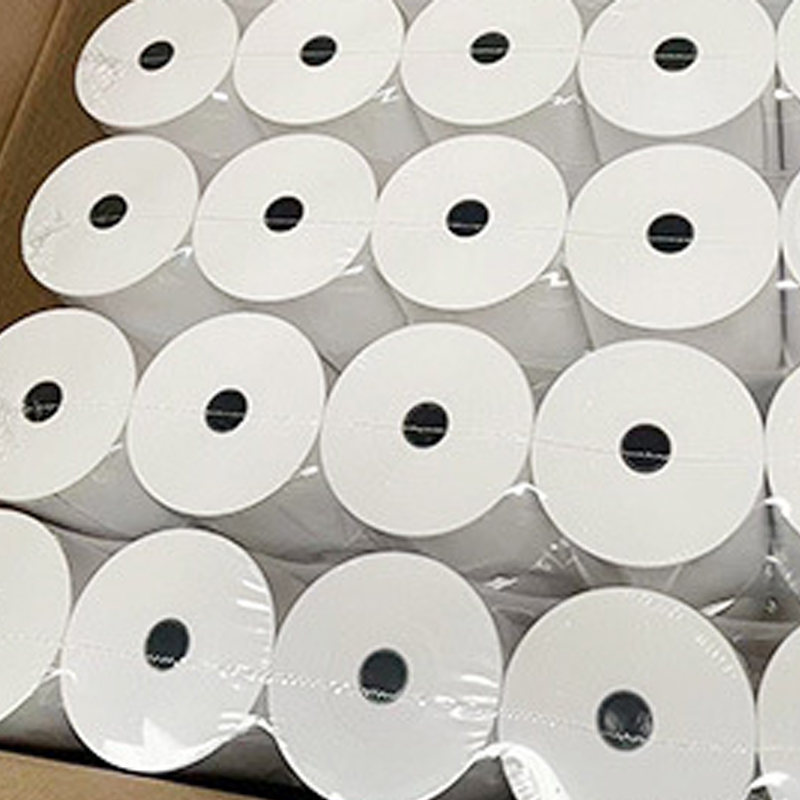
Shifting the procurement metric from cost per roll to cost per usable foot is critical for accurate purchasing. Evaluating products strictly by their outer dimensions leaves buyers vulnerable to deceptive manufacturing practices. A roll that looks identical in size to another might contain 20% less actual paper.
Suppliers sometimes manipulate roll diameter by using thicker plastic or honeycomb cardboard cores. A larger core pushes the paper outward, making the roll look larger while actually containing less media. Core material analysis is also vital. Cardboard, plastic, and coreless options all impact total shipping weight, structural integrity under tension, and recycling initiatives. Industry standard core dimensions, such as a 13mm inner diameter versus a 19mm outer diameter, have a direct impact on the total paper volume you receive.
Understanding the mathematical relationship between outer diameter, core outer diameter, and paper thickness helps determine actual length. The financial impact of short-rolling can be devastating across a large order. Receiving 200 feet instead of an expected 230 feet across a pallet, container, or truckload order results in massive financial losses and increased labor costs from frequent roll replacements.
Loose winding artificially inflates roll diameter without adding any actual paper length. During sample evaluation, buyers should test winding tension. If a roll feels spongy or easily compresses under grip pressure, the manufacturer has likely wound it loosely to hit a target outer diameter with less paper.
Perform a physical squeeze test on the outer edges of the roll; it should feel solid, not spongy.
Inspect the side profile of the roll for telescoping, which indicates uneven winding tension.
Unroll a 10-foot section and check for curling; excessive curl indicates the paper was wound too tightly near the core.
Measure the exact outer diameter of the core itself using digital calipers to ensure it matches the specification sheet.
Weigh the entire roll and subtract the known weight of the core to determine the net weight of the paper.
Differentiating between converters, brokers, and vertically integrated manufacturers is the first step in securing a reliable supply chain. A true thermal paper roll manufacturer controls the conversion process and maintains strict quality oversight from the raw material stage to final packaging.
There is a distinct strategic advantage in partnering with a manufacturer directly integrated with a tier-1 thermal jumbo roll supplier. This relationship ensures consistent raw material buffering, predictable lead times, and reduced vulnerability to global pulp market fluctuations. When a manufacturer controls their jumbo roll supply, they can guarantee the chemical consistency of the thermal coating across multiple production runs.
Evaluating the uniformity of the thermal reactive layer prevents print voids and uneven density. Buyers must determine when to specify top-coated paper, which provides barriers against water, oil, plasticizers, and UV light, versus more cost-effective non-top-coated alternatives. Top-coated paper is essential for environments like commercial kitchens where grease and heat are prevalent, or for receipts that must be archived for tax purposes.
Bulk shipping requires robust packaging to prevent damage before the product even reaches your facility. Thermal paper is highly susceptible to moisture and physical impact.
Moisture-proof shrink wrapping prevents environmental damage during transit and warehouse storage.
Core-plug protectors maintain structural integrity and prevent the rolls from crushing under the weight of stacked pallets.
Double-wall corrugated cartons protect against impact and piercing during forklift handling.
Container optimization and palletization practices minimize per-unit shipping costs by maximizing the cubic volume of the freight.
Navigating global regulations requires verifying BPA-free, BPS-free, and phenol-free chemistry. Procurement teams must also verify international standards such as ISO 9001 for quality management, ISO 14001 for environmental practices, and FSC chain-of-custody certifications. Ensuring your paper meets these standards protects your employees and customers from harmful chemical exposure while aligning with corporate sustainability goals.
Specialized applications often demand specific media configurations. Evaluating the return on investment for pre-printed back-side designs, such as return policies, security watermarks, and promotional brand logos, helps justify the investment in a custom thermal paper roll. Customization transforms a simple receipt into a functional marketing tool or a secure document.
Ensuring UV-cured or water-based inks used in customization do not chemically react with the thermal coating is paramount. Incompatible inks can cause pre-activation of the thermal layer, turning the paper black before it ever reaches the printer, or leave destructive residue on the printhead. Custom widths, lengths, and sensing marks like black marks or die-cut notches are often necessary for specialized hardware, including kiosk printers and mobile field-service units. These marks must be printed with high-contrast, IR-absorbent ink to ensure the printer's optical sensors read them accurately.
Incorrect paper weight, improper slitting resulting in rough edges, or excessive paper dust can cause premature thermal printhead wear. This damage often voids OEM warranties from major hardware manufacturers. Matching paper specifications to the thermal printhead's print energy output and feed mechanism speed ensures optimal performance and hardware longevity. If the paper is too thick, the feed rollers will struggle, causing jams and stripping the gears within the printer mechanism.
Deploying new consumable supplies carries inherent operational risks. Identifying these risks early allows procurement teams to implement effective safeguards and maintain continuous operations without hardware failures or data loss.
Thermal media is highly sensitive to its environment. Establishing strict storage protocols is necessary for wholesale inventory. Keep temperatures below 30 degrees Celsius, maintain relative humidity under 65 percent, and avoid direct sunlight. Selecting the appropriate image durability rating, such as 5-year or 10-year preservation, mitigates the risk of faded archives. Never store thermal paper near chemical solvents, cleaning supplies, or ammonia-based products, as the fumes will degrade the leuco dye.
Fluctuations in paper weight and length disrupt operations. Implement a systematic quality assurance protocol for inbound shipments. This includes precision weighing of sample rolls and using micrometer calipers to spot-check thickness across different batches. If a pallet arrives and the total weight is significantly lower than the previous shipment of the same SKU, you have likely received short-rolled product.
Relying on vendor-specific part numbers limits sourcing flexibility. Standardize procurement requests around universal specifications, including exact width, weight, length, and core size, to maintain leverage and ensure seamless supplier transitions if necessary. Document these specifications in a formal technical data sheet that all potential vendors must match.
Selecting the optimal thermal paper requires a calculated balance between paper density for durability and length for operational efficiency. Diameter remains a secondary, easily manipulated metric that should never drive purchasing decisions. Wholesale buyers must restrict their shortlists to manufacturers who provide transparent specification sheets detailing exact footage, core dimensions, and chemical coating compositions.
Request detailed technical specification sheets from all prospective suppliers before accepting any quotes.
Order sample cases specifically for tension, weight, and length verification using digital calipers and scales.
Calculate the true cost per foot or meter to establish an accurate baseline for comparison.
Establish an inbound quality control process to verify ongoing batch consistency upon delivery.
A: The standard weight for typical point-of-sale receipt paper is 48gsm. This weight maximizes the length of paper that can fit inside a standard printer, reducing the frequency of roll changes while maintaining adequate print quality for short-term use.
A: A 48gsm roll provides more length per roll, meaning fewer changeovers for cashiers. A 55gsm roll feels thicker and more premium, offering slightly better durability, but yields less total length within the same outer diameter constraint.
A: You can estimate length using a formula that subtracts the square of the core outer diameter from the square of the roll outer diameter, multiplied by Pi, and divided by four times the paper thickness. Physically unrolling and measuring a sample remains the most accurate verification method.
A: A manufacturer typically controls the entire process, including coating the base paper with thermal chemicals. A converter simply purchases large, pre-coated jumbo rolls and cuts them down into smaller, POS-ready sizes.
A: Direct relationships ensure a consistent supply of raw materials, better quality control over the thermal coating process, and protection against severe price fluctuations in the global pulp and paper market.
A: Not necessarily. Higher GSM means thicker, heavier paper, which is better for durability and archiving. If the application only requires a temporary receipt, higher GSM simply wastes money and reduces operational efficiency by requiring more frequent roll changes.
A: Heavy plastic or thick cardboard cores add unnecessary dead weight to bulk shipments, increasing freight costs. Coreless rolls or thin-walled, high-strength plastic cores optimize shipping weight and maximize the actual paper volume per pallet.


