


The debate around whether receipt coatings are toxic has shifted rapidly. Consumer health forums once led this discussion. Now, corporate procurement and compliance departments are taking charge. Medical experts widely agree on the risks. Standard chemical developers act as endocrine disruptors. These substances easily transfer through direct skin contact. We must recognize the critical difference between brief consumer contact and chronic occupational exposure. Shoppers touch receipts for a few seconds. Employees handle hundreds of receipts daily. This constant dermal contact raises serious workplace safety concerns. Our objective is to cut through greenwashed marketing claims. We will evaluate the real risks of these chemical coatings. You will learn how to build a clear procurement framework. This guide helps you transition your business to genuinely safe alternatives and protect your workforce.
Standard thermal receipts rely on chemical developers (traditionally BPA) that have documented dermal absorption risks, particularly for high-volume cashiers.
"BPA-Free" labels are often misleading; many manufacturers simply substitute BPS, a chemical with nearly identical toxicological profiles.
True non-toxic thermal paper requires moving to "Phenol-Free" formulations.
Transitioning your POS thermal paper roll inventory involves balancing a slight cost premium against compliance mandates, employee safety, and brand trust.
Thermal printing requires no ink cartridges or ribbons. Heat from a specialized printhead passes over the receipt. This heat triggers a precise chemical reaction. The paper coating turns black instantly. A chemical developer sits within this specialized coating. Heat melts the surrounding matrix, allowing the developer to react and form the printed image. These chemicals do not bind fully to the paper fibers. They sit loosely on the surface. This loose structure allows the chemicals to wipe off easily onto human skin.
Manufacturers have traditionally relied on Bisphenol A (BPA) and Bisphenol S (BPS) as their primary developers. These industrial chemicals create the dark, high-contrast images required for barcode scanning. BPA became the industry standard decades ago. When health concerns emerged, manufacturers quietly shifted to BPS. Both chemicals act as synthetic estrogens. They enter the human bloodstream and disrupt normal hormonal functions. The industry widely uses them due to their low cost and high stability.
We must draw an evidence-oriented distinction between acute and chronic exposure. A retail customer experiences acute exposure. They hold a receipt for five seconds before putting it away. The absorption risk remains relatively low. A retail cashier faces chronic occupational exposure. They handle hundreds of receipts every shift. Chemical developers transfer directly through the skin into the bloodstream hour after hour. Biomonitoring studies show measurable bisphenol levels in retail workers. This continuous exposure demands immediate attention from health and safety officers.
Several scientifically backed variables drastically increase chemical transfer rates. Dry skin absorbs less chemical residue. Wet hands transfer significantly more chemicals. Greasy fingers act as a lipid carrier, accelerating absorption. Hand sanitizer proves particularly dangerous. Alcohol and dermal penetration enhancers in sanitizers open human skin pores. They increase chemical transfer rates exponentially. You must consider these real-world conditions. Handling standard cash register paper after applying hand sanitizer creates a massive occupational hazard for employees.
You have probably seen "BPA-Free" labels everywhere. These labels offer a false sense of security. The chemical industry frequently practices "regrettable substitution." They remove a publicly scrutinized or banned substance. Then, they replace it with a structurally similar compound. This new chemical remains unregulated and largely unknown to consumers. It performs the same function but carries a different name. This practice protects manufacturer profits while ignoring human health.
BPS serves as the primary substitute for BPA. Most "BPA-Free" receipts rely entirely on BPS. Independent ecological evaluations reveal alarming facts. BPS carries almost identical endocrine-disrupting properties. Medical researchers warn aggressively against this substitution. The human body processes BPS just like BPA. It mimics natural estrogen and disrupts hormonal balance. You are not eliminating the risk by buying generic BPA-free paper. You are merely changing the chemical's name. True safety requires looking beyond clever marketing terminology.
Procurement managers must demand complete supply chain transparency. Generic "safe" labels mean very little today. Suppliers might confidently claim their products are harmless. You must verify the exact chemical formulation yourself. Do not accept marketing claims at face value. Ask for Safety Data Sheets (SDS) from every vendor. Review the specific developer used in the thermal coating. This diligence prevents regrettable substitutions in your stores. We highly recommend using genuine thermal paper options verified by third-party laboratory testing.
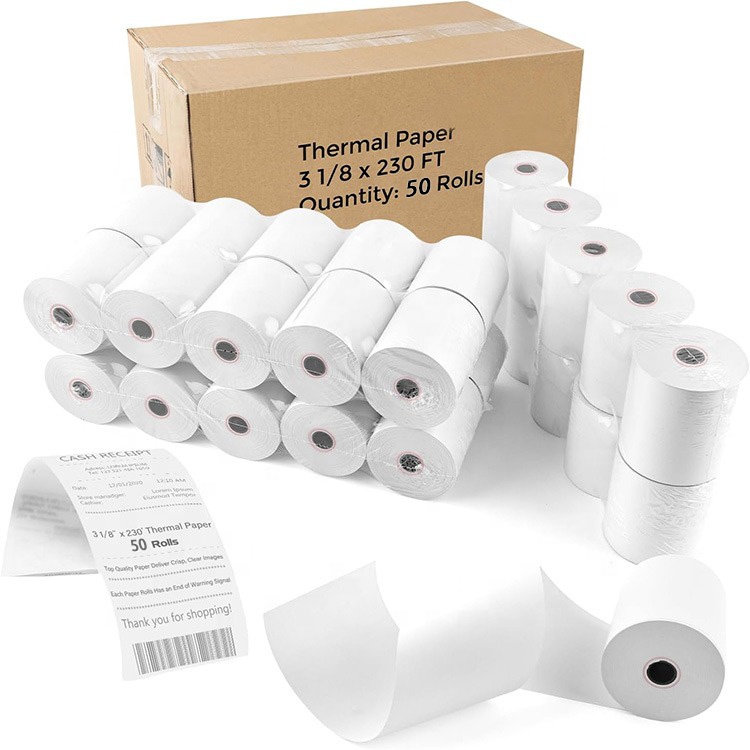
The legal landscape surrounding chemical developers is shifting quickly. The European Union has already enacted strict limits on BPA in receipt paper. State-level scrutiny in the US is intensifying rapidly. The Minnesota Pollution Control Agency (PCA) provides strict guidelines for businesses. They actively encourage the removal of all bisphenols from commercial use. Compliance mandates will likely expand globally. Early adoption protects your operations from sudden regulatory disruptions. Staying ahead of legislation prevents costly forced transitions later.
Employers carry a fundamental duty of care. Ignoring employee health concerns creates massive internal business risks. Workplace safety inquiries are rising across the retail sector. Staff members are increasingly aware of toxic material handling. They know the risks of chronic chemical exposure. You must provide a fundamentally safe working environment. Proactive safety measures boost employee morale and retention. Union representatives frequently highlight occupational chemical exposure. Eliminating bisphenols demonstrates a tangible commitment to worker health.
Brand reputation also hangs in the balance. Consumers value corporate responsibility more than ever. Eliminating known toxins from the checkout experience creates a strong public relations narrative. Shoppers appreciate businesses protecting their health. A clean checkout process builds brand trust instantly. Customers notice when you prioritize their well-being alongside employee safety. You can confidently promote your chemical-free receipts. This transparency turns a simple compliance upgrade into a powerful marketing asset.
Sourcing genuinely safe alternatives requires a clear evaluation framework. You must categorize the available options accurately before purchasing.
BPA-Free (Standard): This paper usually contains BPS. We do not recommend this category for risk elimination. It only solves the PR problem, not the health problem.
Phenol-Free : These formulas contain zero bisphenols. They often use highly stable urea-based compounds like Pergafast 201. We highly recommend this category for commercial use.
Use the following summary chart to compare your primary procurement options:
Category Name | Developer Chemical Used | Health Risk Profile | Procurement Recommendation |
|---|---|---|---|
Standard BPA-Free | Bisphenol S (BPS) | High (Endocrine Disruptor) | Not Recommended |
Phenol-Free | Urea-based (e.g., Pergafast 201) | Low to None | Highly Recommended |
You must balance performance against safety. This requires a strict performance matrix. Let us evaluate three critical functional factors for any alternative paper.
First, test legibility and contrast. Phenol-free alternatives must produce perfectly scannable barcodes. Standard optical readers need high visual contrast. High-quality phenol-free paper performs exceptionally well here. Second, assess image stability. You need strong archiving capabilities. How long will the receipt remain legible in filing cabinets? Does it fade quickly under UV light? Phenol-free options often offer superior fade resistance compared to standard stock. Third, verify hardware compatibility. Your new rolls must work smoothly. Phenol-free options should not leave excessive chemical residue. Clean thermal printheads prevent unexpected maintenance costs. Upgrading to high-quality non-toxic thermal paper protects both your staff and your expensive printing hardware.
Rolling out phenol-free upgrades requires strategic financial planning. Let us address the unit-cost premium transparently. Phenol-free paper generally costs slightly more per roll than standard bisphenol stock. You must frame this premium correctly. View it strictly as an investment in compliance and risk mitigation rather than a simple line-item expense. Attempting to save fractions of a cent on cheap receipt paper invites massive occupational liabilities. Investing in phnoel free formulations proactively solves safety challenges. This upfront investment prevents future legal friction and protects your retail staff immediately.
Inventory phasing demands a calculated, step-by-step approach. You cannot simply throw away existing stock overnight. Follow this rollout sequence carefully:
Audit your current stock levels across all retail locations.
Identify all non-compliant rolls containing BPA or BPS.
Burn through existing inventory while actively protecting staff. Provide nitrile gloves for cashiers handling the old, non-compliant stock.
Stage the rollout of your new POS thermal paper roll inventory location by location.
Collect feedback from cashiers regarding print quality, dust generation, and handling feel.
Storage and handling updates complete your transition process. The newly chosen alternative might possess specific environmental sensitivities. Thermal papers sometimes require stricter humidity controls. You must maintain stable temperatures in your backroom supply closets. Extreme heat can cause premature darkening of the chemical coating. Keep boxes sealed tightly in dark environments until needed. Protect the raw rolls from direct sunlight and moisture. Proper storage guarantees optimal print quality on the shop floor.
True safety in receipt printing requires ongoing vigilance. You must look past superficial marketing labels. "BPA-Free" no longer guarantees a harmless product. Moving to certified phenol-free receipt paper represents a strategic, compliance-driven decision. This critical choice protects your workforce from chronic chemical exposure. It also safeguards your bottom line from future regulatory penalties and workplace liability claims. Prioritize human health over marginal supply cost savings. Take immediate action today. Contact your current suppliers and request their latest safety data sheets. Review the specific developers used in their coatings. Alternatively, order a sample run of phenol-free rolls. Test them on your existing point-of-sale hardware to prove that safety never compromises operational performance.
A: Yes, dermal absorption occurs immediately upon contact. While the dosage for an occasional shopper remains relatively low, the risk profile is dramatically higher for retail workers. Cashiers handle hundreds of receipts daily. This constant occupational exposure allows endocrine-disrupting chemicals to accumulate in the bloodstream, making workplace safety a critical priority.
A: Yes. Hand sanitizers contain alcohol and dermal penetration enhancers. The scientific consensus shows these ingredients drastically increase the absorption rate of bisphenols. Handling receipts directly after sanitizing your hands opens the skin's pores, allowing chemicals like BPA and BPS to enter the body exponentially faster than dry contact.
A: The common "scratch test" only proves the presence of a thermal coating. Scratching the paper turns it dark, but it cannot identify the specific chemical developer used. Only a certified laboratory test or a supplier's Safety Data Sheet (SDS) can confirm the exact formulation. Verifiable procurement specs are absolutely essential.
A: No, standard bisphenol-coated paper generally should not be recycled. It contaminates the recycled paper stream with toxic chemicals. When processed, these endocrine disruptors end up in recycled paper products like napkins or food packaging. Switching to safe, phenol-free alternatives helps protect both the environment and public health.


