


Views: 0 Author: Site Editor Publish Time: 2026-07-21 Origin: Site


The regulatory and consumer-driven phase-out of single-use plastics has made paper straws mandatory for many food service operators. However, the transition frequently results in compromised customer experiences due to inferior product quality. Procurement teams and cafe owners face a saturated market of poorly manufactured alternatives. The challenge is balancing structural integrity—preventing the dreaded "soggy straw" effect—with strict food safety compliance, environmental validity, and viable unit economics. This guide provides a technical framework for evaluating food grade paper straws. We detail the manufacturing standards, compliance certifications, and performance metrics required to select a reliable supplier for high-volume beverage operations. You will learn how to navigate material sourcing, verify safety documents, and test physical durability before committing to large-scale inventory orders.
Compliance is Non-Negotiable: True food grade status requires verifiable documentation that all raw materials, including kraft paper, adhesives, and inks, meet FDA or equivalent international food contact safety standards.
Construction Dictates Performance: Durability is determined by ply-count (typically 3-ply or 4-ply), paper density (GSM), and the curing process of food-safe adhesives, directly impacting soak time and structural integrity in various liquid temperatures.
Environmental Nuance Matters: Distinguishing between a generic biodegradable paper straw and a certified compostable paper straw is critical for accurate brand messaging and meeting local waste management regulations.
Supplier Vetting Reduces Risk: Partnering with a vetted paper straw supplier ensures consistent quality control, reliable lead times, and access to necessary formats like individually wrapped paper straws for hygiene compliance.
Many imported paper straws claim to be safe but use industrial adhesives or non-colorfast inks that leach chemicals into beverages. Understanding the regulatory landscape is crucial for procurement teams. You cannot rely on a simple "safe for food" stamp on a shipping carton. You need to dig into the chemical makeup of the adhesives, the bleaching process of the paper, and the specific regulations the manufacturer follows.
Specific regulatory standards govern food contact materials. In the United States, FDA 21 CFR 176.170 regulates paper and paperboard in contact with aqueous and fatty foods. This standard dictates what substances can safely migrate from the paper into the liquid. In Europe, EU Regulation (EC) No 1935/2004 and the BfR Recommendation XXXVI outline strict safety parameters for paper and board. Manufacturers must use water-based, food-safe glues and soy-based or water-based inks to ensure compliance and consumer safety. If a supplier cannot produce a recent lab test proving compliance with these specific codes, their product is not suitable for commercial beverage service.
The Forest Stewardship Council (FSC) verifies sustainable and safe wood pulp sourcing. Using recycled paper in straws poses severe risks of contamination from mineral oils, heavy metals, or BPA. Virgin kraft paper is the safer alternative. Furthermore, Chlorine-Free bleaching standards, such as Totally Chlorine-Free (TCF) or Elemental Chlorine-Free (ECF), ensure chemical purity in the final product. TCF uses hydrogen peroxide or ozone instead of chlorine derivatives, eliminating the risk of dioxin formation.
Request the supplier's FSC Chain of Custody certificate.
Verify the certificate number on the official FSC database.
Confirm the paper stock is 100% virgin kraft paper.
Ask for documentation proving TCF or ECF bleaching methods.
It is vital to verify that straws are free from PFAS ("forever chemicals" often used for water resistance), heavy metals (regulated under CONEG/TPCH), and common allergens. For instance, cheap plant-based starch adhesives sometimes contain gluten, which can trigger allergic reactions in sensitive customers. Always demand a full material safety data sheet (MSDS) for the adhesives used in the manufacturing process.
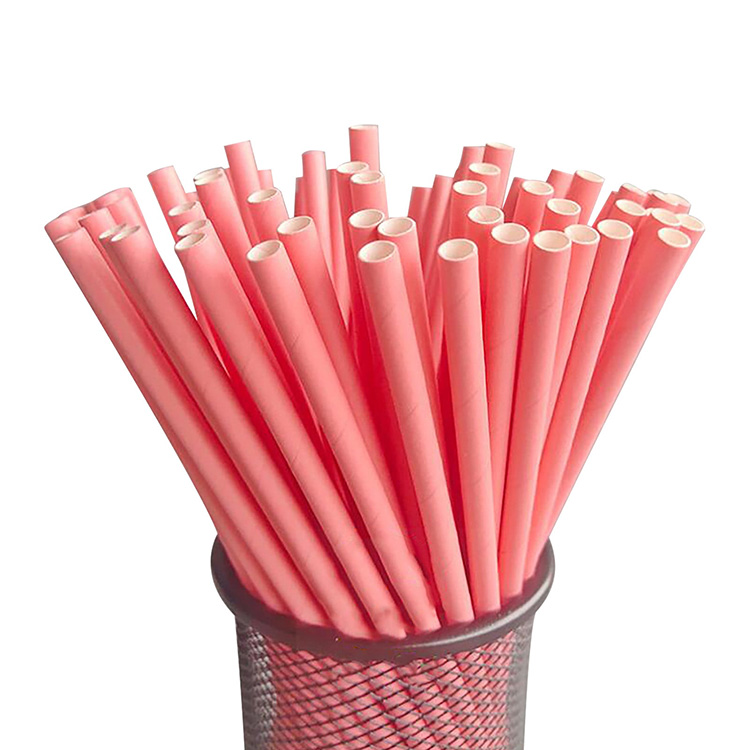
Physical features translate directly to the operational outcome of a positive customer experience. A straw must function properly without premature degradation. You need a product that survives the entire duration of a meal or a long commute.
Structural differences exist between standard 3-ply straws, suitable for quick-service cold drinks, and heavy-duty 4-ply straws, required for thick shakes, smoothies, or extended use. Paper thickness, measured in GSM (Grams per Square Meter), plays a critical role. Higher GSM in the outer and inner plies directly translates to increased crush resistance and longevity.
Construction Type | Typical GSM (Total) | Best Use Case | Estimated Soak Time (Cold) |
|---|---|---|---|
3-Ply Standard | 280 - 320 GSM | Water, Soda, Iced Tea | 1.5 - 2 Hours |
4-Ply Heavy Duty | 350 - 400+ GSM | Milkshakes, Smoothies, Boba | 3 - 4+ Hours |
Proper diameter selection is essential for specific menu items. Using the wrong size frustrates customers and slows down service.
6mm (Standard/Soda): Ideal for water, iced coffee, and carbonated beverages.
8mm (Juices, Frappes, and Smoothies): Provides enough clearance for thicker liquids without collapsing under suction.
10mm to 12mm (Boba/Bubble Tea): Requires pointed end designs to puncture sealing films on cups.
Length options must correspond to drinkware size, ranging from 5.75" cocktail straws to 7.75" standard straws and 10" giant straws for large tumblers.
Acceptable soak times typically require maintaining integrity for 2+ hours in cold liquids. Performance variables change significantly when straws are used in hot beverages, which melt adhesives faster, or acidic and carbonated cold drinks, which accelerate paper fiber breakdown. Additionally, straws must resist bending, crimping, or collapsing when pushed through tight cross-slots in plastic or compostable cup lids. A weak straw will buckle immediately upon insertion, rendering it useless.
Improper curing or low-quality kraft paper introduces an unpleasant cardboard taste or chemical odor. Procurement teams should conduct flavor neutrality assessments before placing bulk orders. Soak the sample straws in plain room-temperature water for 30 minutes, then taste the water. Any papery or chemical notes indicate poor manufacturing controls.
Clarifying the terminology surrounding end-of-life disposal prevents corporate greenwashing and ensures compliance with sustainability goals. You must understand exactly what happens to the product after the customer throws it away.
Biodegradable paper straws require specific environmental conditions and timelines to break down naturally. The "biodegradable" label has limitations if the product ends up in an anaerobic landfill, where decomposition is severely delayed. Without oxygen and sunlight, even paper can sit in a landfill for decades.
A certified compostable paper straw meets criteria for industrial compostability, such as ASTM D6868, EN 13432, or BPI certification. It is important to differentiate between "Industrial Compostable" and "Home Compostable" certifications (like TÜV AUSTRIA OK compost HOME). Marine degradability certifications (e.g., TÜV OK biodegradable MARINE) are also relevant for coastal food service operations where accidental littering poses a threat to local ecosystems.
Red flags in supplier claims include vague terms like "eco-friendly" or "natural" that lack third-party laboratory verification or registry numbers. Always demand verifiable proof of environmental claims. If a supplier cannot provide a valid BPI or TÜV certificate, their claims are likely marketing spin rather than scientific fact.
Adapting straw formats to operational workflows, hygiene requirements, and brand presentation is crucial for scalability. You need packaging that fits your specific service model.
Bulk packaging suits high-turnover, behind-the-counter service where speed and minimal packaging waste are prioritized. Baristas can grab bulk straws quickly during a rush. Conversely, individually wrapped paper straws are necessary for delivery apps, self-service condiment stations, and post-pandemic hygiene expectations. Customers want assurance that their drinking utensil has not been handled by others.
Ensure the wrapper itself is made of compostable paper rather than plastic. Wrapping a paper straw in a plastic sleeve defeats the entire purpose of the sustainability initiative. When printing logos on straws or wrappers, consider technical constraints like color limitations. Ink must remain food-safe, non-bleeding, and free of volatile organic compounds (VOCs).
Proper storage prevents premature adhesive degradation or mold growth. Store bulk straws with humidity control, adequate temperature, and elevation off concrete floors. Inner-packaging should include moisture-barrier inner lining bags in shipping cartons to protect inventory during ocean transit or humid warehouse storage. Paper absorbs moisture from the air; if left in a damp environment, the straws will lose their structural integrity before they even reach the cup.
Selecting a manufacturing partner requires balancing cost with reliability and safety. You are not just buying a product; you are integrating a component into your food service supply chain.
Cross-reference supplier-provided certificates with public certification databases, such as the BPI public registry or FSC certificate database. Red flags include outdated certificates (older than 12 months) or certificates issued to third-party trading companies rather than the manufacturer. You want a direct line to the factory to ensure accountability.
Evaluate a paper straw supplier based on facility certifications like ISO 9001, ISO 22000, GMP, HACCP, or BRCGS. Inquire about batch testing, alignment of plies, and defect rates, such as unspooling, unraveling, or incomplete adhesive coverage. Ask for their standard operating procedures regarding quality control checks during a production run.
Assess the trade-offs between domestic suppliers (shorter lead times, lower shipping costs, zero tariffs, higher unit cost) and overseas manufacturers (longer lead times, lower base unit cost, higher MOQs, potential anti-dumping duties or import tariffs). Factor in container shipping delays and warehouse space requirements when calculating your inventory needs.
Transitioning to paper straws requires prioritizing structural integrity and verifiable food safety over the lowest possible unit price. Procurement teams should filter suppliers based on FDA/EU compliance, FSC certification, and independent compostability testing before evaluating price.
Request physical sample kits for in-house soak testing across your entire beverage menu.
Demand current compliance certificates (not older than 12 months) directly from the manufacturer.
Negotiate trial runs for high-volume orders to test operational workflow and customer feedback.
Verify the source materials and request adhesive safety data sheets to ensure allergen-free status.
A: High-quality 3-ply or 4-ply paper straws should maintain structural integrity for 2 to 4 hours in cold beverages without unraveling or turning to mush. Performance varies based on the acidity and temperature of the liquid.
A: Certified food grade paper straws use synthetic or safe plant-based adhesives that are free from common allergens like gluten. Buyers must verify this directly with the manufacturer's specification sheets and material safety data sheets.
A: While all paper is eventually biodegradable, a certified compostable paper straw has been rigorously tested to break down completely in commercial composting facilities within a specific timeframe (usually 90 days) without leaving toxic residue.
A: Paper straws degrade faster in hot beverages because heat melts the food-safe adhesives. Specialized heavy-duty straws may perform better, but rigorous testing is required before deploying them for hot coffee or tea service.
A: A cardboard taste usually results from low-quality kraft paper or improper curing of adhesives during the manufacturing process. High-quality manufacturers use proper drying techniques to ensure complete flavor neutrality.


