


We have all experienced a deep, universal frustration at the worst possible moment. You pull out a critical expense receipt, shipping label, or journal entry. Instead of important data, you find a completely blank, yellowed sheet of paper. This missing text haunts businesses and consumers alike during tax season or inventory checks.
Standard direct printing materials prioritize extreme cost-efficiency and rapid speed. They deliberately sacrifice archival permanence. They rely on heat-sensitive chemicals rather than traditional wet ink to generate images. Consequently, they remain highly vulnerable to everyday environmental factors long after they leave the printer.
All standard prints eventually degrade over time. However, understanding their specific chemical triggers helps you drastically extend their functional lifespan. We will show you exactly how to restore lost data quickly. You will also learn when to upgrade your operations to purpose-built, long-lasting alternatives.
The Lifespan Reality: Standard direct thermal prints typically last 6 to 12 months under optimal conditions; exposure to heat or UV drastically accelerates fading.
The Lamination Trap: Applying heat-based lamination to preserve a thermal receipt will instantly turn the entire page black—a common, irreversible error.
Restoration is Possible: Faded prints can often be recovered digitally (via scanning and color inversion) or physically (by applying gentle heat to the back of the paper).
Upgrading for Permanence: Businesses requiring longevity should evaluate anti-fade thermal paper, specialty formulations, or transition to thermal transfer technologies.
Direct thermal printing uses absolutely no ink, toner, or physical ribbons. You might wonder how it produces such crisp, clear text. The printer head contains hundreds of microscopic heating elements. It applies targeted heat directly to a specialized surface coating. This unique coating contains a carefully balanced mixture of chemical components. We can break these vital elements down into three main categories:
Leuco Dyes: These act as the colorless foundation. They remain invisible until they encounter extreme heat.
Developers: These acidic compounds react forcefully with the leuco dyes. They fuse together to produce a visible, dark color.
Sensitizers: These compounds optimize the exact melting point. They ensure the chemical reaction happens rapidly at precise printer temperatures.
Stabilizers: High-quality rolls include these agents to prevent the dye from recrystallizing and fading too quickly.
When the print head sweeps across the page, these chemicals melt together instantly. They form a dark, visible mark in milliseconds. However, this temperature-sensitive chemical reaction presents a major inherent flaw. It remains entirely reversible. The image never truly "sets" or dries like traditional liquid ink. Environmental factors continually interact with the fragile chemical layer. This vulnerability persists every single day after the initial printing process.
Buyers must establish highly realistic operational expectations. Standard direct prints simply do not last for decades. They typically survive for a few months. If you store them poorly, they might only remain legible for a few weeks. Recognizing this strict baseline lifespan helps you plan your storage and documentation workflows much more effectively.
We constantly expose our important documents to harsh, fluctuating environments. Five primary environmental culprits actively destroy the delicate chemical bonds on your standard prints.
UV Light (Sunlight)
Direct sunlight aggressively attacks the internal chemical structure. Prolonged UV exposure actively breaks down the leuco dye molecular bonds. If you leave a printed delivery receipt on a sunny car dashboard, it will likely disappear. Sunlight can bleach a clear document completely blank in just a few short weeks.
Ambient & Extreme Heat
These specialized materials are inherently heat-reactive by design. Warm environments force the chemical reaction to remain active. A sweltering summer warehouse or a stifling car interior causes massive, rapid damage. The text will slowly fade into the background. Alternatively, ambient heat over 140°F (60°C) might cause the entire background to turn dark gray.
Crucial Warning (The Lamination Disaster): You must never use heat-based laminators to archive these documents. Many consumers attempt this trick to preserve important tax receipts. The laminator's intense heat activates the entire surface coating instantly. It will permanently black out your entire document. You absolutely cannot reverse this catastrophic error.
Moisture & Humidity
High ambient humidity rapidly ruins clear text. The specialized paper coating absorbs heavy moisture directly from the air. This causes the delicate chemical layer to swell, soften, and loosen. The ink-like dyes then begin to migrate across the page. You will soon notice blurred, bleeding, or completely illegible text.
Chemical Interference
Daily handling exposes prints to invisible chemical threats. Hand sanitizer, harsh cleaning solvents, and even natural skin oils accelerate dye degradation. Furthermore, standard plastic folders contain harmful plasticizers. Polyvinyl chloride (PVC) sleeves actively leach plasticizers into the paper. These invisible chemicals act like an eraser on the print.
Friction & Abrasion
Physical rubbing causes irreversible damage. The chemical top-coating remains surprisingly fragile. If you constantly slide a receipt in and out of a tight leather wallet, the rough friction degrades the surface. It physically scrapes the fused dye right off the paper stock.
Environmental Culprit | Primary Effect on Print | Common Real-World Scenario |
|---|---|---|
UV Light | Bleaches text, yellows paper base | Leaving a parking ticket on a dashboard |
Extreme Heat | Darkens background, obscures text | Running a receipt through a hot laminator |
Moisture | Swells coating, blurs text | Storing kitchen order tickets near a steam station |
Chemicals | Erases dye bonds rapidly | Storing documents in cheap PVC plastic sleeves |
Friction | Scrapes away image layer | Folding and rubbing a receipt inside a pocket |
You can effectively protect and even recover your faded documents. We highly recommend adopting strict, proactive storage practices across your organization immediately.
Best Practices for Storage
You should always seek out cool, dark, and exceptionally dry storage environments. Keep your essential records far away from direct sunlight and building heat sources. We strongly recommend archiving them in standard paper envelopes. Avoid glossy plastic sleeves entirely. Paper envelopes completely prevent the harmful chemical reactions caused by synthetic plasticizers.
Digitization (The Safest Route)
Digital preservation offers the highest level of security and peace of mind. You should scan important financial receipts and compliance labels immediately upon receipt. A quick smartphone photo prevents major future headaches.
Tech hack: You can often recover already faded receipts using digital tools. First, scan the blank-looking document in high resolution. Next, open it in basic photo editing software. Increase the image contrast dramatically. If that fails, apply a "Negative" or "Invert" color filter. This simple digital trick often reveals hidden, faded text clearly enough to read.
The "Blow Dryer" Recovery Method
You can try a physical hack for desperate, unreadable situations. We call this the blow dryer recovery method. It represents a high-risk, high-reward technique. You must execute these exact steps carefully to avoid destroying the document entirely:
Place the faded receipt face down on a clean, flat surface.
Turn your standard hairdryer to a medium, gentle heat setting.
Hold the dryer roughly six to eight inches strictly above the back of the paper.
Sweep the warm air continuously back and forth across the surface.
The residual, unactivated chemicals on the front will darken slightly from the ambient warmth. This often creates enough contrast to reveal the faded text. We reiterate this crucial point: you must never heat the front of the receipt directly. Heating the front face will trigger a massive chemical reaction. It will turn the entire document pitch black, ruining the record forever.
Businesses must directly align their material choices with their specific operational use cases. Choosing the wrong supply type causes severe data loss and massive logistical failure. Let us carefully evaluate when standard options suffice and when you urgently need premium upgrades.
Aligning Material with Business Use Cases
Short-term applications rarely require expensive materials. Shipping labels, temporary retail price tags, and daily restaurant receipts possess very short operational lifespans. Standard direct thermal paper remains the most cost-effective and appropriate choice here. It handles these rapid tasks perfectly without draining your supply budget.
Conversely, long-term and archival applications demand absolute permanence. Product warranties, complex tax records, and strict compliance labeling require durable solutions. You cannot rely on standard rolls for these critical tasks. We highlight the absolute necessity of switching to high-quality anti-fade thermal paper for archives. This premium stock utilizes advanced chemical stabilizers. These complex stabilizers lock the dye firmly in place, significantly preventing premature fading.
If you need even greater permanence, you should migrate to thermal transfer printing. Thermal transfer technology does not rely on reactive dyes. Instead, it uses a heated print head to melt a physical wax or resin ribbon directly onto the label. This creates a permanent, waterproof bond. It easily guarantees three to ten years of readable lifespan.
Specialty Applications
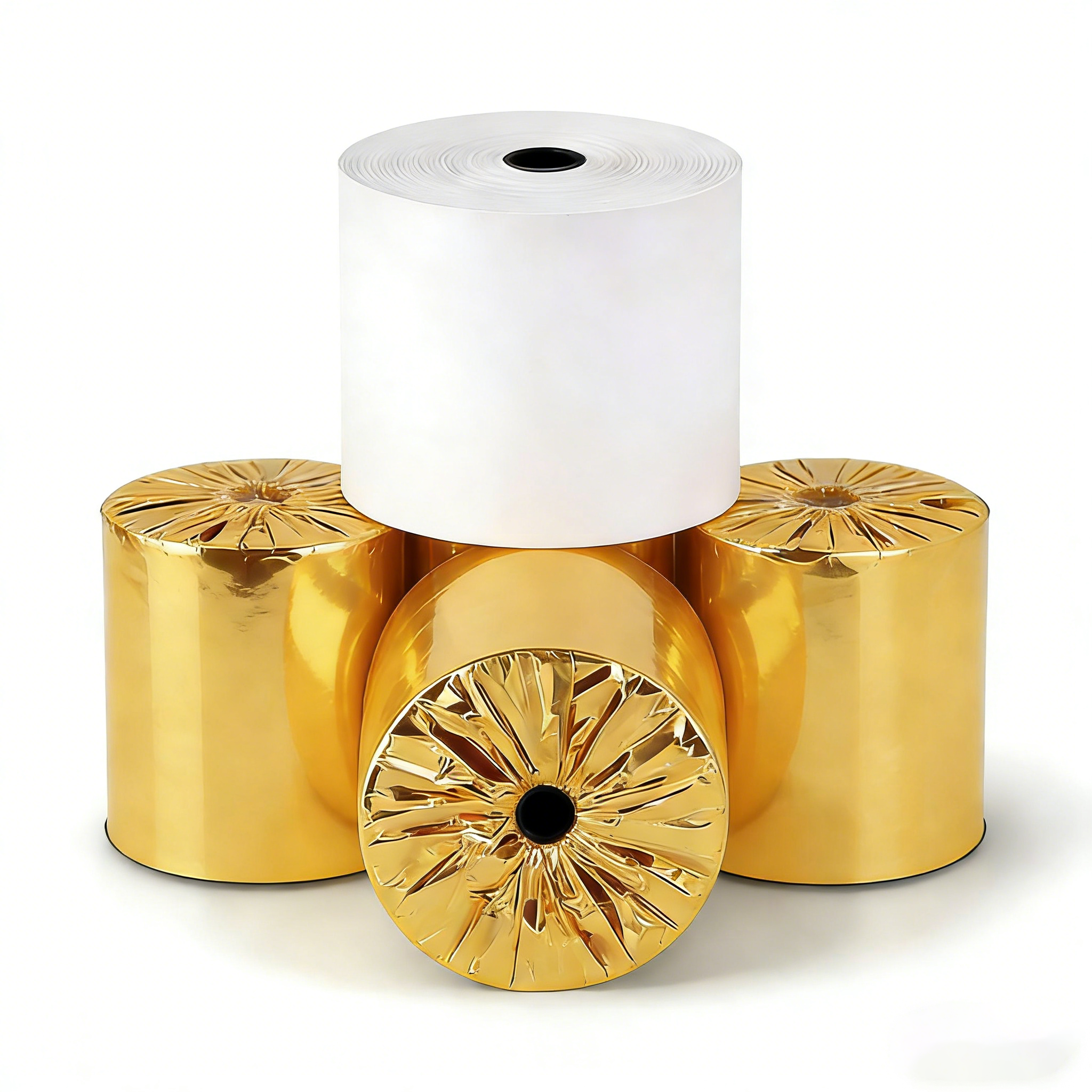
Certain modern industries demand both extreme durability and premium aesthetics. High-end retail brands, luxury boutiques, and consumer journaling enthusiasts need highly specialized solutions. We proudly introduce premium aesthetic options like gold foil film thermal paper for these unique markets. This specialty formulation resists standard fading variables beautifully. It provides an upscale, metallic finish while fiercely protecting the printed data from heat and light degradation.
Application Type | Ideal Paper Technology | Expected Lifespan | Primary Benefit |
|---|---|---|---|
Daily Receipts, Logistics | Standard Direct Thermal | 3 to 6 months | Maximum cost efficiency |
Tax Records, Warranties | Anti-Fade Direct Thermal | 5 to 10 years | Compliance without new printers |
Luxury Retail, VIP Tickets | Specialty Gold Foil Film | 1 to 3 years | Premium brand aesthetics |
Permanent Asset Labels | Thermal Transfer (Resin) | 10+ years | Indestructible physical print |
Choosing the right manufacturing partner directly impacts your daily operational success. Procurement teams must look far beyond simple pricing metrics. Quality control at the factory level determines how long your data survives in the real world.
Verifying Coating Quality
The chemical top-coating acts as your first critical line of defense. A highly reliable high contrast thermal paper supplier should always provide clear, transparent technical documentation. They must prove the structural quality of their base stock and their protective top-layers. High-quality top-coatings actively repel destructive UV rays, ambient water, and natural oils. Cheaper, non-top-coated alternatives save money upfront but invite catastrophic data loss later.
Health, Safety, and Compliance (The BPA Issue)
We must seriously address the environmental and health risks of chemical developers. Historically, global manufacturers used Bisphenol A (BPA) extensively to create the dark image. Scientists widely recognize BPA as an endocrine-disrupting chemical. Handling standard receipts with wet or greasy hands dramatically increases chemical absorption straight through your skin. Businesses face increasing public pressure to protect their employees and daily customers from these hidden risks.
Vendor Shortlisting Logic
Procurement teams should adopt a strict, safety-first vetting process. Follow these specific logic criteria to future-proof your organizational supply chain:
Mandate strictly "Phenol-free" (BPA-free and BPS-free) formulations. This actively protects all users and ensures smooth compliance with tightening global health regulations.
Demand verifiable ISO certification proofs. Your chosen supplier must consistently meet strict international standards for image density and long-term environmental stability.
Request highly detailed material safety data sheets (MSDS) for all prospective product lines.
Conduct your own independent fading tests on sample rolls. Expose them to heat and light before committing to massive, multi-year volume contracts.
Direct thermal paper remains inherently temporary largely due to its reactive chemical makeup. The specialized dyes and acidic developers react continuously to unseen environmental triggers. However, you can easily mitigate this inevitable fading through rigorous, smart storage protocols. You must prioritize cool, completely dark environments for your archives. Above all else, you must avoid common, destructive mistakes like heat lamination.
We actively encourage buyers to rigorously audit their specific business use cases today. You must securely categorize your daily documents into temporary and archival buckets. Determine if you truly require standard rolls for fast daily logistics. Evaluate carefully if specialized anti-fade stock better serves your strict compliance needs. Sometimes, you may even require a complete equipment shift to physical thermal transfer technology. Take proactive steps right now to secure your essential printed data before it fades away completely.
A: No. Even high-grade direct thermal paper is not permanently archival. For permanent records, traditional ink/laser or thermal transfer with resin ribbons must be used.
A: Yes, usually. The chemicals and moisture in standard highlighters react with the paper's coating, often accelerating the fading process underneath the highlight.
A: It depends on local regulations. Because of the chemical coatings (like BPA/BPS), many municipal recycling programs reject thermal paper to prevent contaminating recycled paper streams.


