


Views: 0 Author: Site Editor Publish Time: 2026-11-27 Origin: Site


Supply chain efficiency relies heavily on an often-overlooked component: the thermal label. Label failure directly translates to operational downtime and lost revenue. Poor adhesion, fading, or printer jams disrupt workflows instantly. A single unreadable barcode stops an entire sorting line, forcing manual intervention and delaying shipments. Procuring labels at scale requires balancing unit economics with technical reliability. Decision-makers must sort through a fragmented market of brokers, converters, and direct manufacturers. You need a partner capable of meeting specific environmental, volume, and hardware requirements. Finding the right supplier prevents catastrophic shipping delays and protects your hardware investments. This guide provides a technical evaluation framework for vetting a Thermal Label Manufacturer. We detail how to assess production capabilities, quality assurance protocols, and supply chain stability before committing to a long-term contract.
Align Material to Environment: Sourcing must begin with technical specifications; direct thermal and thermal transfer labels require fundamentally different face stocks and adhesives based on their end-use environment and required lifespan.
Audit Manufacturing Tolerances: A reliable partner minimizes printer wear by adhering to strict slitting tolerances, clean-room winding processes to reduce paper dust, and consistent core sizing.
Evaluate Supply Chain Resilience: Weighing domestic suppliers against a thermal label factory in China requires calculating total landed costs, including freight volatility, lead times, and Minimum Order Quantities (MOQs).
Demand Proof of Quality: Always require raw material spec sheets, adhesive performance data, and physical sample testing across your specific printer fleet before finalizing procurement.
Document the exact lifecycle of your label from printing to final delivery. Consider exposure to UV light, moisture, chemical solvents, and extreme temperature fluctuations. Cold storage environments demand fundamentally different face stocks than outdoor logistics yards. A label applied in a blast freezer will fail if it uses a standard room-temperature adhesive. Map out every physical touchpoint your label encounters.
Record the ambient temperature and humidity at the exact moment of label application.
Track the maximum and minimum temperatures the package will endure during transit.
Identify any chemical exposure risks, including cleaning solvents used on conveyor belts.
Measure the duration of direct sunlight exposure if stored in open-air yards.
Understanding these environmental stressors dictates the exact material science required for your application. Skipping this step guarantees premature label failure and operational headaches.
Establish the precise specifications of your current printer fleet. Note whether you deploy mobile, desktop, or heavy-duty industrial printers. Identify required roll outer diameters, core sizes, and sensor mark configurations. Desktop printers typically require one-inch cores, while industrial units utilize three-inch cores. Printers use either gap sensors or black marks to calibrate label spacing.
Ensure the label face stock optimizes for your printer's specific DPI. High-resolution output requires perfectly matched thermal coatings. Running a 300 DPI printer on low-grade paper yields blurry, unscannable barcodes. Match the media to the machine to maximize print clarity. Check the maximum outer diameter (OD) your printer housing accepts to avoid ordering rolls that simply do not fit.
Define your application timeline clearly before contacting suppliers. Short-term logistics tracking usually requires a lifespan under six months. Long-term asset identification often demands durability exceeding two years. This timeline dictates the fundamental chemistry of the label you need. Archival applications require acid-free materials to prevent yellowing over time. Logistics labels prioritize rapid print speeds over decade-long durability. Establish your minimum acceptable lifespan to avoid overpaying for unnecessary material longevity.
Assess the supplier's access to high-quality, chemically treated heat-sensitive paper. A competent Direct Thermal Label Manufacturer provides various top-coating options. These coatings protect the heat-sensitive layer against scuffing, moisture, and minor environmental exposure. They work exceptionally well for short-to-medium-term use in controlled environments. Direct thermal eliminates the need for ribbons, simplifying printer maintenance and reducing consumable management.
For thermal transfer requirements, evaluate the manufacturer's ability to pair face stocks with correct ribbon formulations. Paper, polypropylene, and polyester require specific wax, wax/resin, or resin ribbons. This precise pairing ensures high durability for outdoor or chemical-resistant applications. If the manufacturer cannot explain ribbon compatibility, they lack the technical expertise required for complex applications.
Print Technology | Ideal Use Case | Durability | Hardware Maintenance |
|---|---|---|---|
Direct Thermal | Shipping labels, receipts, short-term tracking | Low to Medium (sensitive to heat and UV) | Low (no ribbons to replace) |
Thermal Transfer (Wax) | Retail tags, warehouse bin labels | Medium (resists scratching, indoor use) | Medium (requires ribbon changes) |
Thermal Transfer (Resin) | Chemical drums, outdoor asset tagging | High (resists harsh chemicals and weather) | Medium (requires ribbon changes) |
Request technical data sheets for all proposed adhesives. Review options for permanent, removable, or freezer-grade applications based on your mapping. Verify the adhesive stays intact through rapid temperature changes. High-moisture environments quickly degrade weak glues, causing labels to flag or detach completely. Establish protocols for testing how the adhesive interacts with your specific packaging materials.
Corrugated cardboard requires high initial tack to grip porous fibers.
Poly mailers need adhesives formulated to stick to low-surface-energy plastics.
Glass and metal substrates often require specialized acrylic adhesives.
Removable applications demand adhesives that leave zero residue upon peeling.
Test the shear strength and peel adhesion on your actual substrates before approving a production run.
Determine if the vendor operates as a true manufacturer rather than a middleman. Converters possess in-house press capabilities and raw material warehousing. Brokers simply mark up third-party products and pass them along. Direct manufacturers offer superior quality control and faster troubleshooting when issues arise. Conduct a virtual or physical facility audit to verify their operational footprint.
Look for automated web guides, tension controllers, and inline inspection systems on their presses. Cleanliness matters immensely; excessive dust on the factory floor inevitably ends up on your label rolls. Ask to see their raw material staging areas to confirm they store thermal paper in climate-controlled environments.
Review the manufacturer's press widths and operational lines. Check their shift schedules to gauge true output potential. They must handle seasonal volume spikes without extending lead times. A facility running at maximum capacity during off-peak months will fail during peak seasons. Ask about their disaster recovery plans and redundant manufacturing locations. Ensure they maintain adequate safety stock of raw materials to buffer against supply chain shocks. A supplier with multiple identical presses provides better redundancy than a facility relying on a single high-speed machine.
Analyze unit costs for standard logistics labels like 4x6 and 4x8 formats. Commodity label economics rely on massive scale and highly efficient material usage. When evaluating a 4x6 Shipping Label Manufacturer, scrutinize their format options. Assess their capabilities in producing fanfold stacks versus continuous rolls. Fanfold labels require precise perforation tie-ratios to fold flat without breaking prematurely during high-speed printing.
Review their automated packaging processes. Proper shrink-wrapping and strong boxing prevent transit damage and moisture ingress during shipping. Poorly packaged rolls arrive crushed, rendering the entire carton unusable. Ask for packaging specifications, including carton burst strength and pallet wrapping standards.
Assess capabilities for flexographic or digital pre-printing on thermal substrates. You may need company logos, static return addresses, or warehouse color-coding. Proper Thermal Label Customization achieves this without compromising the thermal printable area. Using the wrong inks insulates the paper and destroys printhead elements. The manufacturer must use specialized thermal-safe inks.
Evaluate the manufacturer's tooling inventory and die-cutting precision. Custom die-cutting matters immensely for non-standard label shapes. Multi-part labels and integrated packing slips require advanced rotary die capabilities and tight registration control. Ask to see samples of complex die-cuts to verify their matrix removal capabilities.
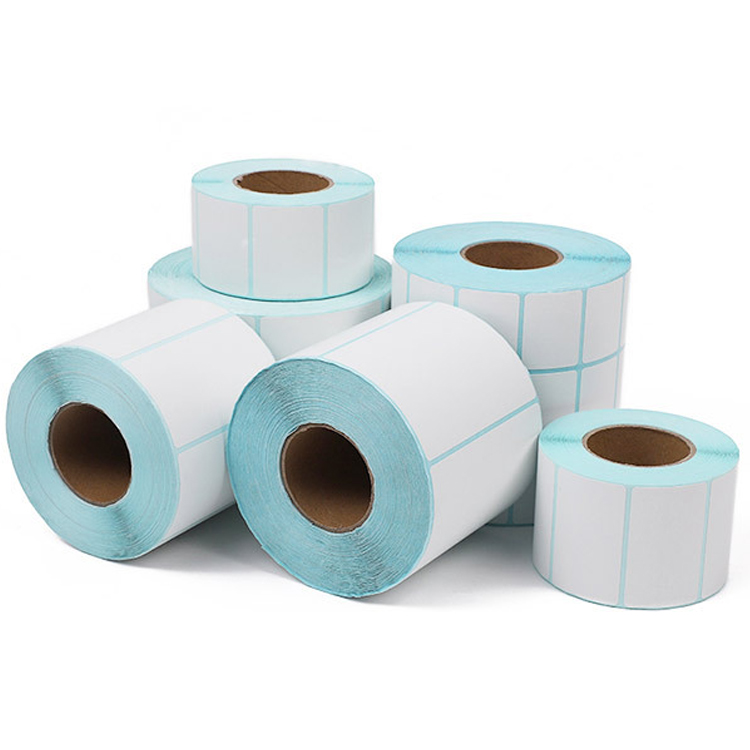
Ensure the manufacturer uses consistent, certified raw materials for every run. Look for FSC-certified paper and BPA-free thermal coatings to meet environmental standards. Avoid suppliers who switch to cheaper, unverified stock mid-contract to pad margins. Material consistency prevents sudden print quality drops and unexpected adhesive failures. Request master roll batch numbers on every carton for full traceability. If a defect occurs, batch numbers allow the manufacturer to isolate the problem quickly rather than recalling your entire inventory.
Examine the quality assurance processes for matrix removal, edge slitting, and web tension. Poor slitting leaves adhesive bleed on the roll edges. It also generates excessive paper dust from dull slitter knives. Both issues prematurely degrade thermal printheads and cause frequent mechanical jams. Implement strict tolerance checks for core alignment. The label web must sit perfectly flush with the cardboard core to prevent tracking errors inside the printer.
Quality Assurance Check | Acceptable Standard | Operational Impact of Failure |
|---|---|---|
Edge Slitting Precision | Clean cut, zero adhesive bleed | Rolls stick together; severe printhead contamination |
Paper Dust Levels | Vacuum-extracted, minimal residue | Clogged optical sensors; premature printhead burnout |
Core Winding Tension | Even tension, flat roll profile | Telescoping rolls; persistent printer tracking errors |
Matrix Removal | 100% clean removal between labels | Label dispensing jams; sensor calibration failures |
Perforation Strength | Tears easily by hand, holds in printer | Web breaks during printing; difficult manual separation |
Verify the capabilities of a Thermal Barcode Label Supplier to meet strict ANSI/ISO grading. Labels must consistently achieve A or B grades on standard barcode verifiers. Ensure the thermal coating's sensitivity matches your printer's energy output. High thermal sensitivity provides high-contrast imaging at your required print speeds. This prevents you from using maximum printhead heat settings. Lower heat settings dramatically extend your hardware life and reduce replacement costs. Ask the supplier to provide verification reports from their inline scanning equipment.
Evaluate the responsiveness of the supplier's engineering and customer service teams. Customer service must act quickly when troubleshooting sudden material failures. Time zone differences can complicate urgent technical support for overseas suppliers. Establish clear communication protocols and escalation paths before signing contracts. Require standard response times for corrective action reports when defects occur. A supplier who ignores emails during a quality crisis will cost you thousands in lost productivity.
Analyze the unit-cost benefits of overseas manufacturing at high volumes. Compare these savings against the reality of four-to-eight-week ocean freight lead times. Partnering with a reliable Thermal Label Factory in China requires strict quality control mitigation. Establish third-party pre-shipment inspections to catch defects before containers load. Draft strict contractual quality agreements to protect your inventory investment.
Understand the Minimum Order Quantity (MOQ) requirements thoroughly. High volume thresholds make overseas sourcing economically viable. Compare this approach to domestic just-in-time delivery models to balance inventory holding costs. Factor in port congestion and customs clearance times when calculating your safety stock levels. A blended approach—using overseas production for base volume and domestic suppliers for emergency spikes—often yields the best results.
Inspect sample rolls for dead zones where adhesive is entirely missing. Look closely for adhesive bleed along the roll edges. Both indicate poor coat weight control during the manufacturing process. Bleed causes rolls to stick together as a solid block, rendering them useless. It also deposits sticky residue directly onto your printer platen rollers. This residue attracts paper dust, creating a hard crust that eventually destroys the printhead.
Identify telescoping rolls immediately upon unboxing samples. Uneven tension during winding pushes the inner layers outward like a telescope. This causes severe printer tracking errors and continuous media jamming. A properly wound roll sits perfectly flat on a table. Reject any shipments showing signs of core crush or loose winding. If you can push the core out of the roll with your thumbs, the winding tension is unacceptably loose.
Baseline your initial approved sample carefully before authorizing mass production. Keep physical control samples in a dark, climate-controlled environment. Conduct random spot-checks on subsequent bulk deliveries. Compare the bulk stock to your baseline to ensure material consistency. Watch for unauthorized changes in paper thickness, top-coating quality, or adhesive tack.
Measure caliper thickness using a micrometer on incoming batches.
Perform a simple tape test to check top-coat anchorage.
Verify the liner release force remains consistent to prevent dispensing jams.
Check the visual brightness of the paper against your control sample.
Request a comprehensive technical capabilities deck and raw material specification sheets from your shortlisted vendors.
Order sample rolls matching your exact hardware specifications and run a 1,000-label stress test through your highest-volume printers.
Conduct a shear strength and peel adhesion test on your actual packaging substrates in their final operating environment.
Establish a baseline control sample from the approved test run to verify material consistency on all future bulk deliveries.
A: Direct thermal manufacturers use heat-sensitive paper that darkens when heated, ideal for short-term logistics and indoor tracking. Thermal transfer manufacturers produce labels requiring a heated ribbon to melt ink onto the surface. This creates highly durable prints necessary for harsh outdoor environments, chemical exposure, and long-term asset tagging.
A: Look for precise die-cutting, clean matrix removal, and dust-free slitting techniques. Verify they offer the correct core size and outer diameter for your specific printers. Ensure the adhesive matches your packaging material, whether corrugated boxes or poly mailers, and check perforation strength for fanfold applications.
A: High thermal sensitivity allows the printhead to create dark, crisp images at lower heat settings. Running printers at lower temperatures reduces thermal stress on the printhead elements. This practice significantly extends the hardware's operational lifespan, reduces maintenance downtime, and lowers your overall replacement part expenses.
A: Request sample rolls and test them using an ANSI/ISO barcode verifier. High-quality labels will consistently score A or B grades. Check for high contrast, sharp edge definition, and zero voids in the printed bars. Ensure the coating does not reflect too much light, which confuses optical scanners.
A: The primary benefit is significant unit-cost reduction at high volumes. Risks include extended ocean freight lead times, higher minimum order quantities, and potential communication delays. Mitigate these risks by using third-party inspections, maintaining higher safety stock, and enforcing strict contractual quality agreements.
A: Yes, skilled manufacturers use flexographic or digital pre-printing with specialized inks that do not insulate the thermal coating. They leave the variable print area clear of heavy varnishes and UV coatings, ensuring the printhead transfers heat efficiently without excessive wear or residue buildup.
A: Direct thermal labels fade when exposed to UV light, excessive heat, or chemical solvents like alcohol and oil. Manufacturers prevent this by applying protective top-coats over the heat-sensitive layer. For extreme environments, switching to thermal transfer labels with resin ribbons eliminates fading entirely.


