


Views: 0 Author: Site Editor Publish Time: 2026-07-02 Origin: Site


Procuring the wrong receipt paper carries heavy operational penalties that go unnoticed until hardware fails. Printer jams, premature printhead degradation, and unreadable transaction records disrupt daily workflows and frustrate customers. A mismatched roll halts checkout lines during peak hours or forces an ATM out of service, directly impacting revenue and customer satisfaction. Procurement and operations managers face the challenge of balancing bulk volume requirements with precise technical specifications. Factors such as paper thickness, roll length, chemical safety, and coating types must be carefully evaluated to ensure seamless point-of-sale and ATM operations. The goal is to secure a reliable supply that meets hardware requirements without inflating operational overhead. This guide provides a comprehensive framework for evaluating receipt paper specifications. We will cover how to match paper grades to specific hardware, understand the impact of different coatings, and mitigate risks related to supply chain disruptions and compliance regulations.
Dimensional Accuracy is Non-Negotiable: A standard 3 1/8 thermal paper roll equates to an 80mm thermal paper roll; however, roll length, core type, and outer diameter dictate hardware compatibility.
Coating Quality Determines Durability: Top-coated thermal paper offers superior resistance to water, oil, heat, and plasticizers compared to economy non-top-coated alternatives.
Chemical Compliance Impacts Liability: Transitioning to BPA-free or completely phenol-free (BPS-free) thermal paper is increasingly required by regional regulations and corporate health policies.
Quality Dictates Hardware Lifespan: Low-grade paper generates excessive paper dust and features uneven slitting, which acts as an abrasive on expensive thermal printheads, leading to premature hardware replacement.
Storage Dictates Archival Life: Thermal paper is highly sensitive to UV light, heat, and humidity; proper packaging and storage protocols are required to maintain receipt legibility for tax and return compliance.
Standardizing receipt paper across an enterprise simplifies procurement and inventory management. When multiple locations use the same paper size, it reduces the complexity of ordering and storing supplies. This standardization minimizes hardware downtime caused by loading incorrect paper types into printers. Operations run smoother when staff do not have to guess which roll fits which machine. A unified paper standard means fewer SKUs to track in the warehouse and less confusion during shift changes.
The 3 1/8 inch measurement translates directly to the 80mm thermal paper roll standard. While the exact width is typically 79.5mm ± 0.5mm, this size is universally recognized and utilized by approximately 90% of modern receipt printers. Understanding this conversion is critical when sourcing paper from international suppliers who use metric measurements. The slight tolerance in width ensures the paper feeds smoothly through the printer mechanism without binding against the side guides.
The 3 1/8 standard is widely supported across various hardware platforms. This compatibility ensures businesses can easily find replacement rolls regardless of the specific equipment they use. From standard retail checkouts to complex self-service kiosks, this paper size is the backbone of transactional printing.
Compatible with popular POS terminal models like the Epson TM-T88 series, Star Micronics TSP100 series, Clover Station, and Square Register.
Widely used in self-service kiosk printers, parking meters, and standard financial ATMs manufactured by Diebold, NCR, and Hyosung.
Supported by mobile receipt printers used in field service and delivery operations, provided the outer diameter fits the device housing.
Integrates seamlessly with kitchen display systems and impact printers when using specialized heat-resistant or bond paper variants.
Evaluating cash register paper roll specifications requires looking beyond the width. Several technical dimensions impact performance, hardware compatibility, and overall efficiency. Ignoring these details often leads to jammed printers and frustrated staff.
There is a direct trade-off between roll length and outer diameter. Longer rolls reduce the frequency of roll changes, saving time for cashiers during busy shifts. However, longer rolls have a larger outer diameter. You must match the printer housing limits against the roll dimensions. A standard desktop printer can typically accommodate a 3-inch outer diameter, while compact mobile printers may be limited to a 1.8-inch outer diameter. Always check the hardware specifications before ordering longer rolls to ensure the printer cover can close properly.
The choice between top-coated and non-top-coated paper depends entirely on the application environment. Non-top-coated paper is suitable for standard indoor retail environments where receipts have a short lifespan. This paper is vulnerable to fading from hand sanitizers, oils, and moisture. Top-coated paper features a protective layer over the thermal active chemistry. This is mandatory for environments exposed to lipids, water, plasticizers, and high friction, such as hospitality, fuel pumps, and logistics.
Paper thickness is measured in grams per square meter (GSM). The basis weight impacts the tactile feel of the receipt, tearing resistance, and overall roll capacity. Thicker paper provides a better brand perception and resists tearing, but it reduces the total length of paper that can fit within a specific outer diameter limit.
Basis Weight (GSM) | Category | Common Applications | Durability Level |
|---|---|---|---|
48 GSM | Economy | High-volume retail, grocery stores, fast food | Low (Prone to tearing, high yield per roll) |
55 GSM | Standard | Department stores, pharmacies, general retail | Medium (Good balance of yield and strength) |
60-65 GSM | Premium | Financial institutions, luxury retail, fine dining | High (Excellent tactile feel, tear-resistant) |
70+ GSM | Heavyweight | Ticketing, specialized ATM receipts, tags | Maximum (Designed for rough handling) |
The core of the thermal paper roll is a critical component that affects printer operation and environmental impact. The industry-standard core has a 13mm inner diameter. Alternative sizes like 15/17mm, 17/19mm cores are also available depending on the printer spindle. Plastic cores offer low dust and clean cuts, while cardboard or honeycomb cores are biodegradable but prone to generating paper dust. Coreless technology provides longer paper yields within the same outer diameter limit and eliminates core waste entirely.
Poorly wound rolls can suffer from telescoping or coning, where the paper shifts sideways on the core. This causes uneven feeding and potential jams. Clean, dust-free edge-slitting is essential to prevent optical sensor blockages and mechanical jams within the printer mechanism. High-quality slitting ensures the paper unrolls smoothly without leaving debris inside the printer housing.
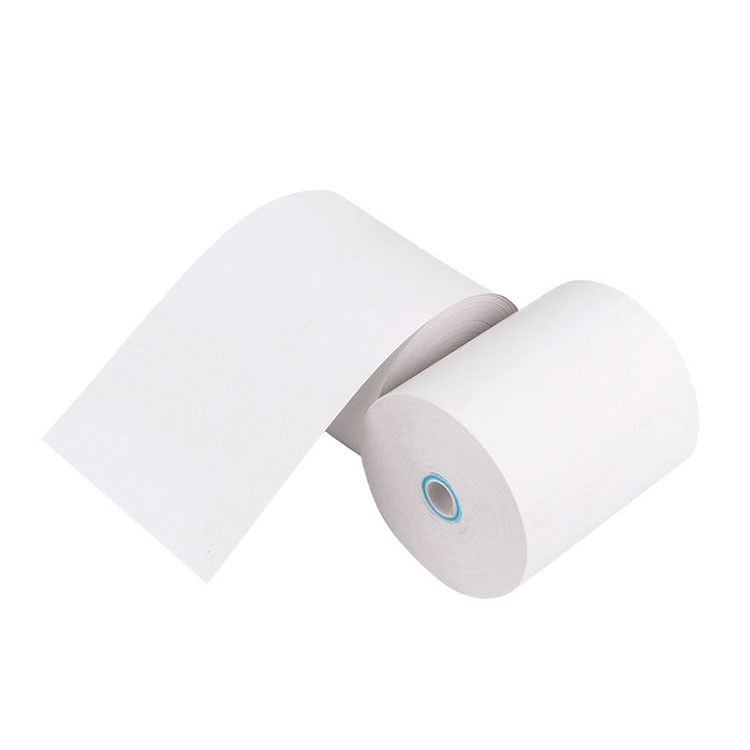
The chemistry behind thermal printing involves leuco dyes, developers, and sensitizers. Historically, bisphenol A (BPA) was widely used as a low-cost color developer. Health and environmental concerns have shifted the industry toward safer alternatives. Understanding these chemical components is necessary for compliance and employee safety.
Regulations regarding thermal paper chemicals are becoming stricter globally. Many regions have banned or restricted the use of BPA. Transitioning to BPA-free or completely phenol-free (BPS-free) 3 1/8 thermal paper is often required to comply with regional regulations and corporate health policies. Next-generation developers include phenol-free alternatives like Pergafast 201 or urea-based compounds. Some innovative solutions use vitamin-C-based physical-barrier technologies, often identifiable as blue thermal paper rolls.
A common misconception is that traditional phenol-coated thermal papers are toxic to the paper recycling stream. While older formulations posed challenges, many modern recyclable thermal paper choices are available. Selecting these options helps enterprises meet strict environmental, social, and governance standards. Proper disposal and recycling protocols should be established based on the specific chemical makeup of the paper used.
The chemical composition directly affects how long the printed image remains legible. Standard thermal paper typically retains images for 3 to 5 years under ideal conditions. Premium top-coated paper extends this to 7 to 10 years, while archival-grade paper can last 10 to 25 years. This longevity is critical for tax compliance, warranty claims, and return policies. Faded receipts lead to customer disputes and audit complications.
Different applications require specific thermal paper characteristics to function reliably. A one-size-fits-all approach often leads to hardware malfunctions in specialized environments. High-volume retail environments demand standard 3 1/8 thermal paper rolls optimized for ultra-high-speed print heads. The paper must print clearly without ghosting or smudging. End-of-roll warning stripes are a critical requirement to alert cashiers and streamline checkout lines. These colored indicators near the core prevent staff from running out of paper mid-transaction.
Self-service kiosks and ATMs have unique requirements compared to desktop POS printers. An ATM paper roll often requires heavy-duty lengths ranging from 400 feet to over 1,000 feet, with outer diameters up to 6 inches or more. This minimizes technician maintenance intervals. Back-side reflective black marks are necessary for precise sensor cutting, ticket separation, and alignment in automated dispensers. Outdoor ATMs need specialized thermal chemistry capable of surviving extreme temperatures and UV exposure without pre-darkening the paper.
Standard thermal paper has a heat-sensitivity threshold. In hot environments like commercial kitchens, standard thermal paper can turn completely black from ambient heat. In these cases, it is necessary to pivot to specialized heat-resistant thermal coatings active up to 80 degrees Celsius or use standard bond paper paired with impact ribbon printers. Kitchen display systems often rely on impact printers because the physical ink ribbon is immune to heat degradation.
Proper storage and handling are essential to maintain the quality and legibility of thermal paper rolls. Environmental degradation is a primary concern. Thermal paper is highly sensitive to environmental factors. The ideal storage temperature is below 25 degrees Celsius with a relative humidity between 45% and 65%. Keep rolls isolated from organic solvents, hand sanitizers, plasticizers, water, oils, and direct sunlight. Storing paper in a hot warehouse or near a heat source will activate the thermal coating, rendering the rolls useless before they even reach the printer.
Establish strict warehouse inspection protocols. Check the outer carton integrity upon receiving shipments. Crushed boxes often indicate damaged roll edges, which will cause printer jams. Monitor the shelf-life expiration on unprinted stock to ensure older rolls are used first. Implement a first-in, first-out inventory system to prevent paper from degrading in storage.
Provide guidelines for cashier staff on proper printer maintenance. Use isopropyl alcohol swabs to clean printheads during roll changes to remove accumulated paper dust and chemical residue. Ensure staff understand the correct roll orientation to avoid printing blank receipts. The thermal coating is only applied to one side of the paper; loading the roll backward will result in the printhead applying heat to the uncoated side, producing no image.
Store all backup paper rolls in their original shrink-wrap or dark plastic bags to protect them from ambient moisture and UV light.
Keep paper supplies off the floor to prevent water damage from mopping or minor flooding.
Never store thermal paper near cleaning chemicals, ammonia, or petroleum-based products.
Train staff to handle paper by the edges to prevent oils from their fingers from degrading the printable surface.
An optimal procurement strategy for receipt paper balances correct technical specifications with top-coating requirements and chemical safety compliance. By understanding the specific needs of your hardware and operating environment, you can select the right paper to ensure reliable performance and minimize hidden operational disruptions.
Audit your current printer fleet to document maximum outer diameter limits and core spindle sizes.
Transition to top-coated paper for any terminals located in kitchens, outdoor areas, or high-moisture environments.
Update your procurement guidelines to mandate phenol-free paper to comply with emerging health regulations.
Implement a strict first-in, first-out inventory rotation in your supply closets to prevent paper degradation.
A: There is no functional difference. A 3 1/8 inch measurement translates to exactly 79.5mm, which is universally referred to as the 80mm standard in the industry. Both terms describe the exact same product used in standard receipt printers.
A: Top-coated paper generally feels smoother and slightly thicker. You can test it by rubbing a coin on the surface; top-coated paper resists scratching and smudging better than non-top-coated paper. It also repels water droplets rather than absorbing them immediately.
A: Receipts fade when exposed to UV light, heat, humidity, or chemicals like hand sanitizer and oils. Using top-coated paper or storing receipts in a cool, dark place prevents rapid fading. Avoid keeping receipts in plastic wallets that contain plasticizers.
A: BPA-free means the paper does not use Bisphenol A as a color developer. It often uses alternatives like BPS or phenol-free compounds to comply with health and safety regulations, making it safer for cashiers to handle daily.
A: Most modern receipt printers can accommodate coreless rolls, provided the outer diameter fits within the printer's housing limits. Always check your printer's specifications first, as some older models require a physical core to trigger the paper-out sensor.
A: Store bulk rolls in a climate-controlled environment below 25 degrees Celsius with 45% to 65% humidity. Keep them in their original shrink-wrap or boxes away from direct sunlight, heat sources, and chemical solvents.


