


Views: 0 Author: Site Editor Publish Time: 2026-09-09 Origin: Site


Procuring the wrong receipt paper carries hidden operational costs that extend far beyond the initial purchase order. Substandard or incorrectly sized rolls inevitably cause hardware jams during peak operating hours. They accelerate premature printhead failure by introducing abrasive debris into the printing mechanism. Furthermore, low-quality paper produces illegible transaction records that frustrate customers, complicate return processes, and create compliance issues for accounting departments. Matching exact paper specifications to specific portable printers and modern smart terminals requires technical precision. You must account for the roll width, outer diameter, core size, and the specific chemical coating applied to the paper web. Mobile point-of-sale systems demand incredibly tight physical tolerances to function correctly. This guide provides a definitive, evidence-based framework for evaluating and selecting the correct 2 1/4 thermal paper rolls for your hardware fleet. By understanding the mechanical and chemical properties of these supplies, operators can prevent equipment downtime, ensure hardware longevity, and maintain strict regulatory compliance regarding chemical handling.
Dimensional Accuracy is Non-Negotiable: The outer diameter (e.g., 40mm vs. 50mm) dictates whether a roll will physically fit inside a compact mobile printer's housing.
Chemical Compliance Matters: Transitioning to BPA-free 57mm thermal paper is increasingly required by regional regulations and corporate health policies.
Quality Impacts Hardware Lifespan: Low-grade paper generates excessive lint and dust, which acts as an abrasive on thermal printheads, leading to costly hardware replacements.
Strategic Sourcing Reduces Costs: Partnering directly with a verified thermal paper manufacturer for bulk or custom orders yields better unit economics and quality control than relying on unvetted third-party marketplace sellers.
Industry terminology surrounding receipt paper often blends imperial and metric measurements. This creates confusion during procurement. The 2 1/4-inch width measurement translates to approximately 57.15 millimeters. Depending on regional manufacturing tolerances and rounding practices, suppliers frequently label this exact same width as 58mm. Both 57mm and 58mm designations refer to the identical global standard for mini POS thermal paper. This specific dimension dominates the portable receipt printing market. It provides just enough horizontal space for legible itemized lists while keeping the hardware small enough to hold in one hand.
Direct thermal printing relies on a highly specialized, heat-sensitive chemical coating applied to the base paper. The paper web passes directly over a thermal printhead containing hundreds of microscopic heating elements. These elements selectively pulse with heat. They activate leuco dyes and developers within the paper's coating to instantly produce black text and images. This process requires zero ink ribbons, toner cartridges, or liquid ink reservoirs. Because the paper itself acts as the ink delivery system, the chemical composition and surface smoothness of the paper directly dictate print clarity. Poor chemical distribution results in faded, patchy, or low-contrast receipts.
The anatomy of a thermal receipt involves multiple engineered layers. The base paper provides the structural foundation. Above this, a pre-coat layer fills in the natural pores of the paper fibers, creating a smooth surface and preventing the active chemicals from sinking into the sheet. The thermal layer contains the leuco dyes and developers that react to heat. Finally, premium rolls feature a protective top-coat that shields the reactive layer from environmental damage like moisture and oils.
Specific hardware ecosystems rely entirely on this 2 1/4-inch form factor. Modern smart terminals utilize this width to maintain a sleek, compact footprint on retail counters. Popular devices in this category include the Square Terminal and Clover Flex. These units integrate the screen, card reader, and printer into a single chassis. Traditional credit card terminals from legacy brands like Verifone and Ingenico also require this exact size for their integrated printers. Beyond payment terminals, handheld Bluetooth mobile printers used by warehouse workers, delivery drivers, and field service technicians depend on 57mm rolls for on-the-go transaction logging and ticketing.
The resolution of the printed image depends on the printer's dots per inch (DPI) capability combined with the paper's surface uniformity. Standard portable printers operate at 203 DPI. If the thermal paper features a rough, uncalendered surface, the heating elements cannot make consistent contact with the chemical layer. This microscopic gap causes thermal blind spots. High-quality rolls undergo a calendering process during manufacturing. Heavy steel rollers press the paper to create an ultra-smooth finish that guarantees optimal heat transfer.
Various industries leverage this specific paper size to streamline their daily operations:
Retail and Hospitality: Tableside payment processing and line-busting during peak holiday rushes.
Field Service and Logistics: Printing delivery confirmations, invoices, and compliance tickets directly from the cab of a truck.
Law Enforcement and Ticketing: Issuing citations and parking passes using ruggedized mobile printers attached to duty belts.
Healthcare: Printing patient wristbands and mobile diagnostic labels on specialized adhesive thermal stock.
Reading thermal paper specifications requires understanding four distinct physical variables. These variables are width, outer diameter, core size, and total length. The width remains constant at 57mm for this hardware category. The outer diameter changes drastically based on the length of paper wound onto the core and the thickness of the paper itself. A roll containing 85 feet of standard-thickness paper will naturally possess a significantly larger outer diameter than a 50-foot roll. Understanding how to measure and verify these dimensions prevents purchasing inventory that physically cannot fit inside your device.
The 57x40 thermal paper roll serves as the absolute standard for ultra-compact devices. Battery-operated mobile printers, belt-clip printers, and pocket-sized smart terminals require this smaller 40mm outer diameter. The physical plastic housing and printer lid of these devices simply cannot close over anything larger. The primary operational trade-off involves paper length. A 40mm outer diameter restricts the continuous footage to roughly 35 to 50 feet. Consequently, cashiers and field workers must change rolls more frequently during high-volume shifts. Management must keep backup rolls highly accessible at all times to prevent bottlenecks.
Conversely, the 57x50 thermal paper roll fits standard countertop credit card terminals and slightly larger portable units equipped with deeper paper compartments. The 50mm outer diameter accommodates significantly longer continuous footage. These rolls typically hold 50 to 85 feet of paper, depending entirely on the paper's caliper (thickness). The primary benefit of the 57x50 size is operational continuity. Longer rolls drastically reduce downtime by minimizing replacement frequency. This allows cashiers to process long lines of customers without stopping to reload the printer.
Core size also impacts the overall roll dimensions and usable paper length. Standard rolls feature a 7/16-inch or 1/2-inch inner diameter plastic or honeycomb cardboard core. The core provides structural stability during the winding process at the manufacturing facility. Plastic cores resist crushing better than cardboard but add to environmental waste. Honeycomb cardboard cores offer a middle ground, providing rigidity while remaining recyclable. Coreless rolls represent the most efficient option. They utilize a specialized winding machine that folds the paper onto itself to start the roll without a central tube. Without a rigid core occupying the center of the roll, manufacturers can wind several extra feet of usable paper into the exact same 40mm or 50mm outer diameter.
When measuring a roll to verify its size, always use digital calipers rather than a standard ruler for accurate results. Measure the width straight across the flat face of the roll. Measure the outer diameter straight across the circular side, passing directly over the center hole. Even a two-millimeter discrepancy in outer diameter can prevent a printer hatch from locking securely.
Specification | Outer Diameter | Typical Length | Primary Hardware Compatibility | Operational Impact |
|---|---|---|---|---|
57x40mm | 40mm | 35 - 50 feet | Pocket-sized mobile printers, compact smart terminals (e.g., Square Terminal) | Requires more frequent roll changes; highly portable. |
57x50mm | 50mm | 50 - 85 feet | Countertop terminals, larger handheld POS units, standard Verifone/Ingenico devices | Reduces downtime during high-volume shifts; holds more footage. |
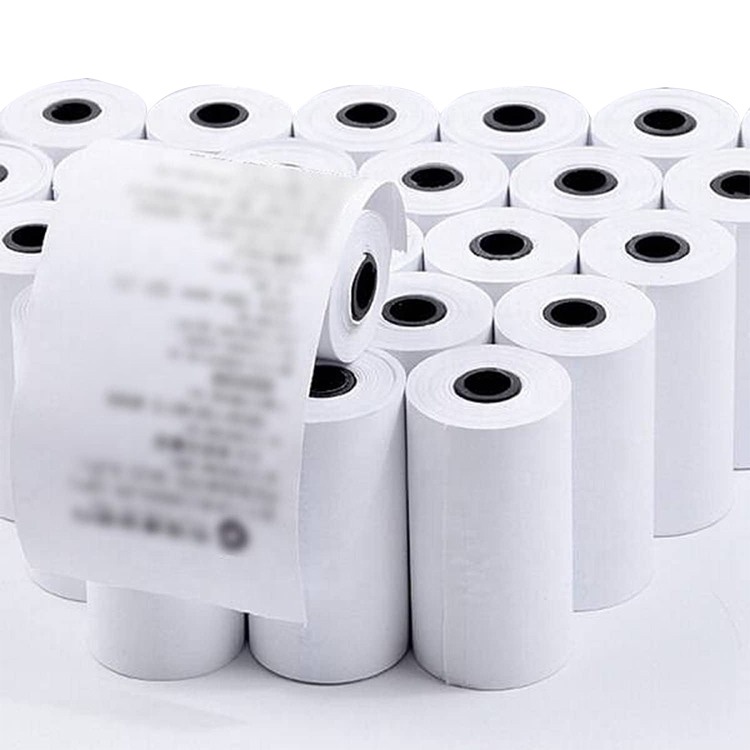
Paper thickness directly influences both receipt durability and the physical diameter of the finished roll. Manufacturers measure this metric in Grams per Square Meter (GSM). Higher GSM indicates thicker, heavier, and more robust paper. Standard retail receipts typically utilize 48 to 55 GSM paper. This range provides adequate tear resistance for everyday transactions while keeping the paper thin enough to maximize roll length. Thicker paper, ranging from 58 to 65 GSM, resists tearing and feels significantly more premium in the customer's hand. However, higher GSM increases the physical thickness of the paper web. A 55 GSM roll will reach a 40mm outer diameter much faster than a 48 GSM roll, resulting in less total footage per roll.
GSM Rating | Paper Thickness Category | Ideal Use Case | Trade-off |
|---|---|---|---|
48 GSM | Economy / Standard | High-volume retail, quick-service restaurants, basic transaction logs. | Thinner feel, lower tear resistance, but maximizes roll length. |
55 GSM | Premium Standard | Boutique retail, credit card terminals, standard mobile POS. | Excellent balance of durability and length. |
65 GSM | Heavyweight / Archival | Warranties, fine dining, long-term tax records, compliance tickets. | Highly durable, premium feel, but significantly reduces footage per roll. |
Image life determines the archival quality of the printed record. The chemical stability of the thermal coating dictates exactly how long prints remain legible before fading into the background. Standard thermal paper offers a one-to-three-year image life under optimal, climate-controlled storage conditions. Businesses processing long-term warranties, tracking compliance documents, or maintaining physical tax records require premium archival paper. These specialized rolls utilize advanced top-coated chemical formulations to provide a five-to-ten-year image life, protecting the data from premature degradation.
The regulatory landscape surrounding chemical coatings is tightening rapidly across multiple jurisdictions. Bisphenol A (BPA), a chemical historically used as a developer in thermal coatings, faces increasing restrictions globally due to health concerns. Transitioning to BPA-free 57mm thermal paper mitigates corporate liability and ensures compliance with modern safety standards. Furthermore, many forward-thinking suppliers now offer BPS-free and completely phenol-free alternatives. Upgrading to these safer, non-toxic coatings protects cashiers and employees who handle hundreds of receipts daily from unnecessary chemical exposure.
Printhead protection relies heavily on the paper's cut quality and surface integrity. Cheap, poorly manufactured paper generates excessive lint and microscopic paper dust during the cutting and winding process. As the paper feeds through the device, this dust builds up inside the printer mechanism. This debris acts as a harsh abrasive on the delicate thermal printhead. Lint causes thermal blind spots, resulting in distinct white streaks running vertically across the receipts. Worse, it physically degrades the printer's heating elements over time, forcing premature hardware replacements. High-quality paper features clean, precision-cut edges and a tight wind to eliminate dust generation entirely.
You can perform a simple field test to verify the active side of a thermal roll. Place the roll on a hard surface and quickly scratch the outside of the paper with your fingernail. The friction generates enough heat to activate the leuco dyes, leaving a distinct black mark. If no mark appears, flip the paper over and test the other side. If neither side reacts, the roll has lost its chemical sensitivity due to improper storage or age.
Standard white receipts represent a massive, frequently overlooked marketing opportunity for retail operators. Utilizing custom printed 57mm thermal paper transforms a basic transaction record into a powerful promotional tool. Businesses can pre-print full-color logos, detailed return policies, promotional discount codes, or dynamic QR codes on the non-thermal back side of the roll. Edge printing allows for subtle branding along the margins without interfering with the primary transaction data. This strategy guarantees that your brand messaging physically reaches every single paying customer.
Implementing custom printing requires understanding specific manufacturing constraints. Custom orders carry minimum order quantities (MOQs) to justify the setup costs of the printing press. Lead times also vary based on the complexity of the artwork, the number of colors used, and the manufacturer's current production schedule. Operators must forecast their paper usage accurately to ensure they do not run out of custom stock while waiting for a new production run to complete.
Beyond marketing, specialty coatings expand the functional utility of portable printers. Continuous sticky thermal paper supports specific mobile applications that require immediate labeling. Quick-service restaurants use adhesive thermal rolls for custom order labeling on beverage cups and food wrappers. Retailers deploy it for dynamic, on-the-fly inventory tagging and markdown pricing. Prosumer app-based mini printers also utilize adhesive rolls for home organization and crafting.
Using adhesive paper requires strictly compatible hardware. You cannot put sticky paper into a standard receipt printer. The printer mechanism must feature specialized, non-stick silicone platen rollers and a modified tear bar. These specific hardware adaptations prevent the silicone release liners or the linerless adhesives from binding to the internal components and jamming the feed path. Always verify that your mobile printer is explicitly rated for linerless or adhesive media before loading these specialty rolls.
Proper installation prevents the vast majority of daily printing errors. Modern portable printers feature intuitive, drop-in loading mechanisms designed for speed. Operators simply open the main hatch, drop the new roll into the cavity, pull a short tail of paper past the tear blade, and snap the lid closed. The rubber platen roller housed in the lid automatically aligns the paper against the printhead.
Despite this mechanical simplicity, user errors remain incredibly common. Thermal paper only contains the reactive chemical coating on one specific side. Loading the roll upside down guarantees completely blank prints. The non-coated side passes over the printhead, resulting in zero image transfer, while the device continues to feed paper normally. Always ensure the paper feeds from the bottom of the roll upwards, curving naturally toward the tear bar. Training staff on this simple visual check eliminates frustrating troubleshooting delays at the checkout counter.
Environmental factors easily destroy thermal paper inventory if left unmanaged. Extreme heat activates the chemical coating prematurely. Leaving a box of paper in a hot delivery vehicle or storing rolls near a commercial oven turns the entire roll black, rendering it useless. Prolonged ultraviolet light exposure from direct sunlight or harsh fluorescent bulbs fades existing prints and degrades the sensitivity of unused rolls.
High humidity causes severe paper jams by altering the moisture content of the paper web, making it limp and prone to tearing inside the feed mechanism. Furthermore, direct contact with specific plastics, petroleum-based oils, hand sanitizers, and cleaning solvents dissolves the thermal image instantly. Plasticizers found in vinyl folders or leather wallets react aggressively with the thermal coating, erasing the text within days. To protect your investment, store bulk inventory in dark, climate-controlled environments. Maintain storage temperatures below 77°F (25°C) and keep relative humidity between 45% and 65%. Keep all rolls sealed in their original shrink-wrap or protective foil packaging until the exact moment they are needed on the floor.
When a paper jam does occur, follow these specific steps to clear the mechanism without damaging the hardware:
Power down the printer immediately to prevent the feed motor from stripping its internal plastic gears.
Open the main paper hatch fully to release the tension on the rubber platen roller.
Gently pull the crumpled paper out evenly from both sides to avoid tearing the sheet inside the feed path.
Inspect the thermal printhead for any stuck paper fragments or adhesive residue.
Reload a fresh roll, ensuring the paper feeds from the bottom up, and snap the lid securely closed.
When cleaning the printhead, never use water or standard glass cleaners. These liquids can short out the electrical components. Always use 99% isopropyl alcohol. Apply the alcohol to a foam-tipped swab rather than a cotton swab, as cotton leaves behind microscopic fibers that can catch on the heating elements. Wipe the swab in a single direction across the glass printhead until the swab comes away completely clean.
Evaluating your supply chain directly impacts both product quality and long-term operational budgets. Buying from a general office supply distributor or an online marketplace offers perceived convenience. However, these third-party sellers frequently change their underlying suppliers to maximize their own margins. This leads to inconsistent paper quality from order to order. Sourcing directly from a dedicated thermal paper manufacturer provides distinct, measurable advantages. Direct relationships eliminate intermediary markups, lowering the cost per roll.
Quality assurance improves significantly with direct manufacturer sourcing. Manufacturers provide absolute traceability for their products. They guarantee consistent GSM, exact footage lengths, and precise cutting tolerances across every single batch. Direct suppliers also supply verified chemical compliance documentation upon request. You receive certified BPA-free or phenol-free paper backed by laboratory testing, rather than relying on unverified claims from anonymous marketplace substitutes.
Vetting a manufacturer requires asking specific technical questions. Request their ISO certifications to verify their quality management systems. Ask for physical samples of their paper to test in your actual hardware. Verify the supply chain of their base paper stock to ensure they source from sustainable, responsibly managed forests. A reputable manufacturer will gladly provide this transparency.
Bulk purchasing yields substantial financial benefits for multi-location businesses and high-volume operators. Manufacturers offer highly favorable volume pricing structures. Standard case quantities typically include 50-roll or 100-roll configurations, packed securely to prevent edge crush damage during transit. When ordering pallets, logistics planning requires accurate inventory forecasting based on historical transaction data.
Freight considerations play a major role in bulk orders due to the sheer weight of dense paper products. Consolidating orders into larger, less frequent shipments reduces shipping frequency and significantly lowers overall unit costs. Work directly with the manufacturer to establish a reliable safety stock level. This ensures you never face a stockout scenario during peak seasonal rushes while waiting for a heavy freight delivery to arrive.
Audit your current mobile printer specifications and user manuals to confirm the exact maximum outer diameter capacity before placing any paper orders.
Request physical sample rolls from a direct manufacturer to test for lint generation, feed reliability, and print clarity in your actual devices.
Review internal corporate compliance requirements regarding BPA, BPS, and overall phenol-free handling policies for your staff.
Calculate your average monthly paper consumption per terminal to forecast bulk order volumes and establish an automated reorder point.
Implement a strict, climate-controlled storage protocol to protect bulk inventory from heat, humidity, and UV degradation.
A: Yes, 2 1/4 inches (57mm) is the exact standard width required for these modern smart terminals. However, you must verify the maximum roll diameter your specific device accepts. Most compact smart terminals require a 57x40 roll to allow the printer door to close and latch properly.
A: Check your printer's hardware manual for the maximum outer diameter capacity. An outer diameter of 40mm is typical for pocket-sized mobile printers and compact terminals. An outer diameter of 50mm fits standard desktop credit card terminals and larger handheld point-of-sale units.
A: It indicates the paper's heat-sensitive chemical coating is manufactured completely without Bisphenol A. This complies with modern health regulations. Removing BPA ensures safer daily handling for both cashiers and customers, mitigating potential health risks associated with long-term chemical exposure.
A: Thermal paper only has the reactive chemical coating applied to one side. If your receipts print blank, the roll is likely installed upside down. Open the printer hatch and flip the roll so the paper feeds from the bottom up toward the thermal printhead.
A: Yes, in almost all cases. The terms 57mm and 58mm are frequently used interchangeably in the industry to describe the 2 1/4-inch standard. The slight one-millimeter difference usually falls well within the hardware's manufacturing tolerances, allowing the roll to feed without jamming.


